Remembering a CIA Coup in Iran That Never Was
Mohammed Mossadegh was not a democrat or democratically elected, nor was he toppled by nefarious foreigners
March 05, 2023
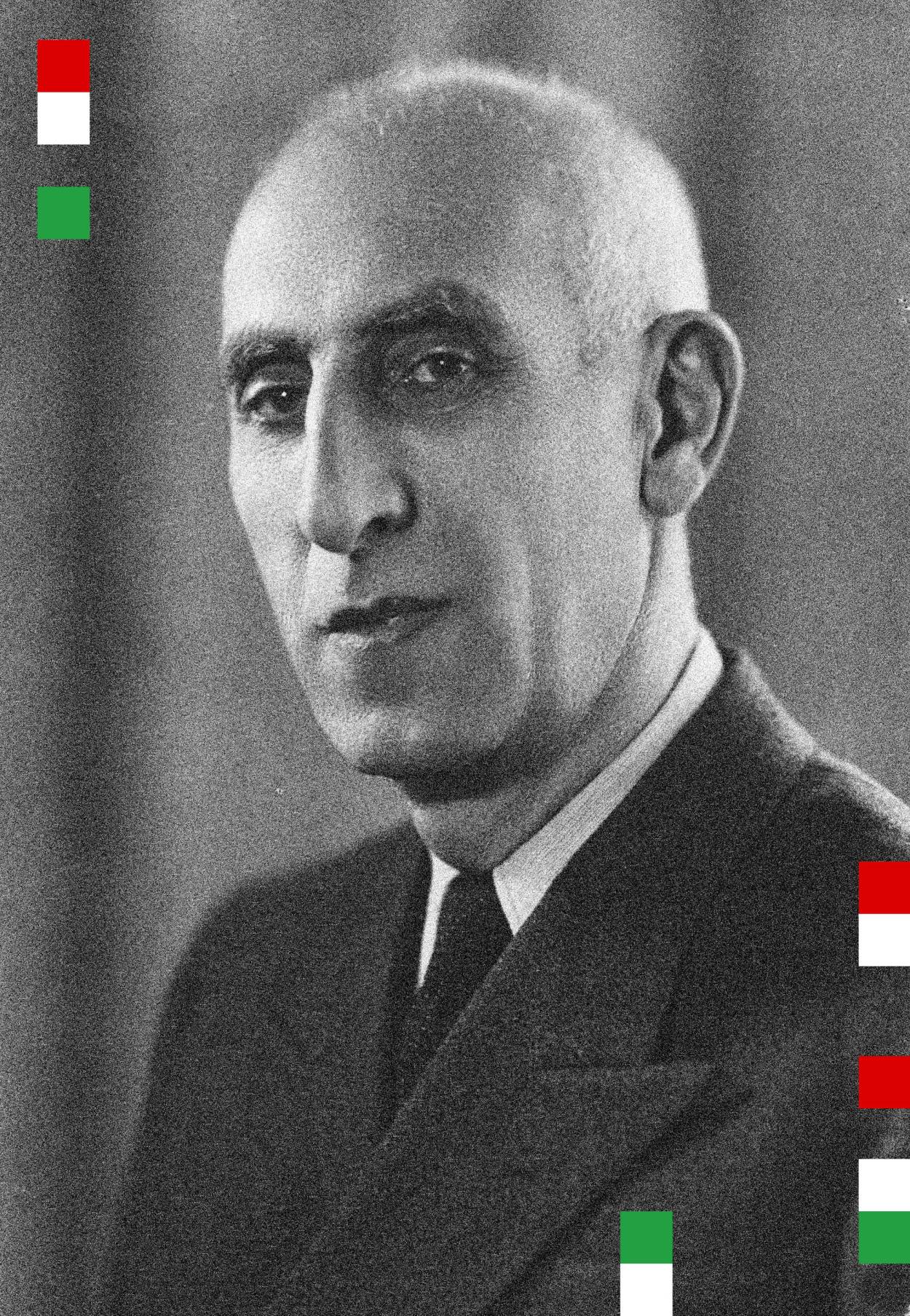
‘The prime minister had a deep strain of decency, but was an inept visionary who overplayed his hand’Keystone/Getty Images
When anti-regime protests spread like wildfire throughout Iran in mid-October of 2022, the regime’s Supreme Leader Ali Khamenei was quick to lay the blame on the usual foreign suspects. “I say explicitly that these riots and this insecurity were a design by the U.S. and the occupying, fake Zionist regime and those who are paid by them,” he told a class of cadets at a police college in Tehran. He suggested that the ultimate goal of the U.S. and Israel was regime change in Iran.
This elicited a response on Twitter from Iranian rapper Hichkas, who defended foreign support for the uprising, saying that it represented solidarity, not collaboration. He ended his riposte with a taunt that was retweeted or liked more than 50,000 times:
“And you can shove that Mossadegh tale you’ve lived off of for a lifetime.”
The rebellious young hip-hop star was connecting dots that Khamenei had only implied: that in 2022, the United States and its allies were once again seeking to overthrow an Iranian leader, just as in the summer of 1953 the United States had cooperated with players inside and outside Iran to help end the political career of the doomed nationalist prime minister, Mohammed Mossadegh.
For anyone who needs a reminder of the significance of that episode, whose 70th anniversary falls this year, let Columbia University’s professor Hamid Dabashi provide one, from his book Iran: A People Interrupted:
As Iranians never get tired of repeating (for this is the defining trauma of their modern history), the CIA, aided by British intelligence, mounted, paid for, and executed a military coup, overthrew the democratically elected government of Mosaddeq, and brought the corrupt Mohammed Reza Shah back to power.
This Ivy League encapsulation of the events of August 1953 in Iran contains at least four remarkable untruths, though “As Iranians never get tired of repeating” is not one of them.
First, the CIA did not mount or execute a coup.
Second, Mossadegh was not democratically elected.
Third, the shah was not yet corrupt.
Fourth, he was not brought back to power, because he had never left it: Assassinations were a fact of life in 1950s Tehran, and having survived an attempt on his life in 1949, Mohammed Reza chose to wait out Mossadegh’s fall in Baghdad and Rome but never abdicated.
What actually happened in the land which once harvested prime ministers more promiscuously than Henry VIII harvested queens was this: After Shah Mohammed Reza’s Prime Ministers Mohammed-Ali Foroughi, Ali Soheili, Ahmad Qavam, Mohammed-Reza Hekmat, Ebrahim Hakimi, Abdolhossein Hazhir, Mohammed Saed, and Ali Mansur, came Ali Razmara, who was assassinated in March 1951. Following the brief caretaker premiership of Hossein Ala, Shah Mohammed Reza Pahlavi wanted Seyyed Zia Tabataba’i, but in deference to the aged Qajar aristocrat Mohammed Mossadegh, had him offered the job, feeling confident he would decline. To everyone’s surprise, Mossadegh accepted, and the Majlis concluded a brief poll to endorse him. Then the shah gave Mossadegh the job. Again, the sequence of events is significant: The shah chose a prime minister, the parliament consented, and the shah appointed him.
Between 1953 and 1979, the shah would appoint and dismiss 10 more prime ministers, including Mossadegh twice. Not even the most overheated Iran historian describes these changes as coups.
Between 1953 and 1979, the shah would appoint and dismiss 10 more prime ministers, including Mossadegh twice. Not even the most overheated Iran historian, in Islamic Iran or American academia, describes these changes as coups. The difference is that when Mossadegh’s second government went down in flames in August 1953, there were some American would-be arsonists in the wings who may or may not have shared responsibility, but who insisted on claiming the lion’s share of the credit, however implausibly or unwisely.
Constitutionally, appointing prime ministers in imperial Iran was the sole prerogative of the shah. As Gholam Reza Afkhami wrote, “The Constitution … gave the Crown and only the Crown the power to appoint or dismiss the ministers (Article 46, Supplementary basic Law) …” In George Lenczowski’s Iran Under the Pahlavis we read that “The Shah’s authority embraced the right to appoint and dismiss the prime minister and ministers.” However, according to Afkhami, “over the postwar years it had become the accepted practice for the shah to ask the Majlis to express its preference before he appointed a prime minister.”
Article 46 of the Supplemental Constitutional Law of the Iranian constitution in force at the time was blunt: “The Ministers are appointed and dismissed by the decree of the King.“ The poll noted above to align king and legislature behind a prime minister was “a tentative consent of the majority of the Majlis which was ascertained in the form of a vote of investiture known in Iran as raye tamayel (“vote of inclination”), prior to the issuance of Royal farman appointing the prime minster,” as Iranian American scholar Sepehr Zabih put it in The Mossadegh Era. Mossadegh scholars Darioush Bayandor and Christopher de Bellaigue call it a straw vote or straw poll.
The Iranian parliament’s role in the choice of a prime minister was similar to, but weaker than, the U.S. Senate’s role in confirming presidential appointments, such as, among others, Supreme Court justices, some cabinet posts, and ambassadors. Yet despite this even stronger legislative role, no one refers to “the democratically elected Justice Samuel Alito,” the “democratically elected Secretary of State Antony Blinken,” or “the democratically elected Ambassador Pamela Harriman.”
This fetishistic formulation, applied to Mossadegh is even odder, for reasons that are worth examining. First, though, it’s worth retracing Mossadegh’s steps on his way out of power.
The story of Mossadegh’s departure from power is notorious among Middle East scholars, on par with the JFK assassination or abdication of Edward VIII. Hence retelling it is a little laborious, with sensationalism vying in a death match with numbing familiarity.
Once in power, Mossadegh quickly achieved national hero status by getting a bill through the Majles nationalizing the Iranian oil industry. However, negotiations with the British Anglo-Iranian Oil Company, AIOC, went in circles over details such as management and future compensation to the British. As the U.S. worked with the British toward a solution, the Brits were annoyed by the Washington upstart’s idealism towards Mossadegh, while Washington was peeved by London’s anachronistic, patronizing greed.
The U.S finally dispatched Averell Harriman to work with Mossadegh toward a resolution. The canny old man’s posturing and slippery illogic inclined the Americans to sense that he plainly did not want an agreement. As the Iranian prime minister himself conceded, he was wary of “my fanatics” in the Iranian polity who would kill him for making concessions. Harriman went home empty-handed, and Eisenhower soon replaced Truman.
The British, having been talked out of military action by the Yanks, pulled AIOC staff out of Iran. The British pullout and boycott, combined with the lack of domestic Iranian expertise to produce or market oil, proved catastrophic for the economy, as increased production in Iraq, Kuwait, and Saudi Arabia made the renamed National Iranian Oil Company, NIOC, irrelevant. Mosaddegh and his advisers were blind to these realities amid the nirvana of unanimous domestic support for their anti-imperialist bluster. Worse, his decision to end the oil talks were a signal event for Washington, who now joined London in seeing the prime minister as unstable and untrustworthy.
As the political and economic tides turned against him, Mossadegh sparred with the shah over who had the right to appoint the minister of war. This demand was a red line for the shah, who prized the military as his key constituency. The prime minister resigned in protest, but his brinkmanship got him what he wanted, his job back along with power over the War Ministry. He was quick to rename it the Ministry of Defense and appoint himself to head it, cut its budget by 15%, purge the services of 136 officers, install men loyal to himself, including his nephew General Vossuq (whom he named assistant minister), and obtain six months’ emergency powers, including the power to legislate. He then dismissed the Supreme Court, and, lacking support in the Majles, sought to dissolve it, too—a power that the constitution reserved to the shah.
This was the beginning of the end for the prime minister who spoke eloquently of democracy but, when given opportunities to exercise it, always showed a dictatorial bent. Claiming to seek legitimacy not from the legislature but from “the people,” Mossadegh set up a national referendum on dissolving the Majles, with no secret ballot: Yes and no votes were cast in different locations. Mossadegh’s stacked referendum gave him a landslide victory, which cost him the support of the Shia clergy, the National Front coalition, and even family members. Sattareh Farmanfarmaian, his niece, wrote in her memoir, Daughter of Persia, of how “wretched” she felt over this betrayal. Majles Speaker Ayatollah Kashani denounced him, and his former National Front allies called him a “worse dictator than Reza Shah.”
Having lost nearly all political support except the communist Tudeh party, and with even his pro-oil nationalization supporters split, Mossadegh found himself with a reduced base composed of radical supporters and an increasingly united front opposing him: the clergy, the military, and the bazaar, with the U.S. and Britain now both solidly behind the monarch. Most importantly, the absence of a functioning Majles offered the shah an opening to remove his unpopular prime minister.
Previously, the shah had rejected repeated advice, domestic and foreign, to fire Mossadegh, though it was within his constitutional powers. There had already been 14 recess appointments or dismissals of prime minister, which Mossadegh knew well, but he boasted that the shah would not “have the guts” to dismiss him. His bluff backfired. Absent a parliament, Mossadegh could now be removed from power. All it took was royal will.
Despite the cresting of the feud between Mossadegh and the now less-deferential young shah, the latter hesitated to oust his prime minister. The British succeeded in persuading Eisenhower to connive against Mossadegh. Hands-off Ike bucked the conversation down to the working level, which was the Dulles brothers, Alan and John Foster, and the operational components of the CIA. London favored some form of a palace coup, using its network of Iranian agents, who with the rupture of Tehran-London relations had been passed to the local CIA station for handling.
The agency was barely six years old and years away from having its own headquarters in Langley. Still, it had already adopted practices like the secretive use of cryptonyms to conceal identities.
Long since declassified, TPBEDAMN was an anti-communist covert influence program in Iran. KGSAVOY was the shah, and TPAJAX was the plan for the rather tame machination—far removed from a British military invasion—to remove Mohammed Mossadegh from power legally and constitutionally, by persuading the shah to use his prerogative to replace him.
Enter RNMAKER, true name Kermit “Kim” Roosevelt, Teddy’s grandson and no stranger to the sandbox. In his book Arabs, Oil, and History (1949), he devoted a chapter to Iran, which in his telling is one of the “fringe lands,” as a Muslim but non-Arab country in the suburbs of the Middle East (there are Iranians who would punch him in the nose for this alone). On a trip through Iran, Kim is lectured by ragged tribals about bad royal priorities: “Why does [the shah] not give away some of his lands? Or spend what he spends for a B-17 on a program to combat trachoma?” Our good listener and deft name-dropper tells us that on a recent visit to the country, “The shah had told me much the same thing … As long as Iranian people are ill-fed, ill-clothed, ill-educated and just plain ill there could be no real security against outside aggression.”
In a subsequent book, Countercoup: The Struggle for the Control of Iran, published in 1979, Roosevelt detailed the course of his plotting. Like Stephen Kinzer’s 2003 book All the Shah’s Men: An American Coup and the Roots of Middle East Terror, which relies heavily on Roosevelt, it is overly padded and suffers from what H.R. McMaster would call strategic narcissism—the tendency to put the United States at the center of everything, deserving of both glory and blame, whether rightly or wrongly. Fittingly, McMaster uses the term, in his book Battlegrounds, to describe the posture toward Iran adopted by President Obama (who we shall see would also weigh in on the Mossadegh affair).
A good example of this world view occurred in the movie Shakespeare in Love, where we see the cast of Romeo and Juliet taking a break in a tavern. When the portly actor who plays the nurse is asked by a fellow drinker, “So what’s the play about, then?” he starts to explain, “Well, you see, there’s this nurse … “
This gets to the heart of the narratives around Mossadegh’s political demise. The isolated prime minister was entirely correct in his complaints to everyone from the shah to Harriman that he was being plotted against. Ray Takeyh writes that Mossadegh’s coming ouster was “the worst-kept secret in Iran.” While Roosevelt strategically and narcissistically spins tales of CIA plotting in Washington and London and secret meetings with the shah, the Iranian army brass was already assessing its options against Mossadegh, and had even approached the British Embassy in Tehran for support. Grand Ayatollah Borujerdi in Qom, Ayatollah Behbehani in Tehran, and Ayatollah Kashani, who had been dismissed from his Majles speaker post by Mossadegh, had already lined up against him.
One of the best accounts of the movement to oust Mossadegh is in Ervand Abrahamian’s Iran Between Two Revolutions, and in a dozen dense pages he scarcely mentions the CIA. Having inherited the (still closed) British Embassy’s human intelligence network, the CIA station in Tehran, in the person of Roosevelt, held secret meetings and moved some money around. Yet the already-existing network, meeting in the capital’s Officers Club, lacked neither motivation nor money. Abrahamian notes that Roosevelt’s support did help Major General Fazlollah Zahedi—the declared candidate to replace Mossadegh—win over key allies such as Imperial Guards Commander Nassiri, Air Force Chief Gilanshah, gendarmerie Chief Colonel Ardubadi, secret police Chief Mu’tazed, and the senior tank commanders of the Tehran army garrison.
The TPAJAX plan unfolded on the night of Aug. 15. Colonel Nassiri arrived at Mossadegh’s house with the royal edict, or farman, signed by the shah. This one dismissed Mossadegh as prime minister, another appointed Zahedi to replace him. Despite the weird circumstances—it was nearly midnight, and Nassiri was accompanied by two truckloads of soldiers—this was a legal and constitutional action. But because it was the worst-kept secret in Iran, Mossadegh had been tipped off. Tudeh had penetrations of the Imperial Guard and the military, according to Bayandor, and Abrahamian even names the leaker, one Captain Mehdi Homayouni. (Mossadegh may have had multiple sources—senior Tudeh leader Noredin-Kianuri claimed in his memoirs that he too had personally tipped off Mossadegh.) Mossadegh signed a receipt for the edict but refused to comply, and his men placed Nassiri under arrest.
The plan had failed, and the Americans had no plan B. Roosevelt was asked to return to Washington but preferred to stay in Tehran. The CIA passed a memo to Eisenhower conceding the failure and assessing that the U.S. would “probably have to snuggle up to Mossadegh.” The U.S. ambassador, Loy Henderson, who like the shah had sat out the operation abroad, returned to Tehran to meet on the 16th with Mossadegh, who denied having ever seen the royal edict dismissing him, but went on to say that even if he had and if it were real, he would have ignored it. When Henderson gave his account of the meeting to the media, he pointedly omitted the title of prime minister when referring to Mossadegh. Despite all the confusion and contradiction, the underlying fact was that Zahedi was the legitimate prime minister of Iran.
That was Roosevelt’s focus for the next couple of days. He arranged for photostats of the two farmans to be circulated to local newspapers, who published them. Skeptics of the Roosevelt legend point out that the only papers the CIA could suborn were low-circulation organs in south Tehran and thus of limited citywide influence.
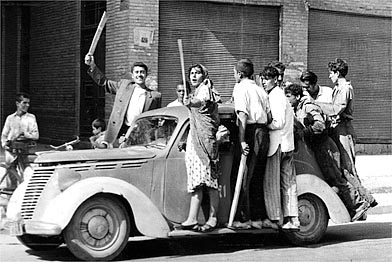
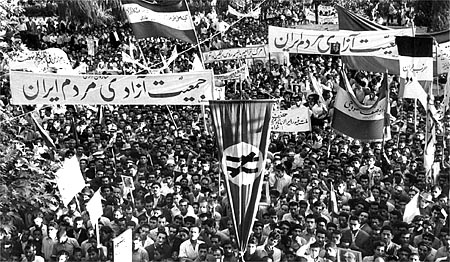
On Aug. 19, demonstrations and counterdemonstrations broke out in Tehran, eventually converging on the radio station and Mossadegh’s house in Kakh (Palace) Street, which was defended by tanks. If Mossadegh’s fall is analogous to the JFK assassination, 109 Palace Street was Dealey Plaza. Violence broke out, and dozens were killed. The former prime minister’s house was damaged by gunfire. In the late afternoon, a tearful Mossadegh heard the public radio broadcast of Zahedi’s victory speech saying that Mossadegh’s “coup” had failed. He learned, but refused to believe, that his relative, the police chief Col. Daftary, had turned against him. When his house was overrun, he fled and turned himself in to Zahedi’s government the next day. He was treated respectfully.
Before flying home, the shah sent telegrams to Grand Ayatollah Borujerdi and Ayatollah Behbehani. The more senior ayatollah responded with elaborately polite hopes that the shah could now put an end to the country’s ills and bring glory to Islam. He closed, “Do return as Shiism and Islam need you. You are the Shiite sovereign.”
More than one Iranian historian has derided Roosevelt’s memoir as “prophecy made after the fact,” and Afkhami complained that “[t]his false history, fostered by pro-Mosaddeq Iranians and liberal and leftist westerners, has diminished Mosaddeq, demonized the shah, and turned Iranians into traitors or wimps.”
The highly detailed, if also highly redacted, U.S. government histories of the so-called coup make the same point. While rich on details of secret travels and meetings, money changing hands, successive British and American drafts of the TPAJAX plans, and intragovernmental communications, all of them—the National Security Archives’ “Secret History of the Iran Coup, 1953” of 2000, “Zendebad, Shah!” by the CIA history staff, partially declassified in 2017, and “Planning and Implementation of Operation TPAJAX, March-August 1953,” an archive of documents published by the Office of the Historian of the State Department, all concur that it is impossible to establish who, if anyone, was directing the protests and mob actions on the fateful and chaotic day.
In retrospect, Roosevelt did himself no favors in Countercoup. He places himself at the center of the action, including instances that stretch the imagination. He gives us a shah who spends long evenings listening to him and gushing with praise, as well as a remarkable instance of him lying to the monarch: In a final meeting before the ruler left Tehran and Nassiri would start enforcing the two royal edicts, Roosevelt lacked a message from Eisenhower, so he made one up. “Since [Eisenhower] had failed to send one, I put into words what he must surely be feeling,” he wrote. His fabricated message from the president to the king was, “If the Pahlavis and the Roosevelts working together cannot solve this little problem, then there is no hope anywhere!” That he chose to publish it just as the shah was overthrown provided the nascent Islamic Republic and its partisans with yet more reasons to hate America. Eisenhower, who had died a decade prior, would have been furious.
It is unsettling that the cult of democratic Mossadegh exists, even in the United States. When I asked a friend of mine who served as the CIA’s chief of Iran analysis—albeit more in the Qassem Soleimani than the Mohammed Mossadegh era—to explain this bizarre interpretive slant, he blamed “bias” and “an overinflated view of U.S. power and influence,” which he called “bullshit.” He added, “Whatever the wisdom of U.S. and UK involvement in his ouster—which was likely near at hand even absent foreign involvement—his removal from power sparked mostly public indifference and some celebration. His contemporaries, including many former supporters, were glad to see him go. Mossadegh’s fictional status as a victimized, heroic advocate of democracy was only later cynically conferred by those who sought and supported the decidedly undemocratic dictatorship that rules Iran today.”
Reuel Gerecht, another former CIA observer, but from the operational side, put it this way: “Look, the focus on ’53 among Iranians is primarily a reflection of, one, left-wing, tier-mondiste critique of American power after the Vietnam War went south—starting in the West before it started in Iran—and two, the growing dissatisfaction among Iranian leftists, most tellingly the Islamic left, with the course of the revolution. Imagining Mossadegh triumphing allowed them to see a democratic Iran where the Shah and Khomeini, Khamenei, Rafsanjani, et al, get deleted.”
Back home, there is a thread that runs through the Mossadegh literature, from Roosevelt’s and Kinzer’s wildly tendentious accounts, down to Shahzad Aziz’s In the Land of the Ayatollahs Tupac Shakur Is King, and even the Cambridge History of Iran. The thread combines hindsight versus historical context to connect American villainy, lack of Iranian agency, and an alarmist view of the future, always panicking about the folly of Washington’s next terrible moves but never Tehran’s. And then there is the purely magical phenomenon of those who loathe the CIA and its operatives yet who naively take Kim Roosevelt’s self-centered memoirs at face value. American spies overthrow democratically elected governments, but they never tell a lie.
The enduring myth is that the CIA dispatched its serpent, Kim Roosevelt, into a democratic Iranian Garden of Eden, and everything bad that happened over the next half-century can be attributed to this original sin.
The enduring myth is that the CIA dispatched its serpent, Kim Roosevelt, into a democratic Iranian Garden of Eden, and everything bad that happened over the next half-century can be attributed to this original sin. (The “original sin” metaphor is everywhere—The New York Times even worked it into Ardeshir Zahedi’s obituary). On this, the tier-mondistes, American progressives, and Qajar memoirists all agree. A quick sampling:
Not only did Kinzer blame Mossadegh’s fall for the Islamic Revolution, he wrote that “From the seething streets of Tehran and the other Islamic capitals to the scenes of terror attacks around the world, Operation Ajax has left a haunting and terrible legacy.” His book is a warning against the U.S. projecting power—fair enough—but not satisfied with blaming the September 11 attacks on the Mossadegh action, his reissued 2018 edition contains a new and unhinged preface titled “The Folly of Attacking Iran.” In it, he slays vast legions of straw men, such as “the idea of attacking Iran and seeking to decapitate its regime,” which, he judiciously informs us, is “dangerous.”
I served in two of the most hawkishly anti-Iran administrations, Bush 43 and Trump, and while we heard out a foreign ally or two talk about hitting Iran’s nuclear program, no one spoke of anything more than that, and in fact no U.S. president, as we have seen, has ever agreed with those foreign allies, or done more than a single targeted attack against an internationally sanctioned Iranian terrorist.
In a similar but also unhinged and infinitely more turgid work, Going to Tehran, the team of Flynt and Hillary Leverett castigate Washington for overthrowing the democratically elected prime minister. The entire book makes the case for the U.S. to fold to the ayatollahs and for the U.S. president actually to go to Tehran, something the Tehran regime would never dream of allowing. Leverett is a former CIA analyst who has been wandering toward Code Pink territory for years now.
Obama repeats the “democratically elected” canard more than once in his memoir A Promised Land, unsurprisingly from the leader who would use the feckless John Kerry to negotiate the weak JCPOA and seek a legacy of accommodation with the regime. Those who recall Obama’s speech to the Muslim world in Cairo will remember that he not only mentioned Mossadegh but used Kinzerian wording.
Also unsurprisingly, Princeton University’s unsavory Hossein Mousavian, who served as Iran’s ambassador to Berlin during the Mykonos Café massacre of dissidents, wrote in his Iran and the United States (in which he denies that Tehran ordered the Mykonos killings or the Khobar Towers bombing), “the 1953 coup that toppled Iran’s first democratically elected government.” His whole book pleads the wounded innocence of the Islamic Republic.
Dabashi, unsurprisingly, lines up with Mousavaian on Mossadegh, with the difference that he opposes the Islamic regime, though he shares the mullahs’ hatred for Israel. He outdoes Kinzer in alarmism, lobbing brickbats not only at “warmongers” but at “native informers, imperial strategists”—Azar Nafisi and Ken Pollack—Bernard Lewis, and “self-loathing Oriental” Fouad Ajami. (He also thinks Salman Rushdie is Pakistani.)
Even innocuous books by writers with no apparent agenda repeat the error. Akbar Ganji, Mark Bowden, and Scott Peterson have all done it. I have a gripe with the monumental Cambridge History of Iran, whose chapter “The Pahlavi Autocracy” by Gavin R.G. Hambly tells us that “Iranians have never had the slightest doubt that the C.I.A. … organized the conspirators and paid the pro-Shah mobs … By 1982 this tenacious rumor had been fully confirmed and is now incontrovertible.” Hambly footnotes Roosevelt’s book, seeming to take its contents at face value.
For neutrality, readers must turn to the relatively obscure work of Diarioush Bayandor—fittingly, a resident of Switzerland—who possesses the most impartial moral sense among all Mossadegh historians. In his fastidiously sourced Iran and the CIA: The Fall of Mossadegh Revisited (2010), he delivers the verdict, that while “It is fair to conclude that even if the Shah’s dismissal order was not stricto sensu unconstitutional … it was a feature of a foreign scheme to bring about a change of government” and thus was of questionable legitimacy.
However harsh that is—and it is distinctly harsh, considering that at no time did the shah ever breach the laws of his country, while Mossadegh did promiscuously, and unapologetically—facts remain: Mossadegh was not democratically elected. He was not a democrat. He was not overthrown by the CIA, but by domestic forces he had repeatedly manipulated or misunderstood, and who welcomed a foreign hand of unmeasurable and uneven utility.
The controversy lives on in late prime minister’s story as told on stage and screen. The film Mossadegh, directed by Roozbeh Dadvand, recounts the man’s final days in under 30 beautifully shot minutes, but the opening title cards contain the jarring untruth that Mossadegh was “overthrown from power by U.S. and British forces.” Reza Allamehzadeh’s moving play Mossadegh concluded with his trial. When the military prosecutor tried to shame Mossadegh for his foreign minister’s having proclaimed that Iran no longer wanted a king (by then His Majesty had fled Tehran), Mossadegh brought the audience to its feet with the taunt, “And where was this king for anyone to want or not want him?”
Sentimentality toward Mossadegh is understandable. His nationalization project boosted the morale of a proud and often-humiliated country. He did seek a system with a weaker king, although more to gain power for himself than to pass it on to the people. He undoubtedly won hearts and minds with small acts of integrity like making his aristocratic mother pay her back taxes. Even more endearing is the incident when his daughter reported to him an altercation with a policeman who didn’t buy her “Do you know who I am?” defense. She demanded her father act, and he did—rewarding the cop with a promotion for his honesty. But character is fate. The prime minister had a deep strain of decency, but was an inept visionary who overplayed his hand.
Peter Theroux is a translator and writer in suburban Los Angeles. After more than 20 years in the U.S. government, he was awarded the Career Intelligence Medal.
————————————————————————————————-
Mohammad Mossadegh’s coup against the constitutional monarchy
A reflection on what happened in August 1953
Shaida Bavand
https://www.fereydoun.org/articles/sheida-bavand-60345
Self-breaking, breaking a mirror is a mistake (1)
Foreword
The events of Mordad 1953 are of particular importance in the contemporary history of Iran. Nearly seventy years ago, on these days, events occurred in Iran that still occupy a large space in Iran’s political discourse with contradictory narratives (both in terms of the event’s narration and analysis) and have occupied many people. What is fortunate is that the younger generation of Iranians, with access to the diverse sources of information that now exist, may have the capacity to think, evaluate, and reject the prevailing unreliable narratives, and the tendency to seek the truth will lead to a realistic understanding and attitude toward these events. Facing the past and recognizing it correctly is a big step towards defining identity and the future.
The established narrative of the events of August 15-18, 1953, in the public’s minds and in the domestic and foreign media is as follows: America and Britain overthrew the popular Prime Minister and the national government of Iran in a military coup within three days and restored the king to power; from then on, the king became more than ever the agent and agent of these two foreign powers, and everything that happened after that was aimed at securing the interests of those two countries; until 25 years later, a “savior” in the guise of Ruhollah Khomeini stepped onto the political scene of the country, stood up to the “traitor” Shah, America and Britain, and dismantled the Shah’s puppet and tyrannical regime. For the majority of Iranians, this narrative is the “historical reality” of the events of August 15, 1953 and its aftermath, the Islamic Revolution of 1978.
But a deeper look at the events of this period and the writings of the actors and close observers of those events reveal a much more remarkable and profound story. A story that, because we had seen it in good time, was an epic and should have been a source of pride and honor for the nation; a nation that took control of its own destiny by being on the scene at a historic juncture and saved the country from the danger of falling into the Soviet trap and possible disintegration.
Background to the events of August 15-18
Mossadegh, who had become prime minister for the second time on July 30, 1952, had complete control of the country in the months ending in August 1953, and was, as he called it, the “absolute administrator” (2). He had first obtained full powers from the two chambers to enact laws by force and threatening the members of the parliament to resign from the prime ministership (3) and then, without referring them to the two chambers, he could pass any law he deemed necessary to advance the government’s program and govern the country by decree; then he dissolved the Senate in order to strip the senators of their immunity and arrest or exile anyone he wanted, that is, anyone who opposed the government’s policies. (4) He then dissolved the National Consultative Assembly (5) through an illegal referendum (these actions raised many questions regarding their constitutionality); he had dissolved the Supreme Court in order to dismiss the high-ranking judges who had not obeyed his orders; (6) Relying on martial law, which he regularly extended. (7) He arrested anyone he wanted and kept them in prison for as long as he wanted; the country’s figures and the directors of newspapers opposed to the government were either in prison or on the run, or remained silent for fear of being smeared. (8) Even the Shah had withdrawn from everyone and left Tehran, and Mossadegh had taken over the command of the army, which was one of the king’s responsibilities under the constitution. (9)
Newspapers were being shut down one after another by the military government. Throughout his premiership, the country was in a severe economic and political crisis and was subject to daily demonstrations between supporters and opponents of the government, and in these street clashes, a number of people were killed and injured every day. (10) In August 1953, there were rumors in the city that a coup was on the way; not only did Mossadegh, as the commander of the army and minister of defense, have complete control over the army, police, police, and gendarmerie, and the army chief of staff was his chosen and loyalist, but dozens of Tudeh Party officers within the army were Mossadegh’s eyes and ears against any coup or military action. (11) Organizations and media affiliated with the Tudeh Party played an effective role in spreading rumors about the danger of a coup. (12) The United States and Britain, the former deeply concerned about the rise of communists in Iran and the latter frustrated by the impasse in oil negotiations, had suggested to the Shah that he remove Mossadegh through a military coup, but the Shah was hesitant (13, 14) and ultimately decided to reject the proposal. (15)
In this predicament, the Shah, after much deliberation to break the deadlock in which the country was stuck, decided to use the powers he legally enjoyed to dismiss Mossadegh and appoint Fazlollah Zahedi, a retired major general and senator, as prime minister. According to the laws of the day, dismissing the prime minister and appointing a new one during the so-called iftarat (dissolution of the two chambers) was one of the Shah’s legal powers (16), and the Shah was inclined to dismiss the prime minister through legal means, rather than resorting to coercive means. That the Shah was legally able to remove the prime minister was not a secret to Mossadegh and his associates. When in August 1953, Mohammad Mossadegh decided to hold a referendum to dissolve the Seventeenth Parliament (one of the reasons for this decision was that Mossadegh knew that he did not have a majority in the Parliament and that if the matter came to impeachment, he would face a negative vote. (17) Dr. Gholamhossein Seddiqi, Khalil Maleki, Dr. Sanjabi, and Dr. Shaygan – who were Mossadegh’s supporters – warned him against this and warned him that dissolving the two parliaments would open the way for the Shah to remove him (18) but Mossadegh ignored their advice. Mossadegh believed that “the Shah does not have the courage”. (19)
The government and the prime minister were aware of the coup rumor; (20) while the Shah had rejected the coup proposal to remove Mossadegh because he did not want bloodshed and fratricide and believed that he should act within the framework of the law. (21) Mossadegh replied to Karim Sanjabi, the cabinet minister, saying: “If you close the parliament in its absence, the Shah may issue a decree to dismiss you or you may face a coup. What will you do then?” Mossadegh said: “The Shah cannot issue a decree to dismiss you, and even if he did, we will not listen to him; but the possibility of a coup, the power of government, is in our hands and we will prevent it.” (22) Of course, Mossadegh was right in saying that the power of the government was in his hands because the army, the police, and the security forces were at his disposal, and the Prime Minister had “purged” these three institutions months earlier and appointed people he had complete confidence in at the head of each of them. Thus, when the Shah, contrary to Mossadegh’s expectations, issued the dismissal order, as he had said, he ignored the dismissal order and hid it not only from the nation but also from the cabinet ministers.
Five critical days
A) August 23
The Shah signed the decree dismissing Mossadegh and appointing Zahedi in Nowshahr (23), and Nasiri (Colonel Nematollah) arrived in Tehran with the signed decrees on Friday night, August 13, 1953. To deliver the decree, he first went to Zahedi, who was in hiding; (24) then, on behalf of Zahedi, in whose name the decree of Prime Minister had been issued, he was instructed to deliver the decree dismissing Mossadegh to him, but “since it was a holiday, it was decided that tomorrow, which was Saturday (August 14), and the cabinet was in session, at the end of the session, when the ministers had not yet left, Nasiri would also take the decree dismissing Mr. Mossadegh and deliver it to him.” (25)
The plan was that after the dismissal order was communicated to Mossadegh, Zahedi would go to the prime minister’s office and begin his work. In addition, several people who needed to be informed about the situation and who had been assigned tasks were invited to Zahedi’s hideout the next morning. These people were supposed to take charge of sensitive military and law enforcement officials.
B) August 24
On the morning of August 14, a consultation meeting was held at Zahedi’s hideout and it was decided that Nasiri would go to Dr. Mossadegh’s house between 11:00 and 11:30 at night, when the cabinet meeting had ended and the ministers were still at the prime minister’s house, and deliver the decree. In addition, the people who were to take charge of sensitive military and law enforcement positions after the decree dismissing the prime minister was delivered were also designated and their decrees were written.
On the night of August 14, a Saturday night, Nasiri took the decree to Mossadegh’s house to deliver it. It is said that Nasiri, accompanied by 4-5 officers and a group of soldiers, went to Mossadegh’s residence to deliver the decree. (26) It is not clear why Nasiri went to the prime minister’s house with a group of soldiers. It is possible that since martial law regulations were in place, Nasiri thought that the presence and company of officers and soldiers would prevent him from being stopped along the way.
Ardeshir Zahedi writes in his memoirs that when it was decided that Nasiri would deliver the order to dismiss Mossadegh, “certain precautions were taken because the situation was not normal.” (27) This reference reinforces the hypothesis that the truck carrying the soldiers accompanied Nasiri to avoid being stopped in the city under martial law.
An hour after Nasiri left for the prime minister’s house, Zahedi, along with those who were to hold sensitive posts (with the exception of Batmanghlich), was to leave Shemiran for Tehran to go to the officers’ club, where the new prime minister’s office was to be located. Batmanghlich, who had been appointed chief of staff of the army, left for the city in advance to go to the headquarters and take up his post. (28)
Due to the high level of security around Mossadegh’s house, Nasiri was unable to enter the prime minister’s residence, so he handed the order to Mossadegh through the commander of the residence’s security. (29) He was held in suspense for an hour, and when he was not allowed to meet with the prime minister, he handed the order to one of the prime minister’s bodyguards. Mossadegh issued a receipt for the order in his own handwriting, as follows: “At one o’clock after midnight on Mordad 15, 1953, the blessed handwriting reached me. Dr. Mohammad Mossadegh.” (30) However, in this predicament, Nasiri was suddenly arrested by one of his fellow officers, Lieutenant Ali Ashraf Shojaian, a member of the Tudeh Party’s officer organization. (31)
c) August 25
On the other hand, when midnight on August 14 passed and Zahedi had not heard from Tehran, Zahedi decided to move because he believed that “Nasiri and Batmanghlich should have done their job by now.” (32) While Zahedi and his companions were driving from Shemiran to Tehran, they encountered a car coming from the opposite direction near the Yousefabad intersection, carrying Batmanghlich. The two cars stopped side by side, and Batmanghlich informed Zahedi that “Nasiri had been arrested and armed forces had been deployed around the army headquarters. … and Brigadier General Riahi, Mossadegh’s chief of staff, was in his office.” (33) Thus, Batmanghlich, who had been appointed by Zahedi as the new Chief of Army Staff and had gone to take over his post from Riahi, encountered armed forces around the army headquarters and was unable to enter the building, so he returned to deliver the news to Zahedi.
Zahedi and his companions returned halfway and went to a safe place for a drink – they went to the house of one of the companions’ brother in the Amaniyeh hills to think of a solution. From their hiding place – which overlooked Pahlavi Street – they observed a number of tanks and military trucks moving towards Shemiran at night. (34)
In the meantime, after receiving the order, Mossadegh kept Nasiri inside his house for a while and in the meantime, he informed Brigadier General Riahi to put the military and law enforcement personnel on alert, strengthen the Prime Minister’s bodyguard, and keep Nasiri under arrest. (35)
That night, in Zahedi’s hideout, among other things, it was decided to take a large number of photos of Zahedi’s prime ministerial decree (there were no photocopiers in Iran at that time) and send these photos to all newspapers and magazines, as well as government departments, to inform the public about the appointment of a new prime minister. (Only a copy of the dismissal decree was now available to the prime minister.) Finally, after unsuccessful attempts here and there to take a photo of the decree with cameras, on the morning of August 15, this was done at the “Sako” photo studio on Naderi Street, owned by a trusted Armenian.
I invite the readers of these lines to think for a moment that if a coup had been planned to overthrow Mossadegh, if this operation had been fabricated by the United States and England and, as they say, a pre-prepared “coup,” if officers loyal to the monarchy had intended a military coup, then wouldn’t the soldiers who had accompanied Nassiri to the Prime Minister’s house have taken action after Nassiri did not come out of that house? The truth is that these soldiers were not ordered to take action. They had no role other than to accompany Nassiri to the Prime Minister’s house on Palace Street.
If a coup by Zahedi and Nasiri was really on the agenda, is it reasonable that the coup plotters would be thinking about a solution to the agenda in the middle of the night and during the “coup” or, for example, worrying about how to take a photo of the handwritten decree appointing Zahedi and reproduce it? (36)
After all, every coup is planned in advance and different scenarios are predicted in advance so that if one scenario fails, another scenario is implemented, while Zahedi and his companions did not follow a pre-planned plan, as we see, they think of solutions for the next step at each stage with the developments that occur. Those who attribute this coup to foreigners do not think that, for example, the same people who had planned the “coup” certainly had the capacity to prepare enough photos of the decree to dismiss and appoint the Prime Minister in their embassies and put them in the pockets of the “coup plotters” to reproduce them. What kind of coup was this that its perpetrators were either clumsily arrested or went into hiding to protect their lives and plan? Were Fazlollah Zahedi and his companions the perpetrators of the coup?
On the morning of August 15, tanks and military trucks blocked the city streets and controlled traffic. These tanks and soldiers were acting on the orders of Mossadegh and his appointed military and police commanders. In other words, the deposed prime minister was still in control and was using (read: abusing) the military and police forces, who were unaware of the dismissal order, to keep the deposed government alive .
From six in the morning, Tehran Radio had been announcing that important news would be announced to the public at seven in the morning. Finally, at seven in the morning, Tehran Radio broadcast a government announcement, which reported “a coup plot by the Imperial Guard and its defeat,” without any mention of the decree of dismissal. (37)
At 9 a.m. that day, the Shah and the Queen left the country from Ramsar Airport. Regarding leaving the country, the Shah said: “… I noticed that Mossadegh wants to violate the constitution and constitutionalism, and I have sworn to uphold the constitution and constitutionalism as long as I reign, so I issued a decree to remove him. Now, as I heard on the radio, Colonel Nasiri – who was carrying my decree – has been arrested and they have given the color of a coup and want to start a riot and chaos and shed the blood of innocent people. Therefore, in order to prevent fratricide, bloodshed and civil war, I am leaving the country for a short time.” (38)
Can the Shah’s statement be believed? If we look back 25 years and remember that the king left the country with the same reasoning in 1979, then we can say that without a doubt, in Mohammad Reza Shah’s view, avoiding massacre and bloodshed was always a priority. Mohammad Reza Shah was not a fan of coups. This was the second time that the Shah had intended to leave the country with the intention of avoiding bloodshed and fratricide, but it was not the last. (39)
On the other hand, on the Zahedi front, they were determined to inform the people about the decrees. It was decided to inform representatives of foreign news agencies about the previous night’s events so that the news could be published for inclusion in foreign media. They found Parviz Rain, a journalist from the Associated Press – who was trusted by Zahedi – (40) and it was decided that he would inform his other colleagues.
In the Velenjak-Rain Hills, United Press and Reuters correspondents Yousef Mazandi, Associated Press correspondent Donald Schwind, and New York Times correspondent Kenneth Law arrive for their meeting. (41) Ardeshir, the son of Fadlallah Zahedi, shows the reporters a photo of the decree appointing the new prime minister and informs them of the news of Mossadegh’s dismissal, while reading the text of his father’s message to them. In this message, Fadlallah Zahedi says: “Since the morning of August 14, I have been the legal prime minister, and the current course of the government can be considered a coup or an uprising against the constitution and the constitutional regime.”
Now, to be fair, if a coup was planned and being carried out at the initiative of the United States and Britain, as is said in the distorted narrative, and these two foreign forces were determined to support the monarchy, wouldn’t they have announced the news of Mossadegh’s removal through the trumpets of the BBC and foreign news agencies, just as they made the most of these state media outlets when Reza Shah was exiled from Iran? A more striking example of this media exploitation is the unstinting service of the BBC and foreign news agencies to Khomeini in 1979.
The truth is that the Shah had rejected the coup proposal from these two governments and had decided to use “only peaceful means to remove the Prime Minister.” (42) This is what the British embassy in Baghdad reported to London.
On the other hand, at the cabinet meeting that day – August 15 – the Prime Minister did not raise the issue of the dismissal decree at all and only spoke of a “military coup.” (43) At the same time, the Tehran military governorate took action to arrest a number of figures and officers of the army and police.
Mossadegh spoke about the impeachment decree at different times and in different ways: to the cabinet and in a radio message to the nation at 7:00 AM on August 15, he spoke only of a military coup. To Henderson, the American ambassador, who met with him at his home on August 17 and asked Mossadegh about the issuance of the impeachment decree, he said: “He has not seen such a decree, and even if he had, it would not have made any difference. The Shah is a ceremonial figure. He cannot issue an impeachment or appointment decree on his own initiative;” (44) and in the military court he stated that he had seen the decree but thought the signature was forged. (45)
On the evening of August 15, Fazlullah Zahedi, the legal Prime Minister, decided in his hideout with other associates that, on the one hand, in order to inform the people of the Shah’s decree, he would drop a copy of the decree into the mailboxes of all ministries, government and national institutions, newspapers, magazines, and embassies at night. On the other hand, because they saw their chances of success in Tehran as weak and the possibility of success in implementing the Shah’s decree in the dangerous conditions prevailing, and because they considered speed of action necessary to ward off the threat of the dominance of the masses – whose presence was increasing every day in the chaotic environment – they decided to seek help from the military forces in the provinces that were reliable.
After much deliberation, Isfahan and Kermanshah were chosen as the two most suitable provinces for this purpose. The aim was to settle in one of the two provinces and form a community or government called “Free Iran,” inform the world of their action, the reason for it, and the Shah’s decree, and seek help from the free world. (46)
On the evening of 15th of Mordad, a rally was held by the National Front and the parties and unions supporting Mossadegh in Baharestan Square. Fatemi, the foreign minister and government spokesman, spoke of the “crimes in the Barp Helvi” and Shaygan, Zirakzadeh and others all spoke of supporting Mossadegh and punishing traitors in court; they specifically wrote about the formation of the royal council and completing the task of the fugitive Shah and the resolution. On the same day, Fatemi announced to all ambassadors, ministers-elect and chargés-d’affaires that the Shah had been deposed from the throne and should not be welcomed; and photographs of the Shah and Queen were collected from offices and organizations. (47) In the editorial of Bakhtar Amruz, the Shah was referred to with such titles as “patriot traitor”, “chief of criminals” and “chief of foreigners”. (48)
On the same day, August 15, Dr. Fatemi announced to all Iranian ambassadors, ministers, and chargés-de-affaires abroad that “the Shah has been deposed from the monarchy and should not be welcomed.” All the newspapers of the Iranian Tudeh Party called for the abolition of the monarchy. (49) Mossadegh also ordered the military governor of Tehran to seal the royal palaces. (50)
It is important to mention these details in order to remind the reader that the story of the coup was not as it is presented in the clichéd narrative of history. Mossadegh’s resistance to the legal decree of his removal was unexpected. Even more unexpected was his resort to military force to continue the government. From that moment on, Fazlullah Zahedi, as the legal prime minister, was faced with an unruly and rebellious government that did not know on what basis it considered itself the ruler of the country’s destiny. This resistance in the conditions of that day, when political and military power was all in the hands of the deposed Mossadegh government, shows the patriotism and selflessness of Fazlullah Zahedi and his companions – who were few in number. Knowledge of the details of what happened in those days will undoubtedly have an impact on the analysis of those events.
D) August 26
On the night of August 15-16, the Tehran Military Governorate arrested a number of civilian figures, as well as a number of army and police officers – numbering about twenty. (51)
Engineer Kazem Hasibi, one of Mossadegh’s close companions and advisors, wrote in his daily notes about the talks on August 16 at the Prime Minister’s house: “At Dr. Mossadegh’s house, Messrs. Sanjabi, Shaygan, Zirakzadeh, Engineer Razavi, Nariman and Haghshenas were present, and the discussion was about determining the definitive regime of the country and resolving the current uncertainty. Some people were in favor of declaring a republic, while others were more lenient. … The points agreed upon were the urgency of referring to public opinion, recognizing the Shah as resigned, the extinction of the Pahlavi dynasty and the appointment of a royal council … ” (52)
On August 16, 1941, by order of Mossadegh, the army headquarters issued a circular removing the Shah’s name from the morning and evening prayers of military units. In other words, the deposed government is determined to depose the Shah and eliminate him.
On the Zahedi front, people are waiting for the envoys to return to Kermanshah and Isfahan and for a decision to move to one of those two provinces.
e) August 27
Dr. Karim Sanjabi, Minister of Culture and one of Mossadegh’s companions, says: “On August 17, I was with him [Mossadegh] and he ordered me to go and talk to the parties and take down the statues. … I went to the Iran Party. I called Khalil Maleki and he came. I called the People’s Party of Iran and the Pan-Iranians and some of the Bazaaris and they also came and we sent some people to carry out the order.” (53)
On the same day, supporters of the Tudeh Party pulled down the statue of Reza Shah in Baharestan Square and Sepah Square, broke shop windows and looted people’s property. The people’s fear of the agitators gaining control over various aspects of the capital was increasing by the minute. (54)
In the meantime, within Zahedi’s faction and in the midst of forming a free Iran government, it was decided that Kermanshah would be a more suitable place for them to settle. It was decided that Zahedi and his companions would depart for Kermanshah at dawn the next day, Wednesday, August 18. (55)
On the same day, August 17, the Tehran Military Governorate issued a summons to Major General Zahedi, warning him to report to the Tehran Military Governorate within twenty-four hours. The Tehran Military Governor announced that anyone who provided information about Fazlollah Zahedi’s whereabouts would receive a reward of one hundred thousand rials. (56)
By now, the news of the decree dismissing Mossadegh and appointing Zahedi as Prime Minister had reached the people and had been published in some media outlets. There is no doubt that the military governorship of Tehran was aware of the news of Zahedi’s appointment. The deposed Prime Minister, abusing state power, military and police forces, had refused to accept the decree dismissing him and was seeking to suppress the government’s opponents .
We read, as quoted by Mohammad Ali Movahed in Jalal Matini’s book: “The leaders of the National Movement at this time were hesitant about determining the definitive regime of the country. Some insisted on declaring a republic, while others, including Mossadegh, insisted on forming a royal council through popular vote so as not to “block the possibility of help from America and the West.” (57)
In this regard, it may be necessary to explain that the 1285 AH constitution does not mention the Royal Council. What is there is the appointment of the regent upon the death of the king or the transfer of the monarchy, which is not foreseen through a referendum but through the two chambers; it is also foreseen that before the appointment of the regent, “a delegation consisting of the Prime Minister, the Speakers of the two chambers, the Chief Justice of the Supreme Court, and three former Prime Ministers or former Speakers of the two chambers, selected by the government… shall temporarily assume the duties of the regent of the monarchy.” (58) Therefore, the proposal to refer the matter to a referendum was contrary to the constitution.
On the evening of August 17, 1953, Henderson, the US ambassador to Tehran, went to Mossadegh’s home to meet with him. That evening, Henderson wrote a report to the US State Department about the meeting, saying that he had asked the Prime Minister about the events of the past few days, and that the Prime Minister, without mentioning the dismissal decree, had told him that “on the evening of August 15, Colonel Nasiri came to his home and apparently intended to arrest him. But Colonel Nasiri himself was arrested, and several others were also arrested.” The US ambassador asked the Prime Minister directly about the decree dismissing Mossadegh. Mossadegh replied: “He himself has never seen such a decree, and it would not have made any difference if he had seen it… The Shah has no right to issue a decree to change the government on his own responsibility.”
The ambassador asks again about this and says that he would like to send a detailed report to the United States government. He asks: “Do I understand correctly that a) he has no official information that the Shah has issued a decree removing him from the prime ministership? b) even if he had been informed that the Shah had issued such a decree, would he have declared it invalid in the current circumstances?” He replies: “That is exactly the case.” (59) After 18 Mordad and access to the safe in Mossadegh’s house, the decree of dismissal is taken out of the safe and shown to the reporters. (60)
f) August 28
Ardeshir Zahedi writes in his memoirs: “We were supposed to go to Kermanshah at dawn the next day, Wednesday, August 18, and begin the operation from there, but in the hours when we were busy negotiating, the situation changed unexpectedly. Events occurred that no one had predicted… On Tuesday evening, groups of people who had been shaken by the events of those three days and had become concerned about the fate of the country, either on their own initiative or at the behest of religious authorities, took to the streets and clashed with the masses… We were informed that a rift had arisen among the military. Some of the security forces sided with the demonstrators, and there were clashes and shootings in the central streets of the city. During the night, [my father] received information indicating that Mossadegh had held a meeting with his ministers and colleagues, and they had also realized the seriousness of the situation.” (61)
Dr. Gholam Hossein Seddiqi, Mossadegh’s Minister of the Interior, writes: “At 6:30 in the morning on Wednesday, August 18, the Prime Minister summoned me. They said that since the Shah had left the country and it was necessary to determine the legal duties of the monarchy, I consulted with a group of knowledgeable gentlemen. The gentlemen’s opinion is that the Royal Council should be formed by means of a popular vote. You telegraph to the governors…” (62)
The American ambassador in Tehran sent a report to his State Department almost every two hours on August 18. In his report the previous day, he wrote about the clashes between supporters of the Tudeh Party and the security forces on August 17. He wrote that on August 18, the Shah’s supporters began to demonstrate in order to show their sympathy for the king. The security forces sent to disperse the people refused to attack the crowd, and some even joined the demonstrators, while others remained passive. As the crowds grew in different parts of the city, groups began to attack the offices of newspapers that had been insulting the Shah in the previous days… The central post and telegraph building was taken over by the crowd… The Tehran radio station was surrounded by the crowd. The demonstrators were mostly civilians, and the crowd seemed to be led by civilians, although some armed forces were also present. He also wrote that some soldiers were joining the pro-Shah demonstrators around the parliament. The US ambassador in Tehran wrote of attacks by people and police shooting at demonstrators around the prime minister’s house, around the army headquarters, and in front of the foreign ministry. He wrote that “the police response indicated a lack of confidence, but the number of soldiers and officers joining the Shah’s supporters individually is increasing.” (63) He continued that “the participants in the demonstrations were not the usual knife-wielding, rioting type that has been seen in recent days. They seemed to come from a variety of backgrounds and classes, including workers, employees, shopkeepers, businessmen, and students. . . .” (64) He writes: “The spirit of the people seemed to be full of determination and joy….” He writes that in the early afternoon the demonstrators took over the radio and they regularly sent out encouraging messages to the crowd and boost their morale. (65)
On August 18, at Mossadegh’s house “around one or two in the afternoon… the colonel who was the head of Mossadegh’s bodyguard [Colonel Mumtaz] came and reported that I had machine-gunned the attackers and driven them back. Mossadegh was also embracing him and praising him.” (66) That day, a large number of people who had taken to the streets were wounded and killed.
Those whom the officer called “the invaders” were neither military nor armed. They were people concerned about the chaotic situation prevailing in recent months, opposed to the opaque functioning of an illegal government, a desperate population fearful for their future and that of their children. In the literature of Mossadegh’s supporters, these people are referred to with words such as “rioters,” “sluts,” and “sluts.”
The legend of the prostitutes and the prostitutes originates from the fact that the Mossadegh government itself had hired Shaban Jafari to the police force on December 19, 1955 (67) in order to use his force in supporting the government. The text of the announcement of Shaban Jafari’s recruitment to the police force was read out on December 19, 1955 by Jamal Emami, the minority leader at that time, in an open session of the National Assembly and published in the newspapers. (68)
In an interview with Homa Sarshar, published in a book, Shaban Jafari says that “first, Mossadegh and his aides themselves dragged him into political work. Second, as long as he used his influence and people for Mossadegh, he was interested in and believed in Mossadegh, and basically everything he did was based on his personal beliefs and convictions. Third, he was in prison until 2:00 p.m. on August 18, and finally, when he was released from prison on the afternoon of August 18, he stayed on the streets and joined the people, based on his belief and interest in the Shah, who had left the country.” (69)
Shaban Jafari categorically denies receiving money from Roosevelt’s chromite. He says he never met Roosevelt and did not receive any money, but he does not rule out the possibility that others—especially the Rashidian brothers—may have received money in his name. He says that people at that time were genuinely interested in the Shah: “People [that day] were good to the Shah, they loved him. They loved Mossadegh because he was good to the Shah. But when he knocks down statues of the Shah and does this, people’s blood boils. In fact, all of Tehran suddenly boiled over and people poured into the streets. But the Tudehs at that time meant that it was difficult to reject the Shah, but easy to reject Mossadegh: “So let’s get Mossadegh to work, then we’ll drown him ourselves, and so on. They thought that their arrow had hit the rock…” (70)
Shaban Jafari, in response to the question, “How did it happen that all those who were saying “Long live Mossadegh!” until the day before Mordad 18 marched that day and said “Long live the Shah?”, says: “Look, they all voted for Mossadegh in the referendum [meaning the referendum on the dissolution of the parliament, which was held on Mordad 12, 1953.] Then the next day they shouted with their same inked fingers, “Long live the Shah.” That’s how it is… This nation would be like this! If they hadn’t been like this, the country wouldn’t have been destroyed. …” (71)
A brief reference to Mossadegh’s personality
Regarding Mossadegh’s mental and physical condition, it is perhaps best to leave the matter to those close to him who knew him better. According to his son, Gholamhossein Mossadegh, a physician, “Mossadegh suffered from physical and nervous illnesses since his youth, sometimes fainting and sometimes crying. … In addition, he attempted suicide once, but was saved.” (72) … “Mossadegh was naturally and acquiredly prone to nervous disorders, and these disorders also caused physical disorders. …” (73)
Jalal Matini, a researcher and historian, writes: “In official meetings, Mossadegh sometimes lost control of himself due to his anger and uttered words that were not worthy of him or the members of the parliament. Once, out of anger, he called the National Assembly a “thief’s den,” another time he said: “Dust on this assembly,” and in another meeting he said to Prime Minister Razmara: “If you are a military man, I am more military than you, I will kill you, I will kill you right here.” (74) And so it came to pass that Khalil Tahmasbi, Razmara’s murderer, was exempted from punishment by the vote of the assembly that Mossadegh was presiding over.”
Ahmad Zirakzadeh, one of Mossadegh’s staunch colleagues and defenders who remained by his side until the last moment, says: “Dr. Mossadegh… has a special skill in changing his appearance. He can turn himself deaf, get angry, or laugh out loud at the right time. He can even get sick and faint if he wants to. He once told me: ‘The prime minister of a poor and humble country must look weak and miserable.'” (75)
Mossadegh used demagoguery and simple-minded jokes to outwit his enemies and to make his point, and he often got out of trouble by leaving important questions unanswered and achieving his goal. For example, in the first session of the military court in Shahrivar 1321, Mossadegh introduced himself as the “legal prime minister.” (76) While the Shah’s order to dismiss him had been made public, and he himself had signed the order to dismiss him, the order having been found in his home safe.
Conclusion
a) What is the meaning of a coup?
The definition of a coup is a military action by the armed forces against the official government of the country. A real example of this is the coup d’état of March 12, 1920, when Reza Khan Mirpanj and Seyyed Zia al-Din Tabataba’i entered the capital at the head of the Kazakh forces. They took control of government organizations and forced the Shah to issue a decree for a prime minister named Seyyed Zia al-Din. However, the removal of Mossadegh is not defined as a “coup.” (77) Mossadegh himself was the government and had complete control over the armed forces. However, the use of that force from the moment Mossadegh issued the decree of his removal was in fact Mossadegh’s coup against the country’s system, and the system was not limited to the monarchy, but rather a set of institutions that were all trampled underfoot; The constitution (in which the powers and responsibilities of all institutions and the king himself were clearly defined, and Mossadegh acted with complete disregard for the express text of the law), the two chambers (which he had illegally dissolved), the executive branch (which had become the legislative branch and was making laws throughout his prime ministership); the judiciary (which, by dismissing high-ranking judges and appointing subordinate judges, had become a tool of the government in advancing its goals and programs).
B) External role
The United States and Britain had proposed a military coup to remove Mossadegh from power to the Shah (the United States feared that Mossadegh’s weak government would lose control and communism would take hold in Iran and Britain, because it saw Mossadegh as an obstacle to concluding the oil negotiations), but the Shah had rejected the proposal. In addition to the fact that the Shah mentioned this in a meeting with the American ambassador to Iraq on August 16, 1953, all correspondence between the American embassy in Tehran and the Iraqi Foreign Ministry on August 16-18 shows the closeness of the United States to Mossadegh’s government until the last day and the continuous contacts between the Prime Minister’s Office and the embassy, so much so that on August 17, 1953, the Deputy Secretary of State advised the President of the United States that “we should bring ourselves closer to Mossadegh by any means necessary.”
What happened in Iran on August 18 was unexpected for Western governments. The secret documents of the US State Department, which are the hour-by-hour reports of that day from the US Embassy in Tehran to the State Department, are authentic witnesses that clearly show the disbelief and surprise of the CIA agents at the events they were witnessing. Babak Amir Khosravi, a member of the Central Committee of the Tudeh Party and an active figure on the scene of August 18, has translated and published these documents. (78) This responsible and active cadre of the Tudeh Party on August 18, 1953, was a friend of Sediq Mossadegh.
But Mossadegh’s supporters’ insistence on a “coup” led to foreigners also taking advantage of the opportunity and taking credit for it. Sometimes with loud propaganda and trumpets, and sometimes with more subtlety, they introduced themselves as the agents of Iran and Iranian destiny. To the extent that in the “analyses” of the Western media, the events of 1953 were established as an American-British coup and were sealed and archived as historical fact. Even in recent years, some American and British officials who seem completely unaware of the details of those events. (79) apologized for America’s “role” in the coup! What better trick to neutralize the strength and will of the people of a country than to make them believe that they had no role in their own destiny?
Jalal Matini writes: “Generally, the presence of the brainless Shaban and the prostitutes who were mobilized with American money is considered the main reason for the success of the second coup. But no one has written anything about the presence of Mossadegh’s supporters in confronting these aggressors and thugs. … The main question is where were they – and, as Mossadegh said, “the entire Iranian nation” on August 18, and why did they not rise up to confront the aggressors, thugs, and prostitutes? Furthermore, does not the reliance of Dr. Mossadegh’s supporters on the important role of the aggressors and prostitutes on August 18 diminish the dignity and credibility of Mossadegh’s national government?” (80)
It is an insult to the Iranian nation to say that an American representative came to Iran with a suitcase of money and in a few days overthrew a “popular and national” government at the hands of a few hundred thugs. How can one believe that a few Americans would kill a prime minister whom they say the people worshipped and were willing to give their lives for in a few hours? So where were those people? Why did no one support the national hero prime minister? The truth is that on August 18, Mossadegh was no longer popular or national. “… the people were worn out by the hardships and pressures of the last two years, … they were worried about the temporary compromise between Mossadegh and the Tudeh Party, … they were disgusted by the impudence of the anti-Shah forces and the insults and vulgar words of the foreign minister and newspaper editors in attacking the Shah, … and most of the military and the people were loyal to the Shah at heart, because they considered the Shah a symbol of national unity and the stability of the country.” (81)
But what happened that this popular movement was recorded in the history of Iran as a coup against a national and popular government? What happened that the narrative of Mossadegh and his companions became the accepted and established narrative in history, and what Fazlollah Zahedi and others who joined him and did was forgotten or spoken of as a lie or an unpopular coup with foreign support? What happened that the narrative of the events from the mouth of Mossadegh and his supporters became the dominant narrative? What happened that this false narrative became the favorite of Western politicians and international media, and until decades later, no one questioned this narrative? Who, other than Mossadegh (who was thirsty for national glory) and his comrades, and the supporters of the Tudeh Party who wished for Iran to roll into the arms of communist Russia, benefited from this narrative?
The author of this article invites the reader to explore and study in depth the valuable sources, some of which were used in writing this article, with the hope that the distorted history of Mordad 1953 will be corrected and the idol that was created and nurtured of Mossadegh in the minds of the children of Iran by their fathers will be broken, because people who do not know their history or are not interested in knowing it are doomed to perish.
c) The role of the king
Although the Shah was willing to remove Mossadegh, he did not really agree with the coup “solution,” especially since he had the legal authority to remove the prime minister and did not need a coup. The king’s actions at historical junctures before and after this event show that the late king was not one for coups and confrontation: both on March 22, 1953, and on August 24, 1953, the Shah preferred to leave the country to avoid fratricide and bloodshed.
D) The role of Major General Fazlullah Zahedi
Zahedi’s role, his determination and steadfastness, and the loyalty, sincerity, and impeccable cooperation of his small group of companions who did not fear their lives and bravely stepped into the field at that historic juncture should not be underestimated. Accepting responsibility in those critical circumstances was a sign of Zahedi’s courage and self-confidence in facing the crisis. With his military background and patriotism, he was an exceptional match for the mission he took on. Mossadegh, who was a shrewd man, had sent a message to Zahedi using personal connections that “you will be given a political passport and we will give you some currency equivalent to the government rate so that you can go to Europe and rest. … If you go, you will get rid of these troubles.” Zahedi had refused and said: “I will stay here and fight. If Mossadegh succeeds, he will eliminate me. But if I succeed, he will only step down as prime minister and I will have nothing more to do with him.” (83) The existence of this personality can be considered a source of pride and honor for every patriotic Iranian. It is a pity that the behavior of the first person of the country towards Major General Zahedi did not help to better understand him. Oh, alas.
e) The role of the people
The people’s movement on August 18 was a fateful movement. August 18 was a manifestation of a fury that inspired a people who were agitated and worried about the Tudeh Party and feared the possibility of falling into the Soviet Union again (let’s not forget that the story of the Azerbaijani occupation and the tragedy was still alive in the minds of the people) to step up and save their homeland. The fate of Iran was determined in that popular movement. A movement that should have been an incentive to arouse national pride and self-confidence in the people towards their collective power. It is very unfortunate that after the events of August 1953, Mossadegh’s supporters and supporters of the monarchy each tried to gain credibility and dignity from this incident with delusional but deceptive myths, and the domestic media also joined in this movement in the wrong way and did nothing but demagoguery on both sides. Foreign media outlets also engaged in distortions and false documentation, but one should not expect anything other than what they did and are doing. As a result, two false and stereotypical accounts of this event became historical “facts.”
The incident of August 18 proved that people who are not afraid of their lives and risk their lives to take control of their destiny force foreigners to change their policies and behavior. The historical incident of August 18 was truly a turning point in the contemporary history of Iran that needed to be recognized anew.
Final Thought: The Iranian Constitutional Court is a Victim of the Events of August 1953
During his prime ministership, Mossadegh violated the constitution in various ways, which was the great achievement of the Iranian people at the beginning of the 20th century. In Mossadegh’s eyes, the parliament, which is the basis of constitutionalism and democracy, was discredited and merely a tool to further his intentions. Although the elections for the 17th parliament were held under Mossadegh’s supervision and Mossadegh had repeatedly claimed that “80 percent of the representatives of this parliament are the true electors of the people,” (84) he had seized power with a vote of confidence from the same parliament, and the same parliament had given him full financial and economic authority to do whatever he wanted to advance the government’s program without referring to the representatives; however, when the representatives opposed some of his actions and impeached him, he did not accept the same parliament, calling it an obstacle to the government’s work and considering it illegitimate. According to Ayatollah Kashani: “When the parliament gave him illegal powers, he called it national, and when it impeached him, he called it a foreign agent.” (85) And he dissolved it through an illegal referendum (86) despite the advice of close advisors and the protests of the opposition; this was despite the fact that he had already dissolved the Senate through a parliamentary trick. (87)
Mossadegh did not bomb the parliament in the manner of Mohammad Ali Shah, using the Russian method. However, through guided diplomacy and under the guise of demagogic slogans such as “Defending freedom,” “This parliament is a base for disruption,” and “Asking the people,” and by using state power and abusing the weakness of a group of representatives, by resorting to the policy of threats and appeasement, and by using the organized force of the Tudeh Party, which voted to dissolve the parliament in a referendum, he dismantled the foundation of this prominent symbol of constitutionalism.
“The Shah should reign, not govern.” This statement by Mossadegh and his emphasis on the Shah’s “irresponsibility”—which his supporters often cite in justifying Mossadegh—was nothing more than a demagogue’s slogan. He had repeatedly encouraged and incited the Shah to intervene in affairs. On October 12, 1949, in protest of the Tehran elections, which he considered to be a lack of freedom in the elections, he went to the court using the long-standing custom of “sit-in” and wrote a letter to the Shah “requesting his intervention in resolving the election problem.” In a letter to the court minister, he called “the Shah the general source of reforms” and wrote: “The purpose of the sit-in was to bring into power, in this period of inactivity, when the appointment of a prime minister does not require the consent of the parliament, [the monarchy] would bring into power a government whose only concern was to safeguard the interests of the monarchy and the nation. . . ” (88) He repeatedly appealed to the Shah to intervene in executive or legislative affairs (dismissing the prime minister). Such actions were a clear violation of the constitution.
But it should not be forgotten that the king did not defend the constitution, the rule of law, and even the monarchy as he should have. The pardon of Mossadegh after his conviction in a military court (89) was a great historical mistake for which the king and his advisors were responsible. The monarchy was not the private prosecutor of the prime minister and therefore was not in a position to exempt the convicted prime minister from punishment. Although the king could overlook the mistakes of the prime minister and members of his government towards himself or his family (for example, regarding the attacks that were made against them during the three days of August 25-28), the monarchy did not require that the violation of the constitution and the disruption of the basis of government and monarchy – the latter being merely a trust that had been entrusted to the king by the people (90) and the king had the role of guardian of it by virtue of the oath he had taken (91).
Footnotes
(1) From Nizami Ganjavi, a 12th century poet
(2) Mossadegh wrote in a letter to Ayatollah Kashani: “… if they want reforms [meaning the Shah], they must refrain from interfering in affairs for a while, especially since no reforms are possible unless the person in charge [meaning Mossadegh] is absolutely free in his work . If you agree with this procedure, I will also have the honor of serving you, otherwise… please allow me to refrain from interfering in affairs…” An excerpt from Mossadegh’s letter to Ayatollah Kashani dated 26 August 1952, “The Disturbed Dream of Oil”, Mohammad Ali Movahed, Volume 2, pages 558-559, taken from “A Look at the Political Career of Dr. Mohammad Mossadegh”, Jalal Matini, Book Company, 2005, page 299.
(3) While Mossadegh himself admitted that the request for such powers was unconstitutional (Jalal Matini, page 304), he himself had voted in several cases that the “powers” in the parliament were illegal: including opposing the granting of powers to Ali Akbar, the Minister of Justice, to reform the judiciary (February 17, 1926, in the sixth parliament): In the session of June 18, 1927, Mossadegh said: “… I believe that the National Consultative Assembly cannot allow the government to legislate because it is like one person giving permission for his own ijtihad to another person. … We are not attorneys in power to tell the government to go and enact a law.” Minutes of the parliament of June 18, 1927, opposing the granting of financial and economic powers to Dr. Milispo, the head of the General Treasury of Iran, for reforms in the treasury (in the fourteenth parliament), opposing the granting of powers to the Razmara government to revise the customs tariff (in the sixteenth parliament). For a description of each and Mossadegh’s arguments for the illegality of the powers, see Mossadegh’s Political Career ; Jalal Matini, pp. 306-309. Before the expiration of the said powers, which were granted for six months, Mossadegh once again requested an extension of the powers from the parliament, and this time, again by threat and force, succeeded in extending the powers for one year. He himself says: “Although granting powers is against the constitution, I will make that request, and if it is approved by both parliaments, I will continue working; otherwise, I will resign…” ( Memories and Troubles , p. 250).
(4) The Senate was declared terminated on November 1, 1952, with the term of that parliament being reduced to two years.
(5) On August 12, 1953, the 17th Majlis was dissolved in a public vote. The manner in which the referendum was held was such that few dared to express opposition: for those in favor of dissolving the Majlis, there were ballot boxes in Sepah and Rah Ahan Squares, and for those opposed, in Baharestan and Mohammadiyeh Squares. The referendum left at least four dead (Ali Akbar Movahed, 2/767-765).
(6) During Mossadegh’s reign, more than two hundred judges in the Ministry of Justice were disqualified. Quoted from the book “Memories and Confusions,” by Mohammad Mossadegh, page 281; also see Mossadegh’s Political Career , Jalal Matini, page 321. According to current laws, judges could not be dismissed or replaced, and the executive branch’s interference in the judiciary was contrary to the country’s constitution.
(7) Throughout the two years and several months that Mossadegh was prime minister (on two occasions), martial law was in place continuously, with the exception of one day. Source: “Three Events and Three Statesmen”, Houshang Nahavandi, page 329.
(8) Lieutenant General Kamal writes in his memoirs (Tehran edition – 1982): “One night on the radio, the Minister of Foreign Affairs – Dr. Fatemi – said that a bag of documents had been obtained about Zahedi’s connection with the British embassy and the oil company. Since I was the head of the police at the time, I had to keep a close eye on Major General Zahedi until Zahedi wrote me a threatening and insulting letter. Therefore, in order to give an answer to Major General Zahedi, I asked Dr. Fatemi about the documents discovered against Zahedi. In response, he said that it was just a rumor, he didn’t need proof. It turned out that there was no proof at all …,” from Zahedi’s memoirs, page 163.
(9) Amendment to the Constitutional Law, Article 50: “The commander of the entire land and sea forces is in the person of the King.”
(10) The demonstrations of 13 July 1955 left more than 24 people dead and 200 injured (“The Chaotic Sleep of Oil”, Mohammad Ali Movahed 1/206-207; the bloody demonstrations of 14 December 1955 saw the murder of Colonel Nouri Shad, the head of the police station, and several constables and non-commissioned officers, and many demonstrators were injured (Ruzshamar Aqili 1/458); the demonstrations of 13 July 1952 left at least 32 dead, 96 missing, and dozens injured (Safaei, 228-229).
(11) Dr. Mossadegh: Pathology of a Failure ; Ali Mirfatrous, page 242.
(12) On Thursday, August 12, a statement was published in the Tudeh Party newspaper “Towards the Future” in which it warned “workers, peasants, artisans, intellectuals,…” that a military coup was about to take place and encouraged them to enter the scene of resistance and defeat the coup.
(13) Confidential report of the British Embassy in Baghdad, dated August 17, 1953 (26 Mordad 1332), Memoirs of Ardeshir Zahedi, page 167.
(14) The US ambassador to Iraq, in his report to the State Department, quotes the Shah as saying that the Shah “rejected the US proposal for a coup to remove Mossadegh because he believes he must act within the framework of the law,” letter from the US embassy charge d’affaires in Iran to the embassy in Beirut dated 17 August 1953, pp. 232-233, Memoirs of Ardeshir Zahedi.
(15) See the Shah’s statements to the American ambassador in Baghdad at 9:30 p.m. on August 15, “Pathology of a Failure,” Ali Mirfatrous, pp. 250-249.
(16) Under normal circumstances, when the Shura Council existed, the two chambers would express their preference for the prime ministership of their preferred candidate, and the Shah was obligated to appoint the proposed candidate.
(17) Jalal Matini, page 351, quoting Mossadegh: “The government was impeached and the government had to choose one of two things: 1- to appear before the parliament to present its answer and the majority that had been prepared for this task would overthrow the government, which was against the interests of the country… 2- the government should not go to the parliament… .
(18) Ibid., page 352.
(19) Ibid., page 352, quoted by Gholam Hossein Seddiqi. Karim Sanjabi also confirms this answer in “Oral History.”
(20) On the morning of Thursday, August 12, 1953, the Tudeh Party had published a statement in the newspaper “Towards the Future” as a statement of readiness, warning the people that a coup by “enemies of the nation, servants of the court” was about to take place, and calling on them to enter the field “with the help of the masses of nations throughout the world … to be ready to crush the enemy.”
(21) The US ambassador to Iraq quotes the Shah in his report to the State Department as saying that the Shah “rejected the US proposal for a coup to remove Mossadegh because he believes he must act within the framework of the law,” letter from the US embassy charge d’affaires in Iran to the embassy in Beirut, dated 17 August 1953, published on page 232 of Ardeshir Zahedi’s memoirs.
(22) Karim Sanjabi in an interview with Oral History of Iran.
(23) There is no precise information about the date of signing of the decrees. Ardeshir Zahedi says: “His Majesty’s decree was supposed to reach Tehran on Sunday, August 18, and be announced on the same day, but Nasiri’s arrival was postponed.” Mossadegh says in the first court session of his trial: “The date of issuance of the decree is August 22.” The full text of the decree is included in Ardeshir Zahedi’s memoirs , quoted by the chargé d’affaires of the American embassy in Tehran in a report he sent to the US State Department on August 25, 1953 (page 231). The date of signing of the letter is given as August 23, 1953, but since the chargé d’affaires mentioned August 13 in the text of the letter and August 13, 1953 is the same as August 22, 1953, it is not possible to comment definitively on the date of signing of the decrees.
(24) Zahedi was wanted under Article 5 of the Martial Law Law for opposing the current government policies and expressing concern about the situation in the country, and had been living in hiding since July 19, 1953. Source: Memories of Ardeshir Zahedi , Part Eight.
(25) Memoirs of Ardeshir Zahedi, page 153.
(26) Ali Mirfatrous, page 226. Shah, in “Mission for My Homeland”, page 179, speaks of the presence of two officers who accompanied Nasiri.
(27) Memoirs of Ardeshir Zahedi , page 153.
(28) Ibid., page 157.
(29) Ali Mirfatrous, page 227.
(30) Article by Seyyed Mahmoud Kashani, son of Ayatollah Kashani, about August 18, published in the weekly Nimrooz , published in London – Issue 827, Friday, March 18, 2004, quoted from the Shargh newspaper, published in Tehran.
(31) Etelaat Newspaper; August 18, 1979, page 4, quoted by Ali Mirfatrous, page 227.
(32) Memoirs of Ardeshir Zahedi , page 158.
(33) Ibid., page 158. Riahi had remained in his office due to rumors of a coup, had put the military and security personnel on alert, and had reinforced the security guard at the prime minister’s residence.
(34) Ibid., The Period of Invisibility, pp. 160-159.
(35) Ibid., page 160.
(36) Ibid., page 17.
(37) The full text of the announcement that was broadcast on Radio Tehran is included in the book Ardeshir Zahedi’s memoirs , page 200.
(38) The Fifty Years of the Pahlavi Empire, Volume 2, page 626.
(39) On March 9, 1952, the Shah had also decided to leave the country to prevent bloodshed. The third time the Shah decided to leave the country again was in January 1978.
(40) The foreign journalists’ hangout was in the hotel park ( on what is now Hafez Street, opposite Najmiyeh Hospital) , which was also considered their workplace.
(41) Ardeshir Zahedi’s memoirs , page 178, and letter from the US Embassy Chargé d’Affaires in Tehran to the US State Department, August 15, 1953, 3 p.m.
(42) Confidential report of the British Embassy in Baghdad dated 16 August 1953, see the memoirs of Ardeshir Zahedi , page 167.
(43) Jalal Matini, page 361.
(44) Muwahhid, 2/815-818.
(45) Dr. Mossadegh’s statements in the military court (first session, Sunday, November 17, 1953): “I looked at the handwriting that night. I saw that it was first signed and then written. It was clear that from the end, the words did not reach, it was written in a wide space until it reached the signature.” Trial and Defense of Mohammad Mossadegh, quoted from Kayhan Newspaper, National Library registration number 1418 dated 14/9/36.
(46) Five Critical Days, Ardeshir Zahedi’s Memoirs , page 205. This was done, and a letter from Zahedi was attached to the decree, which served as a warning and order to government officials.
(47) Quoted from Aqili, Ruzshamar, 1/490-491 and Jalal Matini, page 364.
(48) Movahed, 2/803-804, 812 and Jalal Matini, page 364.
(49) Aqili’s Daily Calendar, page 1/490-491.
(50) Periodicals , Volume 2, page 627.
(51) Journal, Volume 2, page 627. The list of names of those arrested is included in this book.
(52) Memoirs of Ardeshir Zahedi , page 227.
(53) “Oral History of Iran”, Volume 12, interview with Karim Sanjabi.
(54) Journal, page 628.
(55) Memoirs of Ardeshir Zahedi , pages 187-188.
(56) Same.
(57) Mawahid, 2/812. Jalal Matini, page 366.
(58) Article 41 of the Constitutional Amendment, approved on October 14, 1967.
(59) Report of the US Ambassador in Tehran to the US State Department, August 17, 1953 at 10:00 PM, Memoirs of Ardeshir Zahedi , pages 241-236.
(60) The image of Nasiri holding this decree is printed on page 224 of Dr. Mohammad Mossadegh’s book, The Pathology of a Failure , by Ali Mirfatrous. See also Jalal Matini, page 362.
(61) Memoirs of Ardeshir Zahedi , page 188.
(62) Jalal Matini, page 368.
(63) Henderson’s hourly reports to the US State Department on August 18, 1953, Ali Mirfatrous, Pathology of a Failure , page 277.
(64) Ibid., page 288.
(65) Ibid., page 288.
(66) Quoted from Karim Sanjabi, who was present at Mossadegh’s house, interview with Oral History.
(67) The text of the announcement of Shaban Jafari’s employment was read on December 19, 1955 by Jamal Emami, the minority leader of that day, in an open session of the National Assembly and published in the newspapers. The text of the announcement of the employment was as follows: “… Department, Department, Branch, Copy of the report dated August 30, 2015, Ministry of Interior: The Chief of Police of the Country hereby informs His Excellency… that the Chief of Police of the General Police Department has ordered that Shaban Jafari be employed from confidential funds with a salary of three thousand rials per month from November 15, 1955….” See the minutes of the National Assembly’s deliberations, the official newspaper of the country, issue 212, the sixteenth session of the National Assembly, and Ali Mirfatrous in the book Dr. Mohammad Mosaddeq , The Pathology of a Failure, pages 264-263. Furthermore, the minutes detail the events of Azar 14 and the cooperation of government forces (during Mossadegh’s prime ministership) with Shaaban Jafari and his associates in suppressing the opposition, looting businesses and violating the privacy of media owners opposed to the government, assaulting and insulting the opposition and even their young children, and generally creating chaos and unrest in Tehran. Text, page 276.
(68) For the text of this recruitment announcement, see Ali Mirfatrous’s book , page 263.
(69) Shaban Jafari; Interview with Homa Sarshar www.homasarshar.com and interview with Aparat program, August 19, 2017.
(70) Shaban Jafari, interview with Homa Sarshar, page 170.
(71) Same.
(72) Beside My Father ; Gholam Hossein Mossadegh, pages 52-53.
(73) Mossadegh and the Battle for Power ; Mohammad Ali Homayoun Katouzian, pages 52-53.
(74) Jalal Matini , page 497.
(75) Memoirs of Ahmad Zirakzadeh ; Unanswered Questions in the Exceptional Years, page 124, Niloufar Publications, Tehran, quoted from the Political Career of Mohammad Mossadegh , Jalal Matini.
(76) Mossadegh’s trial and defense ; first session, quoted from Kayhan newspaper, National Library registration number 1418 dated 36/14/9.
(77) Jalal Matini , page 36.
(78) An Inside Look at the Role of the Iranian Tudeh Party ; Babak Amir Khosravi, Tehran, Ettelaat 1997. These reports are also included in Ali Mirfatrous’s book, The Pathology of a Failure, pages 276 to 305.
(79) Madeleine Albright and Hillary Clinton, former US Secretaries of State, and Barack Hussein Obama, former President of the United States.
(80) Jalal Matini , page 372.
(81) Confidential Telegraphic Report, No. 348 from Henderson, to the American Ambassador in Tehran, to the American State Department on August 19, Ali Mirfatrous, pp. 293-285.
(82) Mossadegh was in conflict with the court and the parliament, whom he called “seditious.” He had obtained six-month and then one-year powers from the National Assembly to legislate with absolute power without referring to the parliament; he had closed the offices of the Shahpurs and the Princesses; he had sent the Princess, Ashraf, and the Queen Mother abroad; he had forbidden his deputies in the Ministry of Defense from communicating directly with the Shah and reporting to him on military affairs (while according to the Constitutional Amendment, Article 50, the Shah was the Commander-in-Chief of the Armed Forces). See also Movahed 2/562. The Shah, in turn, sent a message to Mossadegh that he was willing to leave the country and could stay abroad until Mossadegh could arrange the oil business… (Movahed 2/679) and “In his meeting with the Shah yesterday, Mossadegh had said that it might be better for the Shah to stay abroad for a while until the situation calmed down. The Shah had welcomed Mossadegh’s proposal and asked when he could leave the country. Mossadegh had said this on Saturday, February 28 [March 28, 1952], (Movahed 679-683/2).
(83) The narration of Amir Khosrow Afshar, an eyewitness to these events. See the book Political Actors , Mustafa Alamuti, pages 292-293.
(84) Mossadegh’s Nowruz message in 1952.
(85) Declaration of Ayatollah Kashani, Movahed 2/765-763.
(86) The significant participation of Tudeh Party members and supporters played a key role in the success of this referendum. See Fouad Rouhani, pp. 394-395.
(87) On October 12, 1952, the government submitted a bill to the National Assembly with three urgent conditions, according to which the term of representation in each legislative term would be limited to two years, and since more than two years had passed since the inauguration of that term of the Senate on that date, the said Assembly was considered dissolved. (Nahavandi, page 433).
(88) Shahed Newspaper ; October 17, 1949, edited by Mozaffar Baghaei, who was one of Mossadegh’s closest advisors and associates at the time. This newspaper was considered an unofficial mouthpiece of Mossadegh’s political positions.
(89) Mossadegh was sentenced to three years in solitary confinement under current law. This sentence was upheld on appeal.
(90) Article 35 of the Constitution: “The monarchy is a trust entrusted by the nation to the person of the king by divine grace.”
(91) Article 39 of the Constitution: “No king can ascend the throne unless he appears before the National Assembly and, before being crowned, takes the following oath in the presence of the members of the National Assembly, the Senate, and the Cabinet: “I swear by the Almighty God as my witness, by the Word of God Almighty, and by what is honorable in the sight of God, that I will devote all my efforts to preserving the independence of Iran, preserving and protecting the borders of the country and the rights of the nation. I will guard the constitutional constitution of Iran and rule in accordance with it and the established laws, and I will strive to promote the Jafari Twelver sect, and I will consider God Almighty present and watching over all my actions and deeds, and I will have no intention other than the happiness and greatness of the Iranian state and nation, and I seek help from God in serving the progress of Iran and I seek help from the good souls of the saints of Islam.”
List of resources
1. A Look at Dr. Mossadegh’s Political Career ; Jalal Matini, Book Company, First Edition, Los Angeles, 2005.
2. The Memoirs of Ardeshir Zahedi ; Volume 1, Ibex, Maryland 2006.
3. Dr. Mohammad Mosaddeq, Pathology of a Failure ; Ali Mirfatrous, second edition, Book Company, 2008.
4. Three Events and Three Statesmen ; Houshang Nahavandi, Book Company, Los Angeles 2009.
5. The Fifty Years of the Iranian Empire , Volume 2, Soheil Printing and Publishing Organization.
6. Iranian Oral History Project Collection ; Interview with Karim Sanjabi, Volume 12, interview date October 1986.
7. A chronology of Iranian history from the Constitutional Era to the Islamic Revolution ; Guftar Publishing House, 5th edition, 1990.
8. Mossadegh’s Memoirs and Reflections ; Scientific Publications, 7th edition, Tehran 1993.
9. Mossadegh’s political life in the context of the Iranian National Movement ; Fawad Rouhani, Iranian National Resistance Movement Publications, England, 1987.
10. Shaban Jafari ; Homa Sarshar, Nab Publishing, Los Angeles. (Taken from Homa Sarshar’s website http://www.homasarshar.com)
11. The troubled dream of oil : Dr. Mossadegh and the Iranian National Movement, Mohammad Ali Movahed, Tehran 1999.
12. Mossadegh’s trial and defense ; first session, quoted from Kayhan newspaper, National Library registration number 1418, dated 1366/9/14.
13. Beside my father ; Gholamhossein Mossadegh, Rasa Cultural Services Institute, Tehran, second edition 1980.
14. The Big Mistake: Nationalizing Oil ; Ebrahim Safaei, Kebatsara, Tehran 1992.
15. Political Actors from the Constitutional Era to 1978 ; Mustafa Al-Amouti, Peka Publications, London 1995.
*The author has preferred to use a pseudonym.
Myth vs. Reality:
Mossadegh Was Not Democratically Elected—And He Undermined Iran’s Recognition of Israel Much of the Western narrative surrounding Iran’s modern history rests on a myth: that Mohammad Mossadegh was a democratically elected leader overthrown in an illegal coup. This is both factually and constitutionally false.
Mossadegh was appointed by Mohammad Reza Shah Pahlavi—not elected by popular vote—under the authority granted to the Shah in the 1906 Constitution and its 1907 Supplementary Laws. According to Article 46, as cited in a declassified CIA constitutional analysis (CIA-RDP80T00942A000600070002-0): “The appointment and dismissal of Ministers is effected by virtue of the Royal Decree of the King.” Article 48 affirms: “The Ministers cannot continue in their functions unless they have the confidence of the King…” And Article 45 clarifies: “Ministers are responsible to the National Consultative Assembly, in addition to being responsible to the King.”
In short, the Shah had full legal authority to both appoint and dismiss Mossadegh without parliamentary consent or a coup. He didn’t need a coup. The constitutional monarchy gave the King executive power over ministerial appointments, and Mossadegh served at the pleasure of the monarch, not as a sovereign. But Mossadegh’s problematic legacy doesn’t end with constitutional mythmaking. In 1950, under Mohammad Reza Shah, Iran granted de facto recognition to the State of Israel, becoming the second Muslim-majority country to do so after Turkey. This pragmatic and forward-looking move signaled Iran’s alignment with sovereign diplomacy and modern statehood, rather than Arab nationalist or Islamist ideology. Just one year later, Mossadegh reversed that recognition. In 1951, his government revoked de facto ties with Israel, withdrew the Iranian envoy, and aligned Iran with the anti-Israel Arab bloc, which was heavily infused with antisemitic and anti-Western rhetoric. As documented in historical accounts, Mossadegh viewed Israel not as a sovereign state, but as a tool of Western imperialism—a view echoed by Arab nationalists like Nasser. His policies alienated Iran from the Jewish state and undermined the Shah’s vision of Iran as a regional mediator, not a partisan actor. So let’s set the record straight:
1.) Mossadegh was not elected. He was appointed by royal decree.
2.) His dismissal was constitutional, not a coup.
3.) He revoked Iran’s recognition of Israel and embraced the language of ideological extremism.
It’s time to separate history from mythology. Mossadegh may have opposed foreign oil control—but that doesn’t make him a democrat, and it certainly doesn’t absolve him of pushing Iran toward ideological isolation.
Iranian constitution https://cia.gov/readingroom/docs/CIA-RDP80T00942A000600070002-0.pdf…
Annulment of Israel’s recognition by Mossadegh https://jta.org/archive/iran-reported-ready-to-extend-diplomatic-recognition-to-israel?utm_source=chatgpt.com…
Remembering a CIA Coup in Iran That Never Was https://tabletmag.com/sections/israel-middle-east/articles/cia-coup-in-iran-that-never-was-mossadegh
Mosaddegh: The Coup That Failed
https://en.radiofarda.com/a/iran-1953-coup-mossadegh-shah-/30785712.html
August 15, 2020
Iran — PM Mohammed Mossadegh during court hearing on November 11, 1953 Photo: AFP
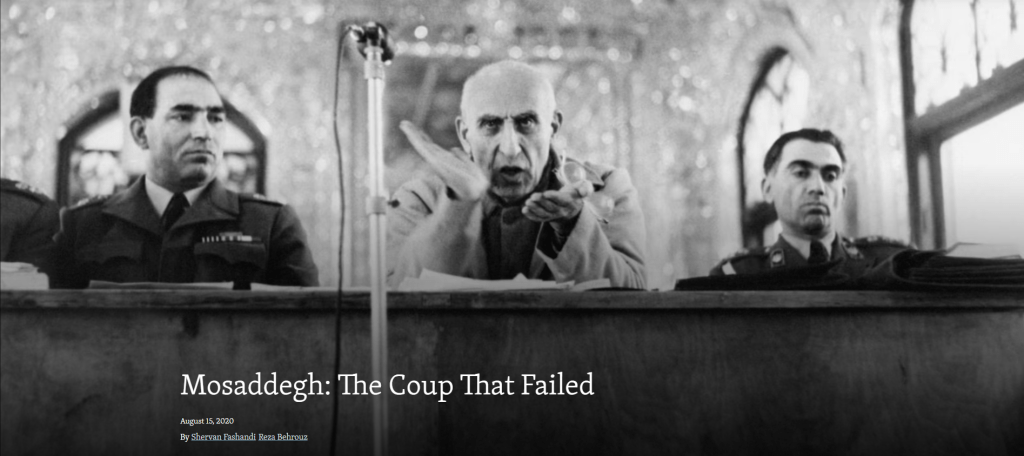
In the early morning hours of August 16, 1953, Colonel Nematollah Nassiri, the commander of the Imperial Guard, delivered a decree hand-signed by Mohammad Reza Shah Pahlavi to the office of the Prime Minister, Mohammad Mosaddegh. It was an order for the Prime Minister’s dismissal. Hours earlier, Nassiri had handed over another signed order from the Shah to Major General Fazlollah Zahedi, according to which Zahedi was appointed Prime Minister. Fearing the forces loyal to Mosaddegh, Zahedi had been hiding in a safehouse.
Mosaddegh did not accept Nassiri in person and instead, ordered Colonel Momtaz, who was part of the Prime Minister’s Office’s Security Guard, to take the order from Nassiri and bring it to him. He then read the letter, didn’t utter a word, put it in the drawer of his desk, and wrote on a piece of paper, “I received Your Majesty’s correspondence at one o’clock in the morning on August 16, 1953. Dr. Mohammad Mosaddegh.”
He handed the paper over to Momtaz to give back to Nassiri. He then calmly ordered the arrest of Nassiri, who was sitting in the other room drinking tea (Houchang Nahavandi 2013).
The Shah with foresight had ordered the dismissal of Mosaddegh and the appointment of Zahedi from his Kelardasht villa. Nassiri was tasked with delivering the order in-person to the Prime Minister in Tehran. At around 4 in the morning, the Imperial Guard reported to the Shah that the mission assigned to Colonel Nassiri had been unsuccessful.
The Shah immediately awoke Empress Soraya and informed her that they had to depart. Kelardasht did not have an airport. Only a flat empty lot was available for landing and takeoff of small aircrafts. The Shah and the Empress boarded a small plane with Major Khatam (Royal Pilot and Future General) and flew to Ramsar.
At around 6 am, they flew from Ramsar to Baghdad on Shah’s dual engine aircraft. In Baghdad, King Faisal received him with reverence. The Shah stayed in Iraq for only one day, and after a brief pilgrimage to Imam Hussein’s shrine in Karbala, he flew to Rome (quoted in the previous reference).
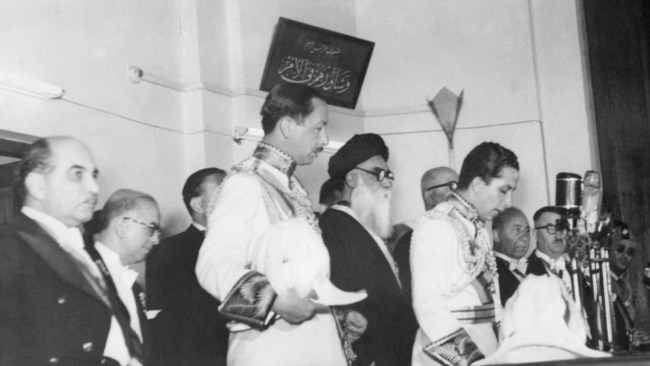
Overcast Conditions
The Shah had never imagined a day in which he would be forced to order the removal of his Prime Minister in the dead of the night and be stripped of safety and security in his own country.
In history, the origin of no event is simplistic and conspicuous because every starting point has its own antecedent. In the first 12 years of his reign, the young Shah, who was educated in Europe and had a Swiss upbringing, did not rule as an absolute ruler by any means and the constitutional monarchy worked by and large. Some may argue that somewhat similar to European kings, at the time the Shah viewed himself as merely a symbol of national unity and guardianship and tasked with safeguarding the proper implementation of the constitution. Yet, maintaining such a delicate balance was not that straightforward, as Iran was not Europe.
His reign began with the Allied occupation of Iran at the height of World War II. With the help of savvy statesmen like Mohammad Ali Foroughi, the young Shah secured an official commitment from the occupying Allies to leave Iran within 6 months after the end of war. This was not so hard to do since for the West, this was a tactical move to force the Soviets out of northern Iran. The United States and Great Britain fulfilled their commitments, but the Soviet Union had no intention of leaving Iran so easily. In Tehran and throughout Iran, communists formed the Tudeh Party, which did not hide its admiration for the “Great Leader” and Comrade, Joseph Stalin. The Tudeh Party’s branches were especially active in Kurdistan and Azerbaijan provinces, which at the time were occupied by the Red Army. Indeed, party members formally convened under Vladimir Lenin and Stalin’s wall portraits. They declared Iran a “multinational” state, and launched campaigns and provocations to free the Iranian “nations” from “Tehran’s tyranny.”
In Azerbaijan, the Azerbaijan Democratic Party, founded by Ja’far Pishevari, declared autonomy and effectively disarmed and occupied the military barracks and forts of the Imperial Iranian Army. In a very small section of Kurdistan, Qazi Mohammad declared the “Republic of Mahabad.” Eventually, Prime Minister Ahmad Qavam (Qavam al-Saltaneh) used clever diplomacy and took advantage of the growing rift between the Soviet Union and the United States to checkmate Stalin. The Red Army subsequently withdrew from Iran in 1946 and in due course, the separatist pandemonium subsided (Jahanshahlou, 2006). In 1949, a member of the Tudeh Party made an assassination attempt against the Shah. Five shots were fired at Iran’s monarch, two of which hit him: one in the face and the other in the back. He miraculously survived and recovered quickly (Mohammad Reza Shah, Mission for my Country, 1961).
The Rain Before the Storm
Another crisis was brewing; this time over petroleum. In 1949, Iran’s then Minister of Finance, Abbas Gholi Golshaeian, signed a draft adjunct contract with the Anglo-Iranian Oil Company (formerly Anglo-Persian Oil Company), which gave some concessions to Iran and increased Iran’s share of the oil. However, some Iranian parliamentarians did not consider it sufficient, and the agreement was not going to be official unless ratified by Iran’s Parliament.
In 1950, General Haj Ali Razmara was elected Prime Minister and charged with sorting out the oil industry and the agreement that was in a standstill. Razmara’s belief was that when Iran lacked the most rudimentary technical and managerial expertise to explore, extract, refine, and export petroleum, nationalizing the oil industry was little more than an empty slogan.
Mosaddegh deeply resented Razmara. As a member of the Parliament, he once threatened Razmara’s life in an angry outburst amidst an official parliamentary session: “God is witness, even if we are killed, even if we are shredded into threads, we shall not submit to the rule of such a person (Razmara). We shall shed blood and we shall spill blood. If you (Razmara) are a soldier, I am more militant. I will kill you right here.” Razamara was taken aback by Mosaddegh’s threat and pointed out to him that despite his vast wealth and influence as a Qajar prince, he had done very little to help the poor in Iran.
Only a few months after this confrontation, Razmara was assassinated. On March 7, 1951, Khalil Tahmassebi who was a member of the Devotees of Islam – an Islamist terrorist faction founded by a theology student named Navvab Safavi – shot and killed Prime Minister Razmara with 3 bullets at the Shah Mosque in Tehran. By this time, relations between Mosaddegh’s National Front and the Devotees had warmed up. At a private meeting with Safavi held shortly before Razmara’s assassination, most members of the National Front agreed on behalf of Mosaddegh that any political decision made in that congregation would be unconditionally binding (Memoir of Ezzatollah Sahabi 2009).
After Razmara’s assassination, Seyyed Hossein Fatemi, Mosaddegh’s associate, confidant, and Foreign Minister wrote an editorial in Bakhtar-e Emrooz newspaper in praise of the slaying. He boasted that “selfless militant youth” were willing to “remove the stains of disgrace,” even at the cost of their own blood.
The Thunders
Shortly after Razmara’s assassination, Mosaddegh became Prime Minister. Initially, he enjoyed the majority’s support in the Parliament. One of the first pieces of legislation that Mosaddeghand his allies in the Parliament passed was to officially pardon Tahmassebi — who had been arrested at the scene of Razmara’s murder — and facilitate his release from custody. The legislation contended Razamara had committed treason against the nation and hence his elimination was justified. It further obliged the government to financially provide for Tahmassebi’s “comfort and livelihood” for the rest of his life.
Subsequently, Tahmasebi was released from prison, recognized as a national hero, and received a steady stipend from the Mossadegh administration. The Ettela’at newspaper reported on Sunday, October 27, 1952 that “Mr. Tahmassebi has met with the Prime Minister, Dr. Mohammad Mosaddegh.”
Although there is no evidence of Mossadegh’s personal involvement in ordering the assassination of Razamara, the actions of his political block in condoning the killing made him politically responsible. However, this did not stop him from pursuing his agenda.
He was hardly content with nationalizing Iran’s oil industry alone, an endeavor that was looked upon favorably by the Shah himself. Mosaddegh had more ambitious and controversial goals in mind. With the passage of the act to take over the Abadan Refinery and other assets of the Anglo-Iranian Oil Company, Mosaddegh sought to expel all British engineers, managers and technicians from Iran. This action effectively shut down Iran’s oil industry on the one hand, and at Britain’s instigation, led to international sanctions on Iran on the other. Furthermore, all of Iran’s shares of the Anglo-Iranian Oil Company outside the country were lost.
Hague’s International court meets on Persian oil dispute
Mosaddegh would not consent to any agreement or overture meant to arbitrate between Iran and the British. He even rejected a proposal by the United States to a 50/50 share of the profits between the Iranian government and the Anglo-Iranian Oil Company. Mosaddegh feared that accepting any agreement with the West would be viewed by his comrades as submission to Western colonialism. Given his rigid posture and being left with little options, Mosaddegh’s government acquiesced to sell oil to China’s communist government at a fraction of the market value. A major obstacle, however, was transporting the petroleum to China. China did not have oil tankers; most of the world’s tankers at the time belonged to Britain. Other countries that owned tankers were reluctant to transport Iranian oil fearing secondary sanctions and the possibility of upsetting their partnership with Britain.
Due to sanctions and the closure of the oil industry, Iran’s economy suffered a deep recession and the value of Iran’s national currency fell by a third. To resolve the crisis, Mosaddegh’s government began issuing national bonds. However, when the sale of those bonds proved inadequate, he illegally and without collateral began printing money, bypassing the Parliament’s consent and without consultation with National Bank’s economists. As a result, the economy fell from recession to inflationary recession.
The already-dire situation escalated to a point at which Mosaddegh was in war with all the branches of the constitutionalist system. Concurrent with his role as the Prime Minister, he took over the Ministry of War to expand his influence over the military. He suspended the highest judicial authority in Iran, the Supreme Court, and dismissed high-ranking judges. He placed so much pressure on the Shah until he obtained the Shah’s consent to dissolve the Senate. Although early in his term as Prime Minister, he had made a steadfast commitment to freedom of press – even when he was the target of criticism and insults – Mosaddegh later requested and was given special authority by the Parliament to penalize newspapers. Even more egregious, Mosaddegh organized a battalion of thugs who were occasionally dispatched to newspaper bureaus to vandalize the property and intimidate employees (Memoirs of Shaban Jafari, 2002).
The Gathering Storm
Eventually, internal and external crises converged to a juncture at which the same Parliament that had elected him Prime Minister began to vehemently oppose him. He also lost the support of his longtime ally, Ayatollah Abol-Qassem Kashani, a hardline cleric with anti-imperialist and anti-colonial leanings. Mosaddegh’s relationship with members of Parliament became so strained that he often avoided attending the National Assembly and communicating with lawmakers (Ali Mirfetros 2008).
Mosaddegh predicted that the National Assembly would soon dismiss him and decided to preemptively dissolve the Parliament. According to the constitution of Iran at the time, the Prime Minister did not have the authority to dissolve the Parliament, from which he received his legitimacy. Moreover, in the history of Iran after the Constitutional Revolution of 1906, there was never an instance wherein a Prime Minister would dissolve the Parliament.
Many of his advisors and staunch supporters warned him about this decision. Parliament Speaker Abdollah Moazami, who was close to Mossadegh, strongly opposed the dissolution of the Parliament and urged Mosaddegh to resolve his differences with lawmakers through mediation.
Mosaddegh undermined an important tradition in the constitutional system of Iran according to which the Shah had the authority to dismiss and replace the Prime Minister during an interregnum, when the Parliament did not exist. Ahmad Shah Qajar had previously used this privilege in extended periods of time when there was no Parliament due to war or other crises. During World War I, Ahmad Shah dismissed and installed a dozen Prime Ministers in the course of an interregnum lasting 6 years, from 1915 to 1921.
Many more friends and supporters of Mosaddegh warned him against his decision to dissolve the Parliament. Another member of the Parliament and ardent ally of Mosaddegh, Karim Sanjabi, visited him at his residence and cautioned him that if he dissolves the Parliament, he may face dismissal by the Shah or potentially a coup d’état. According to Sanjabi, Mosaddegh told him that the Shah lacked the courage to dismiss him and in case of a coup, he had the people’s unconditional support. He then angrily expelled a stunned Sanjabi from his house (Homayoun Katouzian, BBC Persian, 2014).
Overall, Mosaddegh was aware of the Shah’s legal authority to dismiss him during an interregnum, but largely relied on the belief that he was a national hero and hence the Shah did not dare to dismiss him.
In any case, Mosaddegh had made his decision and in early August 1953, held a referendum for dissolution of the Parliament. Neither the Parliament nor the Shah had approved this referendum. Moreover, the method for conducting the vote was outlandish. Not only were the ballot boxes for “yay” and “nay” votes separate, but even the precincts for each vote were different. In other words, to vote “yay,” one had to go to one location in the city; and to vote “nay,” he was to travel to another. Subsequently, the anonymity of the voting process, which is the foundation of democracy, was completely violated.
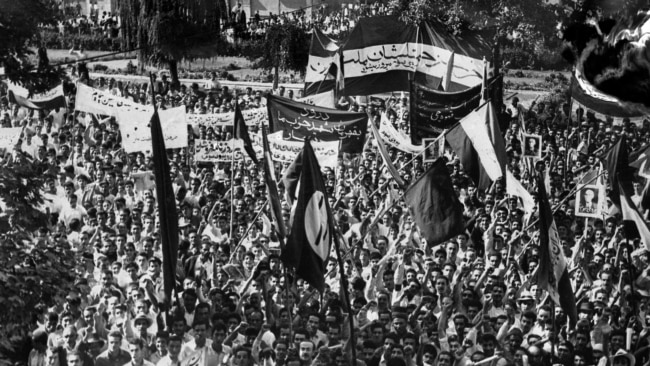
The Storm
Let us go back to the beginning of the article. After Mosaddegh arrested the messenger, Colonel Nassiri, he gave the necessary orders and instructions to Army Chief of Staff Brigadier General Riahi who was appointed by and loyal to him. He then went to bed. He woke up around 6 in the morning and summoned the director of the national radio, telling him that he had been removed from the post of Prime Minister and wanted to convey his last message to the people before departure.
A short message was recorded in which Mosaddegh informed the Iranian people that he had been dismissed by the Shah and asked them to take their fates into their own hands. Yet, the message was never broadcast. Meanwhile, Fatemi and several other loyal supporters of “The Leader” arrived in haste and inquired about the incident. Fatemi who was the most zealous of the bunch protested strongly against Mosaddegh’s decision to resign and told him he is the legitimate Prime Minister and no one can dismiss him. And so began Mosaddegh’s rule as de facto Prime Minister and ruler of Iran without the approval of the Shah or the Parliament.
It was there and then that a decision was made to conceal the Shah’s order of dismissal from the public, as well as from Mosaddegh’s cabinet ministers. Instead, they threw in a red herring. At approximately 7 am, a government statement was broadcast on national radio announcing that the previous night, a coup orchestrated in the Shah’s absence by some members of the Imperial Guard had been thwarted.
From that day on, Mosaddegh’s supporters split into two factions: the more radical group, led by Fatemi, officially declared the Shah a traitor and demanded his official removal, the end of the constitution, and establishment of a republic. Fatemi took part in several large demonstrations with the Tudeh Party between August 16 and 18, believing it was imperative that the National Front and Mossadegh unite with the Tudeh Party to establish a republic. During those demonstrations, large statues of Reza Shah and the young Shah, which had been erected in Tehran’s major squares, were pulled down. Fatemi even suggested Mosaddegh arm members of the Tudeh Party to maximize manpower and use lethal force if necessary. As Mosaddegh’s Foreign Minister at the time, Fatemi also instructed the Iranian Embassies in Iraq and Italy not to let any of the officials greet the Shah and to inform the two host countries that he should be treated as a deposed king. By order of Fatemi, photos of the Shah were taken from all government offices and ministries throughout Iran.
A more moderate faction of Mosaddegh’s allies opposed the republic and sought to form a royal council to replace the Shah. They feared the prospect of Iran’s annexation by the Soviet Union with the help of the Tudeh Party, and believed that proclamation of a republic was tantamount to the Tudeh Party taking over the country’s rule (Houchang Nahavandi, 2013). Mosaddegh himself was in this category. But with respect to exercise of power, the more extremist group led by Fatemi was in charge, as Mosaddegh himself was ill and resting at home.
In those tumultuous days when the news of the Shah’s sudden departure from Iran was spreading like wildfire, a climate of uncertainty was pervasive. In the afternoon of August 18, the inflammatory atmosphere reached its peak. Two proceedings, however, turned the course of events. One, General Zahedi succeeded in making thousands of copies of the Shah’s hand-written and signed order which appointed him as the new Prime Minister and distributed them to the public. Two, a group of bazaar elders sent a message to Grand Ayatollah Hussein Boroujerdi, who was at the time the most prominent Shia authority (Marja’) and rarely interfered in political matters. Based on this communiqué, Boroujerdi recognized that with the way events were unfolding, the country was in the imminent danger of falling into the hands of the Tudeh Party.
He therefore backed the constitutional monarchy, endorsed Zahedi as the legitimate Prime Minister, and allowed bazaar merchants to close their shops and join the protests against Mosaddegh. In addition, a group gathered around the residences of two influential Tehran clerics – Ayatollahs Kashani and Mohammad Behbahani – and from there, marched to seize government offices that were held by Mosaddegh loyalists. Interestingly, Behbahani and Kashani who were bitter rivals had put aside their antagonism and united over their mutual fear of the Tudeh Party taking over the country.
It was not just the traditional bazaar elites and the clergy who were concerned that in absence of the Shah, Mosaddegh may lose control or capitulate to the communists. At the peak of the Cold War era, the West led by the United States could not stay neutral for too long. At the initial stages of the oil crisis in Iran, the US had resisted Britain’s pleas to openly oppose Mosaddegh. However, as the crisis became more volatile and Mosaddegh’s popularity within certain factions of the Iranian society declined,the US administration under the Republican President Eisenhower joined Britain’s Winston Churchill in advocating for Mosaddegh’s dismissal or overthrow. Afterall, with Iran’s massive oil resources and the long borders with the Soviet Union, the US could not risk a destabilized or communist-controlled Iran.
For months, American and British envoys tried persuading the Shah to dismiss Prime Minister Mosaddegh. However, as long as the Parliament had not been dissolved by Mosaddegh, the Shah resisted their requests. The envoys also lobbied with an increasing number of dissatisfied and demoralized Iranian army officers and Generals, giving them assurance that as long as they stay united in opposing Mosaddegh and backing the Shah, they could count on the support of the Western allies. There is also some evidence that the Western envoys contacted several influential clergymen and bazaar elders to assure them of the West’s support for the Shah in opposing Mosaddegh. Shortly after Mosaddegh dissolved the Parliament, the Shah seized the opportunity to officially dismiss Mosaddegh and appoint General Zahedi as the new Prime Minister. The Shah took the risk as he believed that he had the support of some bureaucrats, the bazaar elders, many influential clergymen, the army, and the Western allies behind him.
The Shah’s gamble did pay off eventually, albeit with a few days of delay. Various wings of the armed forces that had encamped in or around Tehran refused to recognize and obey Mosaddegh. When the Parliament was dissolved and the Shah was absent, they saw no reason to follow the orders of a deposed Prime Minister. Pledging allegiance to Mosaddegh also meant confronting fellow servicemen who remained loyal to the Shah and his new Prime Minister, General Zahedi. This would have led to a civil war and widespread bloodshed in Tehran.
The only wing of the armed forces that took practical steps in support of Mossadegh was the Prime Minister’s Residence Guard. A large crowd of Tehran residents gathered around Mosaddegh’s house to seize the main base of the government. The Guard opened fire on the crowd and resisted for several hours. Nearly 40 people, mostly civilians, were killed by Mosaddegh’s Guard (Same as previous reference).
Finally, at around 4:30 pm on August 19, Brigadier General Nosratollah Fooladvand went to Mosaddegh’s residence to advise him that any further resistance was futile and would only lead to more bloodshed. He warned Mosaddegh that resisting surrender would further anger the protesters who may eventually kill him. He called on the deposed Prime Minister to issue a statement announcing the end of his defiance. Mosaddegh, who was bedridden and ill, finally gave in. As a sign of surrender, a piece of Mosaddegh’s white bed sheet was hung above the entrance of his home. He then surreptitiously escaped from the backdoor.
And so, the coup that had begun on August 16 was thwarted on August 19. Mosaddegh’s supporters later called the three-day saga, “the American-backed coup d’état of August 19.”
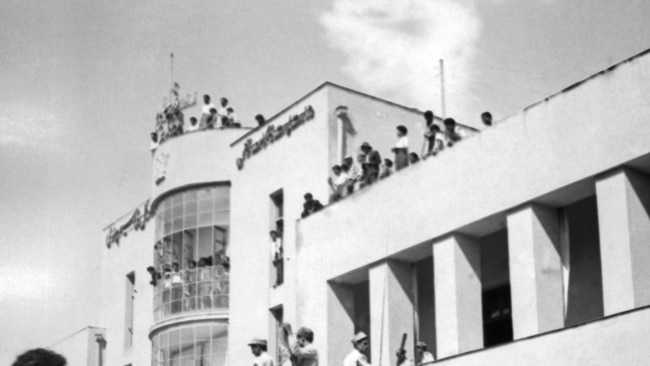
The Aftermath
Mosaddegh went into hiding. After a few days, the government of General Zahedi made an official plea to Mosaddegh to turn himself in to proper authorities. Zahedi further promised Mosaddegh that his safety was guaranteed and that he would receive the respect deserving of a former Prime Minister. Mosaddegh sent a reply informing Zahedi that he was prepared to surrender. Zahedi warned military officers and staff that anyone who made the slightest unmannerly gesture towards Mosaddegh would be prosecuted by military court and may face the firing squad. A stern military man, Zahedi was not one whose orders were taken lightly by his subordinates. When Mosaddegh surrendered, the soldiers greeted him with military salute and he shook their hands. Zahedi likewise greeted him with the utmost respect (Same as previous reference).
At his trial, Mosaddegh’s infractions were limited to the three days in which he had defied the Shah’s order of dismissal. According to the law, only the Supreme Court could try the Prime Minister and cabinet ministers for breach of duty; the military court lacked such authority. But the military court argued that from August 16 to 19, Mosaddegh was already dismissed and no longer enjoyed the legal privileges of a Prime Minister. At the end, Mosaddegh was sentenced to three years in a private prison in a military barrack, after which he was exiled to his home village of Ahmadabad – 100 kilometers west of Tehran, until his death in 1967.
Deep within, Mosaddegh was a nationalist, but surrounded himself with people who were too close for comfort to the Tudeh Party and by association, the Soviet Union. The ambiguous notion that Mosaddegh was “democratically-elected” stems from the referendum he held for dissolution of the Parliament, in which 99.94% voted in favor. Otherwise, under the parliamentary constitutional monarchy of Iran at the time, no Prime Minister was ever elected. They were all appointed or recommended by the Shah and approved by the Parliament. Abbas Milani argues that Mosaddegh’s referendum had no legal basis and because it had breached the fundamental requirement of a secret ballot, its legitimacy has always been questioned. For that reason, the actual coup d’état was conceivably plotted and executed by Mosaddegh against the Shah, not the other way around. In essence, those three fateful days constituted a coup that failed.
The opinions expressed by the authors do not necessarily reflect the views of Radio Farda
- Shervan FashandiDr. Shervan Fashandi is a political analyst and senior financial consultant based in New York. He serves as a board member of Iranian Americans for Liberty, a political advocacy and research group focused on international policy towards Iran. Dr. Fashandi is a member of the Constitutionalist Party of Iran (Liberal Democrat). FOLLOW Subscribe
- Reza BehrouzDr. Reza Behrouz is an Iranian-American physician and medical researcher in Texas. He serves on the advisory board of Iranian Americans for Liberty and is a member of Constitutionalist Party of Iran (Liberal Democrat). FOLLOW Subscribe
Decades Of Deception About Mosaddegh
Cinema Rex & The Satrapi Myth
-The Myth of Mossadegh: Power, Privilege, and Political Betrayal
https://iransofaraway.substack.com/p/the-myth-of-mossadegh-power-privilege
Jul 09, 2025
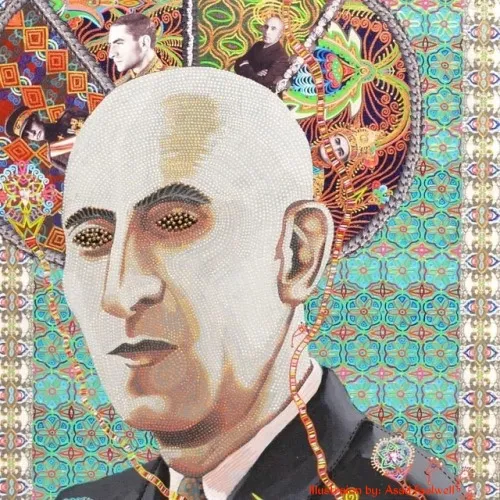
For decades, the name Mohammad Mossadegh has been mythologized in the Western press and among some Iranian intellectual circles as the avatar of Iranian democracy—a lone, aged warrior who stood up to the British Empire and was unjustly toppled by a CIA-backed coup in 1953. But scratch beneath the surface of this narrative, and a far more complex, less romantic, and often damning picture of Mossadegh emerges: a privileged Qajar prince, a feudal aristocrat with close clerical ties, who betrayed allies, crushed dissent, and undermined Iran’s constitutional system for his own ambitions.
Mossadegh: The Aristocrat Masquerading as a Democrat
Far from being a man of the people, Mohammad Mossadegh Ol’Saltaneh (Ol’saltaneh meaning “of the monarch,” a prevalent Qajar princely title) was born into the ruling Qajar dynasty—one of the so-called “One Thousand Families” that dominated Iran for centuries. A feudal landlord and prince, Mossadegh enjoyed the fruits of privilege while claiming to represent popular interests. Contrary to popular Western narrative of having been “democratically elected by the people,” his appointment to prime minister in 1951 was through parliamentary maneuvering and royal approval by the Shah.
According to archival records and the unimpeachable work of Ray Takeyh, Mossadegh “represented not a democratic movement but a coalition of feudal landlords, religious conservatives, and small-time merchants” who feared the modernizing tendencies of Reza Shah and his son. In essence, he was the elite pretending to speak for the masses while safeguarding aristocratic and clerical interests.
The National Front: Origins and Opportunism
The political vehicle Mossadegh helped to forge was the Jebhe-ye Melli or National Front—a loose confederation of secular liberals, bazaar merchants, nationalists, clerics, and even some moderate leftists. Founded in 1949 as a coalition to challenge foreign oil domination and advocate for national sovereignty, it quickly devolved into a fragile and unstable alliance riddled with contradictions. While its public rhetoric was one of constitutionalism and nationalism, its inner workings reflected the compromises of its diverse factions—including those with deep hostility to modern reforms.
Mossadegh’s leadership within the National Front was less about coherent ideology than personal magnetism and symbolic capital. He presented himself as a bulwark against both foreign exploitation and royal absolutism but often maneuvered behind the scenes to consolidate power and suppress dissent within the coalition itself. Though initially seen as a unifying figure, his failure to mediate between the secular and theocratic wings of the Front ultimately led to fragmentation. When Ayatollah Kashani and other clerical allies defected, the National Front began to unravel—leaving Mossadegh politically exposed and increasingly authoritarian in his methods.
Betrayals, Backstabbing, and Dowlatshahi
One of Mossadegh’s most consequential betrayals, as clearly explained in Manda Zand Ervin’s book, The Ladies’ Secret Society, was that of his cousin, Mehrangeez Dowlatshahi, a pioneering feminist, lawmaker, and future ambassador. As described in the rich accounts preserved in Iranian women’s archives, Dowlatshahi had secured support from women’s groups across the country for Mossadegh, promising that he would support legislation on women’s rights and enfranchisement. She believed she could help bring women into the political fold under Mossadegh’s leadership.
But Mossadegh turned his back on her and the women’s movement. He not only refused to support universal suffrage but, under pressure from clerics—particularly his close ally Ayatollah Abol-Ghasem Kashani—struck the women’s electoral clause from proposed reforms entirely. He had taken the support of women reformers and handed it to their enemies.
The Puppet of Ayatollah Kashani
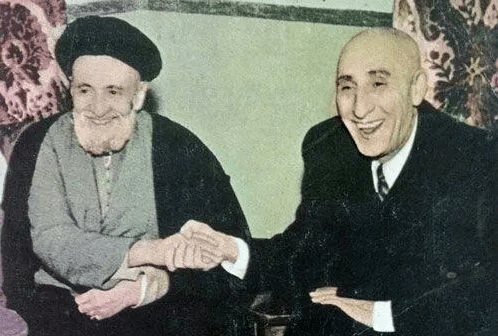
Mossadegh and firebrand Ayatollah Kashani
Mossadegh’s alliance with Ayatollah Kashani was perhaps the most revealing and damaging of all. Kashani—a hardline Shi’a cleric with a violent record of inciting mob violence—was brought into Mossadegh’s inner circle in order to bolster religious legitimacy for the National Front. Kashani’s support ensured that Mossadegh had the street power to intimidate rivals, but it also meant making devastating concessions to theocrats.
The alliance enabled Kashani to become one of the most powerful figures in Iran, setting a dangerous precedent of mixing mosque and state that would pave the way for Khomeinism decades later. Mossadegh was more than complicit—he was instrumental. And when Kashani turned against him, Mossadegh lost his clerical shield and found himself politically isolated.
Anti-Constitutional Behavior: Dissolving the Majlis
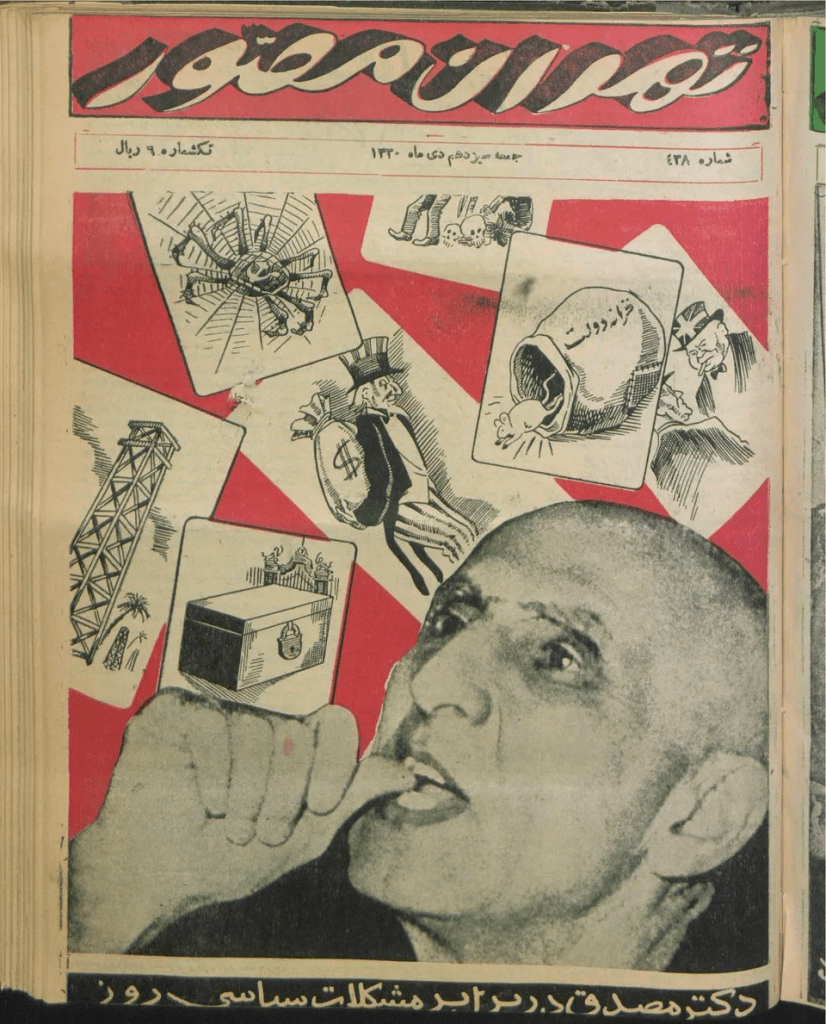
Friday, January 4th, 1952 cover of Tehran Mossavvar Magazine describing Dr. Mossadegh’s reaction in the face of current political problems
Perhaps the most indefensible of Mossadegh’s actions was his decision to dissolve the Majlis (Parliament) and rule by emergency powers. The myth that he upheld constitutionalism collapses in light of this blatant power grab.
He sought and received sweeping authority from a Majlis stacked with supporters, then suspended its operations altogether when faced with dissent. Far from defending democracy, Mossadegh undermined it—relying on street mobs, often controlled by the Tudeh (Communist) Party, and his own emergency decrees. His government began to resemble a populist dictatorship rather than a constitutional republic.
In chapter 15 of her book, Zand Ervin notes, “While Prime Minister Mossadegh defended Iran’s rights and sovereignty at the International Court of Justice… The Soviet Union promoted communism and fomented unrest… Historical records show the British constantly pressured the Shah to fire his Prime Minister, which he refused to do”.
Courting the Communists and Alarm Among the Soviets
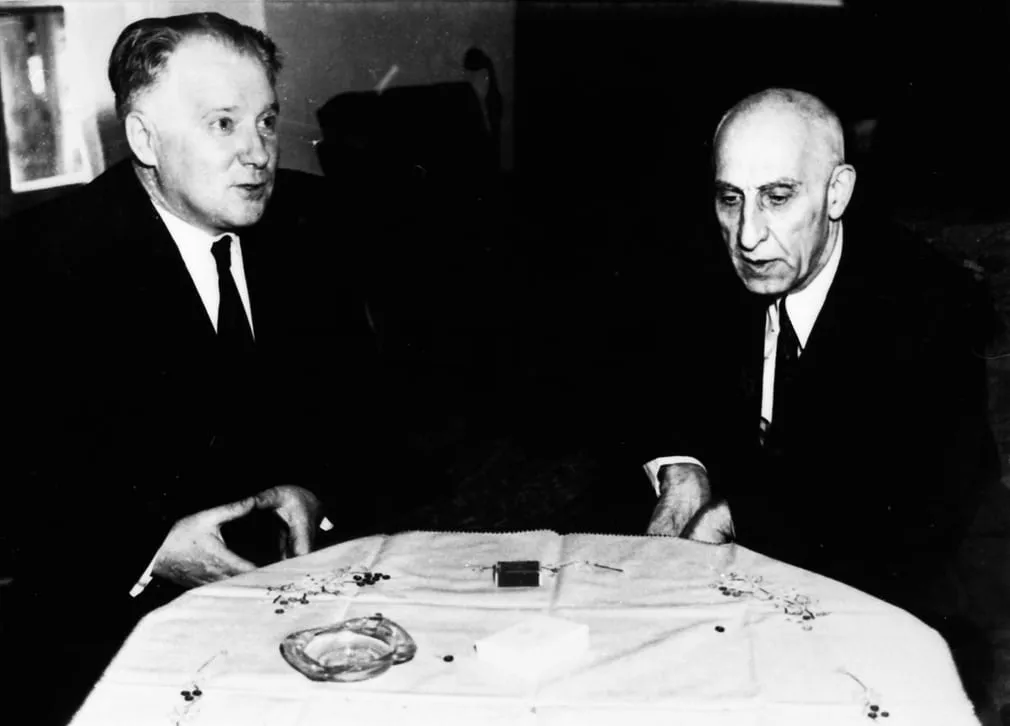
2 August 1953 – The Russian ambassador, Anatoly Lavrentiev, arrived in Tehran on 26 July and met with Iran’s prime minister, Mohammad Mosaddeq, on 28 July and 2 August. Lavrentiev was sent to replace Ivan Sadchikov as ambassador to Iran. Mosaddeq’s last photo before the events of mid-August shows him conferring with the Soviet envoy. Photograph: Dr William Arthur Cram
Despite his aristocratic pedigree and supposed nationalist credentials, Mohammad Mossadegh permitted the Soviet-backed Tudeh Party to thrive under his premiership. The Tudeh—a militant, KGB-aligned communist organization—had a well-documented record of assassinating intellectuals, bombing police stations, and spreading anti-Western propaganda. Rather than confronting them, Mossadegh turned a blind eye, fearing that a crackdown would fracture his fragile coalition, which relied on the uneasy support of clerics, bazaaris, and leftists. Maryam Firouz, the so-called “Red Princess” and Mossadegh’s own cousin, often served as a go-between with the Tudeh leadership, further cementing suspicions of tacit coordination. This permissiveness allowed the communists to embed themselves deeply within Iran’s political fabric, destabilizing the state from within as the Cold War heated up.
Even Moscow grew uneasy. One often-overlooked dimension of the 1953 coup is the alarm it caused within the Soviet diplomatic mission in Tehran. Soviet Ambassador Anatoly Lavrentiev, reportedly disillusioned by Mossadegh’s erratic leadership and chaotic governance, is said—according to a contemporaneous New York Times report—to have attempted suicide in the midst of the crisis. Watching Mossadegh flirt with the Tudeh while failing to stabilize the country, Lavrentiev feared not only a Western-backed coup but the broader collapse of Soviet influence in the region. His despair underscored the wider international consensus: Mossadegh’s tenure was not the enlightened reign of a democratic reformer, but a geopolitical and ideological catastrophe that alienated allies across the Cold War spectrum.
American Support Was with Him—Until It Wasn’t
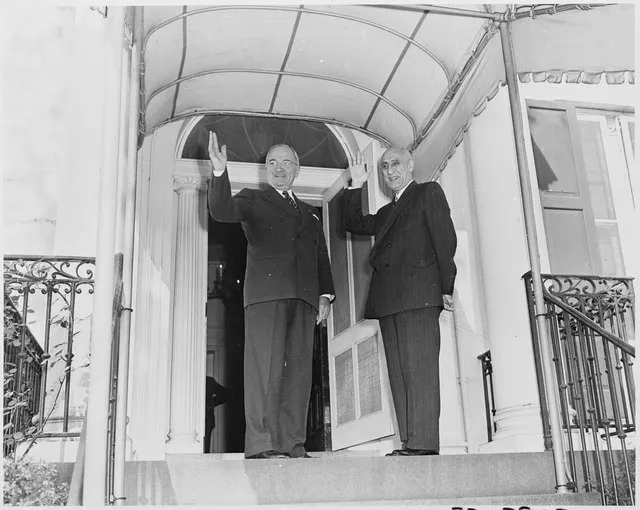
Mosaddegh with US President Truman, at the White House, in 1951
Another shattered myth is the notion that Mossadegh was abandoned by the United States. On the contrary, President Truman warmly welcomed Mossadegh to the U.S., offering him medical care and diplomatic support. Secretary of State Dean Acheson stood by him. It was only after Mossadegh began acting unconstitutionally, ignoring Parliament, and allowing Soviet sympathizers to flourish, that Washington grew concerned.
By 1953, the situation had deteriorated. Mossadegh had burned bridges with the Shah, alienated reformers like Dowlatshahi, infuriated the clergy, and stoked Cold War fears. When the CIA and MI6 finally backed his removal, he had very few friends left.
Ahmadabad: Self-Exile, Not Martyrdom
Today, Mossadegh’s house on his orchard in the town of Ahmadabad
When Mohammad Mossadegh was removed from power in August 1953, the reaction of the Iranian people was not one of widespread mourning or revolt, as so many Western accounts would later imply. The truth was far more nuanced—and damning for the myth.
After the coup on August 15—when Mossadegh forcefully resisted the Shah’s attempt to dismiss him from office—and the successful uprising on August 19 that toppled his government, Mossadegh did not stay and fight. He did not rally the people, call for a constitutional defense, or organize loyalists. Indeed, as observers on the scene remarked, the only people on the street willing to fight for him were the Communist Tudeh militants—not the ideal supporters for a proud former prince! Instead, the once-fiery orator and self-styled champion of Iranian sovereignty retreated to his family estate in Ahmadabad, an orchard near the village of Karaj. There, he lived quietly under house arrest, in comfort and security—not in a jail cell, not in torture, but among trees and servants, sipping tea.
Many Iranians saw this as a fitting end to a man who had postured as a patriot but ultimately failed to stand with the people when it mattered most. For women, intellectuals, modernists, and even many disillusioned clerics, Mossadegh’s fall was greeted with a complex mix of relief, frustration, and quiet vindication. He had betrayed their causes, empowered the wrong forces, and left the country weakened and chaotic.
Mossadegh’s resting place, inside his Ahmadabad house.
Indeed, by the time of his departure, Mossadegh’s support had eroded. He had alienated his former allies like Ayatollah Kashani, betrayed reformers like Mehrangez Dowlatshahi, and driven the country to the brink of economic collapse by refusing compromise during the oil crisis. In the minds of many Iranians—especially the rising middle class, women activists, and even young technocrats—Mossadegh was seen as an exhausted, aristocratic relic clinging to personal pride rather than offering a real vision for Iran’s future.
The Western Myth of Mossadegh & the Cultural Imperialism Behind It
And yet, despite the deep domestic disillusionment with Mohammad Mossadegh—across clerical, reformist, feminist, and technocratic ranks—the West, especially the United States and parts of Britain, have stubbornly sustained a romanticized narrative of him. Mossadegh is endlessly cast as the valiant democrat, the innocent victim of greedy oil barons and CIA intrigue. This tale has persisted for decades, repeated in academia, journalism, and pseudo-intellectual circles, even though declassified CIA documents from 1953 confirm—regardless of later bureaucratic claims—that the August 19 uprising was spontaneous and popular.
But why has this myth endured?
Because it serves multiple Western interests:
- It absolves American guilt with minimal effort.
Reducing the fall of Mossadegh to a “CIA coup” orchestrated by the Dulles brothers and Kermit Roosevelt offers a morally convenient scapegoat. Western historians can wring their hands and say, “We made a mistake,” while avoiding the uncomfortable truth of Iran’s own internal political dysfunctions: Mossadegh’s aristocratic privilege, his reactionary alliances, and his undemocratic behavior. - It promotes a cautionary tale against foreign intervention—while ignoring domestic tyranny.
Mossadegh becomes a case study in “what not to do” in foreign policy circles. But in spinning this parable, Western progressives and isolationists gloss over the real enemies of democracy in Iran: the entrenched clerical establishment, the Stalinist Tudeh Party, and the old-money aristocracy that Mossadegh embodied. - It flatters liberal illusions of “good revolutions.”
The myth upholds the fantasy that Iran’s modern tragedy began with a CIA plot, and that had the U.S. not intervened, a secular, feminist, democratic Iran would have emerged. This is historical delusion. Mossadegh never championed women’s rights, pandered to Ayatollah Kashani, and shut down Parliament. He paved the ideological road for Khomeinism—not for democracy.
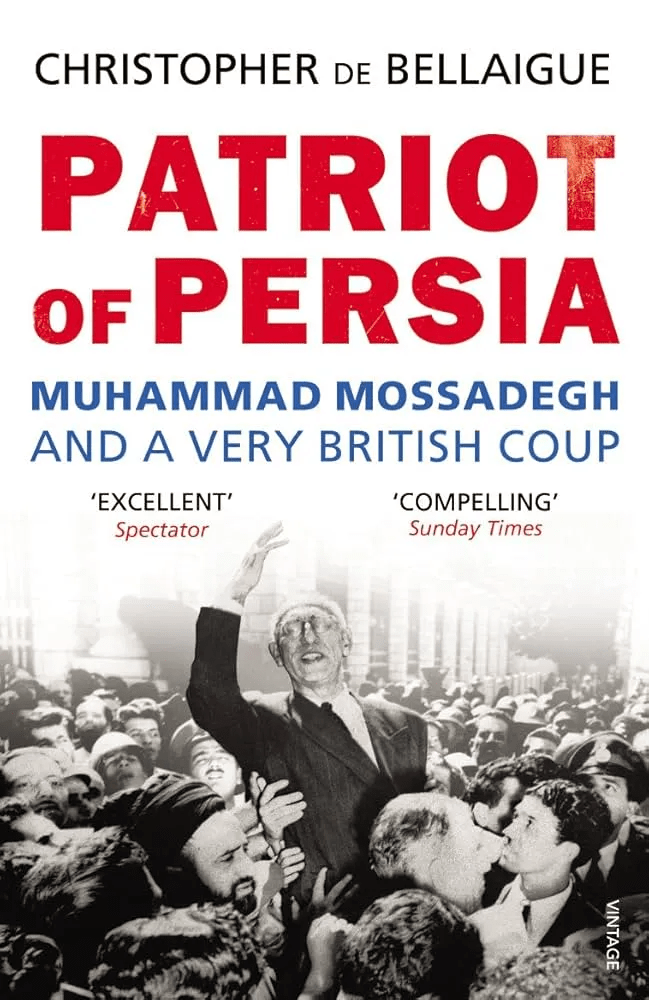
A key enabler of this revisionist fantasy is British author Christopher de Bellaigue. In his sentimental book Patriot of Persia, de Bellaigue offers a polished but deeply misleading portrait of Mossadegh as a tragic, noble liberal—a “man ahead of his time.” In truth, what de Bellaigue peddles is historical revisionism dressed in florid prose and coated in colonial nostalgia. His narrative is not grounded in critical historiography but in emotional convenience, crafted for a Western audience eager to believe that imperialist guilt is the root of all Middle Eastern failure.
This isn’t scholarship—it’s ideology. It’s an act of narrative laundering that flattens Iranian history into a cartoonish East-versus-West morality play. It ignores Mossadegh’s betrayal of women reformers, his alliances with regressive clerics, his authoritarian tendencies, and his willingness to risk national collapse rather than compromise. De Bellaigue and others like him participate in cultural imperialism by imposing a simplified Western redemption arc onto a nation with its own complex, indigenous political contradictions.
This myth of Mossadegh not only distorts the historical record; it undermines the genuine reformers, feminists, and modernists who tried to build a better Iran from within. It paints aristocratic feudalism and clerical appeasement as noble resistance—while condemning real secular modernization as imperialism.
It is time we call this for what it is: revisionist propaganda in service of Western moral vanity.
Who Benefits from the Myth?
This narrative serves both left-wing and isolationist factions in the West who want to blame U.S. interventionism for all global problems. It is useful to the Iran lobby in the U.S., including groups like NIAC, which push for appeasement policies by casting the Islamic Republic as an inevitable reaction to American “aggression.”
It also helps the Islamic Republic itself. By presenting 1953 as the “original sin” of U.S.-Iran relations, the regime shifts blame for its theocracy, repression, and brutality onto foreign forces rather than its own ideologically totalitarian roots. Khamenei regularly invokes 1953 not because he admires Mossadegh—but because the myth deflects from 1979.
The Damage to Iranian Modern History
The greatest victim of the Mossadegh myth has been Iranian historical clarity. The myth has:
- Obscured the role of women like Dowlatshahi, Sadigheh Dolatabadi, and Senator Mehrangez Manuchehrian who fought for real democratic change while Mossadegh pandered to the clergy.
- Ignored the agency of Iranians themselves, as though they had no internal conflicts, factions, or ideology—just helpless pawns of the CIA.
- Sanitized clerical power, forgetting how figures like Ayatollah Kashani used Mossadegh as a puppet and then helped create the blueprint for the Islamic Republic.
- Erased the Shah’s modernizing policies, which after 1953 led to women’s suffrage, land reform, industrialization, and massive increases in literacy and infrastructure.
Most dangerously, the myth de-legitimizes secular modernization by making it synonymous with imperialism, while painting clerical alliances and autocratic rule as somehow more “authentic.”
Iran’s Real Struggle is With Itself
Mossadegh is not Iran’s George Washington. He is Iran’s Don Quixote—tilting at windmills while the country around him burned. A privileged Qajar prince who failed to deliver democracy, who empowered its enemies, and who retreated when things got difficult.
If Iran is ever to reclaim its modern, sovereign, democratic identity, it must bury the false idol of Mossadegh and instead honor the true modernizers—women activists, secular reformers, and those who paid with their lives to build a future free from both clerical tyranny and foreign manipulation.
The truth is not romantic. But it is necessary.
http://large.stanford.edu/publications/coal/references/risen/timeline/coup/
Key Events in the 1953 Coup
| EVENTS | FROM THE ARCHIVES | ||||
| 1949 | |||||
| 1949 � World War II ends. Iran becomes a target of both pro-Western and pro-Soviet forces with regard to the country’s vast oil reserves. | Feb. 5, 1949 Ruler of Iran Is Wounded Slightly by Two Bullets Fired by Assassin | ||||
| 1950 | |||||
| June 1950 � General Ali Razmara becomes prime minister of Iran.� Support grows for the nationalization of Iran’s oil industry. | |||||
| 1951 | |||||
| March 1951 � Prime Minister Ali Razmara is assassinated.� Nationalist Mohammed Mossadegh becomes prime minister and angers the British by wresting control of the oil industry. | March 25 World Eyes Iran on Oil Seizure BidApril 28 Premier Quits as Iran Speeds Nationalization of Oil Fields May 20 British Warn Iran of Serious Result if She Seizes OilSept. 30 Britain-Iran Talk in U.N. Is Sought; Mossadegh Coming | ||||
| 1952 | |||||
| July 17, 1952 � Due to growing friction between the shah and Mossadegh over oil, Mossadegh resigns. Ahmed Ghavam takes over as prime minister. Three days of rioting ensue.July 22, 1952 � Under pressure, the Shah is forced to reappoint Mossadegh. | July 18 Mossadegh Out as Premier; Ghavam to Take Iran Helm New Iranian Chief Political VeteranJuly 21 Hundreds Seized in Iranian Rioting Over Ghavam RuleJuly 23 Mossadegh Is Back as Premier of Iran; Order Is Restored World Court Bars Ruling on Iran OilAug. 11 Iranian Deputies Rebuff Mossadegh Over Martial Law U.S. and Britain Confronted by Dilemma on Help to Iran | ||||
| 1953 | |||||
| March 1953 � The C.I.A. begins drafting a plan to bring to power, through covert action, a government in Iran that would be preferred by the United States. April 16, 1953 � A C.I.A. study entitled “Factors Involved in the Overthrow of Mossadegh” is completed. The study concludes that a coup in Iran is possible. May 13, 1953 � C.I.A. and British intelligence officers meet in Nicosia, Cyprus, to draft plans for the coup. Meanwhile, the C.I.A.’s Tehran station is granted approval to launch a “grey propaganda” campaign to discredit the Mossadegh government. June 10, 1953 � C.I.A. officers meet in Beirut for a final review of the coup plan. June 19, 1953 � The final operation plan for the coup, agreed upon by both the C.I.A. and British intelligence, is submitted to the U.S. State Department and the Foreign Office in London. July 1, 1953 � Britain’s prime minister gives final approval to the operational plan for the coup. July 11, 1953 � President Eisenhower gives final approval to the operational plan for the coup. July 23, 1953 � A British Foreign Office memorandum is presented to an Under Secretary of State, reassuring the U.S. that the British would be flexible on the issue of controlling oil in Iran. July 25, 1953 � Under pressure from the C.I.A., Princess Ashraf, the Shah’s sister, flies to Tehran from France in order to convince the Shah to sign the royal decrees that would dismiss Mossadegh. “…should the Shah fail to go along with the U.S. representative or fail to produce the [legal] documents for General Zahedi, Zahedi would be informed that the United States would be ready to go ahead without the Shah’s active cooperation…” — C.I.A. Document, Appendix B, page 10July 29, 1953 � The C.I.A. intensifies a propaganda effort, which included planting stories in major American newspapers, to weaken the Mossadegh government. Aug. 1, 1953 � In a meeting with Gen. H. Norman Schwartzkopf, the Shah refuses to sign the C.I.A.-written royal decrees firing Mossadegh and naming Gen. Zahedi as the new prime minister of Iran. Aug. 4, 1953 � Mossadegh, suspecting that British and American governments were plotting against him, holds a referendum calling for the Iranian parliament to be dissolved. Aug. 13, 1953 � The shah signs a royal decrees dismissing Mossadegh. Word of the shah’s support for the coup spreads quickly in Iran. Aug. 15, 1953 � The coup begins, but falters and then fails because Mossadegh received advanced warning of the plans. Zahedi goes into hiding. Aug. 16, 1953 � The shah flees to Baghdad. Aug. 17, 1953 � Gen. Zahedi announces that he is the prime minister. To support this claim, C.I.A. agents disseminate a large quantity of photographs of the royal decrees dismissing Mossadegh and appointing Zahedi. The shah announces that he indeed signed the decrees. Aug. 18, 1953 � The C.I.A., discouraged by the failed coup, sends a message to Tehran ordering the operations against Mossadegh to be halted. Aug. 19, 1953 � Several Tehran newspapers publish the Shah’s decrees. As a result, supporters of the Shah begin gathering in the streets, and another coup begins. Gen. Zahedi comes out of hiding to lead the movement. By the end of the day, the country is in the hands of Zahedi and members of the Mossadegh government are either in hiding or incarcerated. “From the fact that certain actions provided for in the military plan failed to materialize … it was obvious that something had gone wrong.” — C.I.A. Document, Part VII, page 44 | “The Director, on April 4, 1953, approved a budget of $1,000,000 which could be be used by the Tehran Station in any way that would bring about the fall of Mossadegh.” — C.I.A. Document, Part I, page 3 “The purpose will be to create, extend, and enhance public hostility and distrust and fear of Mossadegh and his government.” — C.I.A. Document, Appendix B, page 15 Aug. 17 Shah Flees Iran After Move to Dismiss Mossadegh Fails Aug. 18 Statues of Shahs Torn Down in Iran “Just what incident or what reaction … caused the pro-Zahedi officers to falter in their duties is not clearly known.” — C.I.A. Document, Part VI, page 42 Aug. 20 Royalists Oust Mossadegh; 300 Die in Iranian Fighting — Army Seizes Helm Royalists Oust Mossadegh; Shah Is Flying Home Today Moscow Says U.S. Aided Shah’s Group New Iran Premier Lifelong Royalist Britain Is Cautious on Revolt in Iran Aug. 21 Mossadegh Quits Teheran Hideout; Is Held for Trial Shah Instituted Iranian Reforms Shah Leaves Rome to Fly to Teheran  Aug. 23 Shah, Back in Iran, Wildly Acclaimed; Prestige at Peak Week in Review: Reversal in Iran Dec. 22 Mossadegh Gets 3-Year Jail Term | ||||
| 1954 | |||||
| 1954 � With Zahedi acting as prime minister and the pro-Shah army units in control, hundreds of National Front leaders, communist Tudah Party officers and political activists are arrested. � Mossadegh’s minister of foreign affairs, Hossein Fatemi, is sentenced to death and executed.� The Anglo-Iranian Oil Company resumes operation. | March 14 Mossadegh’s Aide Seized in TeheranAug. 6 Iran and Oil Group Initial Agreement to Resume Output Statements on Iran Oil AccordOct. 11 Iran Dooms Aide of Mossadegh for Role in Revolt Against ShahNov. 11 Ex-Foreign Chief of Iran Executed | ||||
Mossadegh, Kashani, and the 1953 Coup that Never Happened
This post is about how Mossadegh, the Prime Minister of Iran, was brought into power by an Ayatollah and how he was later removed for violating the law repeatedly.
@danyentazari
This is Ayatollah Kashani, an influential Shia mullah during the reign of the Shah.
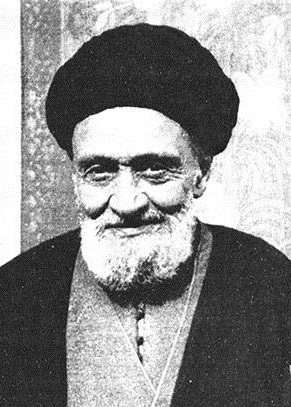
He was the precursor to Khomeini, the founder of the Islamic Republic.
The bald man in the second picture is Mossadegh, the Prime Minister of Iran, who many mistakenly believe was illegally removed by the Shah.
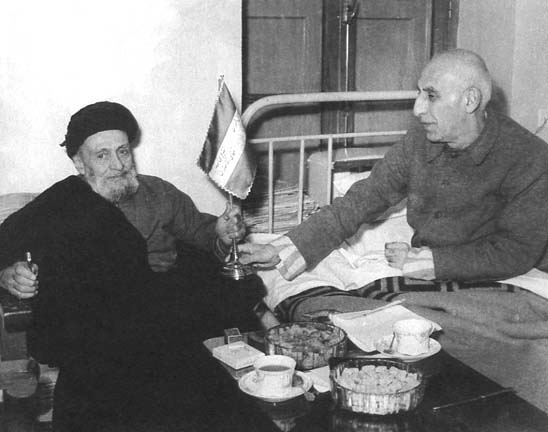
1. The Anti-Capitalist, Anti-Shah, Pro-Nazi, and Islamist Ayatollah
Like his successors, Khomeini and Khamenei, Ayatollah Kashani was a proponent of establishing a global Islamic caliphate.
Of course, like any Islamist, he was also strongly against capitalism because he believed capitalism was all about “colonialism, despotism, and oppression.”
After all, in an Islamic theocracy, all properties are the properties of Allah, and the Ayatollah is the representative of Allah on Earth.
To oppose the Ayatollah and Sharia Law is to oppose Allah—and that is considered extreme despotism and oppression.
And, of course, like a typical Islamist, he openly supported and advocated for Nazism and the massacre of Jews, which is why he was arrested and exiled to the so-called British-controlled region of Palestine.
2. Kashani’s Return from Exile and the Rise of Mossadegh
After his return from exile, he once again resumed his incitement against democracy, capitalism, and the Shah.
He expressed great hostility toward any progressive effort of the Shah’s government, from education for women to freedom of religion to foreign investment.
He notably opposed the Anglo-Iranian Oil Company, which was founded in 1909 during the Qajar dynasty, which preceded the Pahlavi dynasty.
Kashani demanded that the oil company be nationalized, and this is where he found use for Mossadegh, who, ironically, was from a bureaucratic family in power during the Qajar dynasty.
Ayatollah Kashani, who was also the speaker of parliament in Iran, after learning about Mossadegh’s political leanings, used his influence—and of course Shia propaganda—to propel Mossadegh to becoming Prime Minister.
Mossadegh did eventually win the vote of the parliament. The Shah did respect the vote and did appoint Mossadegh as Prime Minister of Iran in 1951.
3. Kashani’s Fallout with Mossadegh
Like Kashani, Mossadegh had agendas of his own.
Mossadegh, who was a Marxist and vehemently against the Pahlavi monarchy, wanted to consolidate power for himself.
For Kashani, who believed the state must be governed by the Muslim clergy, this was unacceptable.
This was the start of their fallout.
When Kashani realized that Mossadegh had different plans, he once again used his influence to bring down the very person he first propped up.
4. Mossadegh’s Repeated Violations of the Law, Dismissal from Government, and Arrest
During his tenure as prime minister, Mossadegh committed several acts that outright violated the very constitution of the country.
In 1952, Mossadegh pressured the parliament to grant him executive powers that would allow him to enact laws without parliamentary approval. This was against the law.
In 1953, Mossadegh demanded a national referendum to dissolve the parliament. This was against the law.
In 1953, once again, Mossadegh violates the law by refusing the Shah’s dismissal decree—a dismissal decree invoked precisely because Mossadegh had repeatedly violated the law and openly opposed the very constitution of the country.
Finally, on August 19, 1953, the Shah exercised his constitutional right and responsibility, and ordered the military to seize control of the capital and arrest Mossadegh.
Mossadegh surrendered himself to the authorities on August 20, 1953, after going into hiding for several hours.
5. The Myth of a Foreign Orchestrated Coup
What people do not understand about the involvement of the United States and Great Britain is this:
The United States and Great Britain, both allies of Iran, would rally behind the Shah’s government to counter the propaganda of Kashani, Mossadegh, and their Islamist and Communist allies.
When it suited them, the United States and Great Britain would write favorably for the Shah, and unfavorably when it did not suit them.
The involvement of these two countries does not change this fact about Mossadegh: he violated the law and was rightfully removed by the Shah’s government.
Once again, another myth about the Shah has been debunked.
Thank you for reading.
 The Hostage Rescue Attempt in Iran, April 24-25, 1980