The MEK’s Bloody Legacy: A Threat to U.S. National Security and a Betrayal of American Lives For decades, the Mojahedin-e Khalq (MEK) has attempted to rebrand itself as a democratic opposition to the Iranian regime. But history tells a different story—one of terrorism, assassinations, and betrayal, including the murder of American citizens.
The MEK’s Assassinations of Americans in Iran
1. Colonel Lewis Hawkins (June 2, 1973) •Position: U.S. Military Advisor in Tehran •Killed by: MEK operatives Alireza Sepasi Ashtiani and Vahid Afra Khteh •Method: Shot outside his home by gunmen on a motorcycle •Why? The MEK viewed American military personnel as “imperialist agents” and justified murder as part of their Marxist-Islamist revolution.
2. Colonel Paul Schaeffer & Lieutenant Colonel Jack Turner (May 20, 1975) •Position: U.S. Air Force officers working as military advisors •Killed by: MEK gunmen in Tehran •Method: Ambushed and executed in their car •Why? MEK sought to drive the U.S. out of Iran through targeted assassinations.
3. Donald J. Smith, Robert R. Krongard, and William C. Catrell (August 28, 1976) •Position: Employees of Rockwell International, a U.S. defense contractor •Killed by: MEK operatives •Why? The group targeted American companies as part of its anti-Western, revolutionary ideology. Attempted Assassinations & Attacks Against Americans •
1971: MEK attempted to kidnap U.S. Ambassador Douglas MacArthur II in an effort to secure the release of their imprisoned members. •
1972-1973: Multiple bombings targeting American-affiliated institutions, including: •U.S. Information Office in Tehran •Iran-America Association •Pan American Airlines office
The MEK’s Continued Anti-American Behavior •Celebration of 9/11: MEK members in Iraq reportedly distributed sweets and cheered following the September 11 attacks. •Collaboration with Saddam Hussein: During the Iran-Iraq War, the MEK became Saddam’s mercenaries, attacking Iranian cities with his full military backing. •
Espionage & Hostage-Taking: MEK provided intelligence to Iraq, resulting in the deaths of both American and Iranian soldiers.
A Terrorist Cult, Not a “Democratic Alternative” Despite this blood-soaked history, the MEK has spent millions lobbying Congress, deceiving lawmakers into supporting their cause. But no amount of money or PR can erase their crimes.
What Must Be Done
1. Hold U.S. Lawmakers Accountable: Any politician supporting the MEK is complicit in whitewashing terrorism.
2. Legal Action Against the MEK: Families of murdered Americans should sue the organization for its role in these assassinations.
3.Congressional Hearings: Lawmakers must investigate how a terrorist cult with American blood on its hands has infiltrated U.S. policymaking.
The MEK is not an alternative to the Islamic Republic—it is a terrorist organization with a history of killing Americans. Congress should not only stop supporting them, but actively work to expose and dismantle their influence in Washington.
#RejectRes166 #MEKterrorists #JusticeForVictims #StopMEK
=============================================================
Mujahedin-e Khalq Organization (MEK)
https://www.investigativeproject.org/profile/140/mujahedin-e-khalq-organization-mek
From: “Chapter 8; Foreign Terrorist Organizations,” Country Reports on Terrorism 2005, US Department of State, April 30, 2006.
a.k.a. MKO;
Mujahedin-e Khalq;
Muslim Iranian Students’ Society;
National Council of Resistance;
National Council of Resistance (NCR);
Organization of the People’s Holy Warriors of Iran;
The National Liberation Army of Iran (NLA);
The People’s Mujahedin Organization of Iran (PMOI);
National Council of Resistance of Iran (NCRI);
Sazeman-e Mujahedin-e Khalq-e Iran
Description
The MEK advocates the violent overthrow of the Iranian regime. The MEK philosophy mixes Marxism, feminism, nationalism, and Islam. The group emerged as one of several political movements seeking to unseat the Shah in the 1960s. After Khomeini’s regime arrested most of the MEK leadership a few years after the Islamic Revolution, many members fled to Europe. Saddam Hussein invited the group to Iraq in the late 1980s, where it reformed as a paramilitary organization and conducted several cross-border forays into Iran. A Marxist element of the MEK murdered several of the Shah’s U.S. security advisers prior to the Islamic Revolution, and the group helped guard the U.S. Embassy after Islamic students seized it in 1979. Since then, the MEK has conducted terrorist attacks against the interests of the clerical regime in Iran and abroad.
Activities
The group’s worldwide campaign against the Iranian Government stresses propaganda and occasionally uses terrorism. During the 1970s, the MEK killed U.S. military personnel and U.S. civilians working on defense projects in Tehran and supported the takeover in 1979 of the U.S. Embassy in Tehran. In 1981, the MEK detonated bombs in the head office of the Islamic Republic Party and the Premier’s office, killing some 70 high-ranking Iranian officials, including Chief Justice Ayatollah Mohammad Beheshti, President Mohammad-Ali Rajaei, and Premier Mohammad-Javad Bahonar. Near the end of the 1980-1988 war with Iran, Baghdad armed the MEK with military equipment and sent it into action against Iranian forces. In 1991, the MEK reportedly assisted the Government of Iraq in suppressing the Shia uprisings in southern Iraq and the Kurdish uprisings in the north. In April 1992, the MEK conducted near-simultaneous attacks on Iranian embassies and installations in 13 countries, demonstrating the group’s ability to mount large-scale operations overseas. In April 1999, the MEK targeted key military officers and assassinated the deputy chief of the Iranian Armed Forces General Staff. In April 2000, the MEK attempted to assassinate the commander of the Nasr Headquarters, Tehran’s interagency board responsible for coordinating policies on Iraq. The normal pace of anti-Iranian operations increased during “Operation Great Bahman” in February 2000, when the group launched a dozen attacks against Iran. One of those attacks included a mortar attack against the leadership complex in Tehran that housed the offices of the Supreme Leader and the President. In 2000 and 2001, the MEK was involved regularly in mortar attacks and hit-and-run raids on Iranian military and law enforcement units and government buildings near the Iran-Iraq border, although MEK terrorism in Iran declined toward the end of 2001. The MEK leadership ordered its members not to resist Coalition forces at the outset of Operation Iraqi Freedom, and they surrendered their arms to Coalition forces in May 2003.
Strength
Over 3,000 MEK members are currently confined to Camp Ashraf, the MEK’s main compound north of Baghdad, where they remain under the Geneva Convention’s “protected person” status and Coalition control. As a condition of the cease-fire agreement, the group relinquished its weapons, including tanks, armored vehicles, and heavy artillery. A significant number of MEK personnel have voluntarily left the Ashraf group, and several hundred of them have been voluntarily repatriated to Iran.
Location/Area of Operation
In the 1980s, the MEK’s leaders were forced by Iranian security forces to flee to France. On resettling in Iraq in 1987, almost all MEK armed units were stationed in fortified bases near the border with Iran. Since Operation Iraqi Freedom, the bulk of the group is limited to Camp Ashraf, although an overseas support structure remains with associates and supporters scattered throughout Europe and North America.
External Aid
Before Operation Iraqi Freedom, the group received all of its military assistance, and most of its financial support from the former Iraqi regime. The MEK also has used front organizations to solicit contributions from expatriate Iranian communities.
Unmasking the Mojahedin-e Khalq: A Comprehensive Look at their Terrorist Activities
With over 40 documented incidents involving bombings and assassinations, the Mojahedin-e Khalq utilized fear, violence, and intimidation as instruments to achieve their political objectives.
February 28, 2025
Sepideh Bahrami
The Mojahedin-e Khalq (MEK), also known as the People’s Mujahedin of Iran, has long been embroiled in controversies surrounding its classification as a terrorist organization. Spanning several decades, between 1971 and 1975, the MEK executed more than 40 armed actions marked by bombings and targeted assassinations. This essay examines the organization’s violent activities during this period, asserting that the MEK’s actions fit the definition of terrorism as they aimed at instilling fear and promoting their political objectives through violence.
Early Violent Acts
The MEK’s initial foray into violence occurred on September 21, 1971, with an unsuccessful attempt to kidnap Shahram, the son of Ashraf Pahlavi. This operation, intended to secure the release of imprisoned comrades, marked the organization’s inception as an entity willing to engage in acts of violence for political ends (Wilber, 1976).
In the ensuing months and years, the MEK further demonstrated its violent capabilities. The May 3, 1972, bombing at the British Airways office, along with another explosion targeting the “This Week” magazine, showcased their willingness to target foreign interests. The group utilized terrorism as a tool to project power against foreign entities and the Iranian regime (Murray, 2005).
Another significant escalation occurred on May 30, 1972, when simultaneous bombings targeted the US Information Office, Iran-America Association, and the Iran-UK Cultural Relations Association in Tehran. This act was intended to signal discontent with American involvement in Iranian affairs under the Shah and to galvanize support for the MEK’s ideology (Keddie, 2003). On the same date, the MEK also successfully executed an explosion along General Price’s route, a high-ranking American adviser, indicating a consistent pattern of targeting individuals associated with the perceived oppressor.
In a striking action, the MEK bombed the tomb of Reza Khan on May 30, 1972, coinciding with President Nixon’s visit to Iran. This operation was not merely a random act of violence; it was a carefully calculated attempt to embarrass both the Iranian regime and the U.S. government (Sanam, 2012).
Targeted Assassinations
One of the MEK’s most infamous actions was the assassination of Lieutenant Colonel Louis Hawkins, an American military advisor, on June 2, 1973. Hawkins’ assassination not only exemplified the group’s violent methods but its resolve to target foreign nationals directly involved in Iranian military affairs (Lentini, 2003).
Other notable assassinations included General Taheri on August 12, 1972, and Brigadier General Zandi Pour on March 18, 1975, both of whom were targeted for their roles within the Iranian military. Such acts of targeted killing emphasize the MEK’s strategy to decimate the country’s military leadership through fear and violence (Central Intelligence Agency, 1993).
Coordinated Bombings
The MEK conducted a series of coordinated bombings as protests against the Shah’s regime and foreign officials. For instance, on March 2, 1974, during Sultan Qaboos’ visit to Iran, the MEK exploded bombs at various locations, including the Housing Bank building and near the British Embassy. This attack aimed to disrupt diplomatic relations and validate the organization’s revolutionary narrative (Zand, 2010).
On December 2, 1975, the MEK assassinated Reza Khalighi, a driver at the court ministry, making it evident that no individual affiliated with the regime was beyond the reach of their violence. Furthermore, the assassination on August 28, 1976, of three employees of the American company Rockwell International marked another deliberate strike against foreign interests within Iran (Harris, 1999).
The Iran-Iraq War and Cooperation with Saddam Hussein
The Iran-Iraq War (1980-1988) marked a crucial juncture for the MEK, during which the organization established a controversial affiliation with Saddam Hussein’s regime. This collaboration was underscored by the MEK’s active participation in military operations against Iran, where the group reportedly executed numerous attacks that resulted in the deaths of thousands of Iranian soldiers and civilians. Historical accounts indicate that the MEK contributed to Saddam’s military strategy, providing intelligence and operational support, which ultimately led to significant casualties for Iranian forces (Zand, 2010).
Saddam Hussein, eager to undermine the Iranian regime, saw the MEK as a useful ally in his war efforts. The organization leveraged this alliance to gain resources and military training, furthering its agenda while simultaneously committing acts of violence that equated to state-sponsored terrorism. Documented instances indicate that the MEK utilized sophisticated weaponry supplied by Iraq and conducted numerous cross-border raids into Iran, causing significant loss of life and contributing to the broader chaos of the war (Harris, 1999). This complicity not only tainted the organization’s image but also raised ethical questions about its motives and methods in pursuing political change.
Conclusion
The actions of the Mojahedin-e Khalq between 1971 and 1975 clearly position the group within the framework of terrorist organizations. With over 40 documented incidents involving bombings and assassinations, the MEK utilized fear, violence, and intimidation as instruments to achieve their political objectives. Each operation was designed to foster a climate of fear and disrupt both domestic and international relations. As such, the MEK’s methods not only contrive to define terrorism but also demonstrate the complexities of politically motivated violence in the 20th century.
In conclusion, the Mojahedin-e Khalq, rooted in Marxist-Islamist ideology, illustrates the intricate use of terrorism for political aims and highlights the moral challenges in pursuing ideological objectives.
References
- Wilber, Donald N. 1976. The Iranian Revolution of 1979: A Historical Perspective. Washington: CIA.
- Murray, Christine. 2005. Terrorism and Counterterrorism: A Global Perspective. London: Routledge.
- Keddie, Nikki R. 2003. Modern Iran: Roots and Results of Revolution. New Haven: Yale University Press.
- Sanam, Arash. 2012. “Nixon’s visit to Iran and its cultural ramifications.” Journal of Iranian Studies.
- Lentini, Peter. 2003. “The Struggle Against State Oppression: An Analysis of the MEK.” Middle Eastern Politics Journal.
- Central Intelligence Agency. 1993. World Factbook. Washington, D.C.: CIA.
- Zand, A. 2010. “SEPTEMBER 21, 1971: A Terrorist’s Diary.” Iranian Affairs Review.
- Harris, John. 1999. The Evolution of Iranian Political Violence. Cambridge: Harvard University Press.
9.Zand, A. 2010. “The Role of the MEK in the Iran-Iraq War.” Iranian Affairs Review.
Mujahadeen-e-Khalq (MEK)
PublishedNovember 7, 2005 7:53 a.m.
UpdatedJuly 28, 2014 8:00 a.m.
https://www.cfr.org/backgrounders/mujahadeen-e-khalq-mek
The Mujahedeen-e-Khalq, an exiled Iranian resistance group, continues to stir controversy despite its removal from a U.S. terrorism list.
Table of Contents
Introduction
The People’s Mujahedeen of Iran, more commonly known as the Mujahedeen-e-Khalq or MEK, is a controversial Iranian resistance group; it was once listed as a Foreign Terrorist Organization (FTO) by the United States for its alleged killing of U.S. personnel in Iran during the 1970s, and for its ties to former Iraqi leader Saddam Hussein. Recognizing the group’s rejection of violence, the State Department delisted the MEK in late 2012 but voiced ongoing concerns about its alleged mistreatment of its members.
The MEK helped Islamists overthrow the Western-backed Shah in 1979, but broke violently with the clerics shortly after the revolution and were forced into exile in France in 1981. The group moved its base of operations to eastern Iraq in 1986, but in recent years the pro-Iranian government of Nouri al-Maliki has pushed for the exiled group to relocate. In mid-2014, some 3,000 MEK members resided at Camp Hurriya (Liberty) near Baghdad, awaiting resettlement to third countries.
Roots of Resistance
The MEK was founded in 1965 by leftist Iranian students opposed to the monarchy of Shah Mohammad Reza Pahlavi and its supporters in the West, including the United States. Many of the MEK’s most influential founding members—including leader Massoud Rajavi—were imprisoned by the Shah in the 1970s, and several were executed.
Throughout the decade, the MEK orchestrated terrorist attacks against the state that killed several Americans working in Iran, including military officers and civilian contractors, according to the U.S. State Department. (By 1978, some 45,000 of the 60,000 foreigners working in Iran were Americans.) The MEK denies any involvement with these incidents, asserting that they were the work of a breakaway Marxist-Leninist faction, known as Peykar, which hijacked the movement after the arrest of Rajavi.
Some analysts support this. “Rajavi, upon release from prison during the revolution, had to rebuild the organization, which had been badly battered by the Peykar experience,” said Patrick Clawson, director of research at the Washington Institute, in a CFR interview.
The MEK participated in the 1979 revolution that swept Ayatollah Khomeini into power, but refutes U.S. government claims that it also supported the hostage-taking raid on the U.S. Embassy in November of that year. “Though denied by the MEK, analysis based on eyewitness accounts and MEK documents demonstrates that MEK members participated in and supported the 1979 takeover of the U.S. Embassy in Tehran and that the MEK later argued against the early release [of] the American hostages,” said a 2011 State Department report on terrorism.
Experts say MEK’s ideology—initially a blend of Marxism, feminism, and Islamism—as well as its popular support in the initial post-revolutionary period put it at odds with the new clerical regime, which cracked down violently on the potential political rival. The mullahs arrested and executed thousands of Mujahedeen, who retaliated by assassinating dozens of senior government officials, including the president and prime minister in August 1981, according to the U.S. State Department. The month prior, Rajavi established in Tehran the National Council of Resistance of Iran (NCRI), also known as the MEK’s “parliament in exile,” but he and the group’s leadership were quickly driven into exile in Paris.
Support for Saddam
In 1986, the government of Jacques Chirac expelled Rajavi and much of the MEK as part of a deal with Tehran that freed French hostages held by pro-Iranian groups in Lebanon. According to the U.S. State Department, the MEK was then welcomed into Iraq, where it supported Saddam Hussein’s war against Iran (1980-88) and reportedly helped quash Kurdish uprisings in the north and Shia unrest in the south (1991). Saddam armed the MEK near the end of the Iran conflict “with heavy military equipment and deployed thousands of MEK fighters in suicidal, mass wave attacks against Iranian forces.” Iran’s Revolutionary Guards killed some two thousand MEK in the ill-fated assault known as Operation Eternal Light. (The MEK denies any role in the suppression of Kurdish and Shiite unrest in Iraq in 1991.)
The MEK’s campaign against the Islamic Republic, including multiple targeted attacks on high-ranking officials, continued throughout the 1990s and early 2000s. The group demonstrated its global reach in April 1992 with coordinated raids on diplomatic missions in ten countries, including the Iranian Mission to the United Nations in New York. (The MEK said that the attacks were retaliation for Iranian air strikes on the group’s base outside Baghdad.) In 2003, French police arrested more than 150 MEK members for allegedly plotting and financing terrorist attacks. The EU had labeled the MEK a terrorist organization the prior year (it was delisted in 2009). The Iranian government blames the MEK for the deaths of more than 12,000 Iranians over the past three decades.
Searching For a New Home
As part of the 2003 invasion, U.S. forces initially attacked MEK military targets in Iraq despite the group’s claims of neutrality. The two sides eventually negotiated a cease-fire that disarmed MEK members and confined them to Camp Ashraf, a 14-square-mile former Iraqi military base in the country’s northeast. In 2004, U.S. Secretary of Defense Donald Rumsfeld designated the group as civilian “protected persons” under the Geneva Convention—a designation that ran against the recommendations of the U.S. Department of State, the Office of the United Nations High Commissioner for Refugees, and the International Committee of the Red Cross.
According to a 2009 RAND report, the decision was “extremely controversial because it appeared that the United States selectively chose to apply the Geneva Conventions to a designated terrorist organization and, further, to grant it special status.” That designation expired after Iraq regained full sovereignty in January 2009.
The MEK had long feared that a transition to Iraqi control of Ashraf [PDF] would result in their eviction. As U.S. forces pulled out of Ashraf in April 2011, violence broke out between the Iraqi military and camp residents. Thirty-five MEK were killed, according to the UN. After the incident, Iraq reiterated its vow to close Ashraf following full U.S. withdrawal at the end of 2011.
Iraq and the UN reached an agreement with MEK in December of that year that would relocate Ashraf residents to Camp Liberty outside Baghdad, a “temporary transit station” from which group members could eventually be taken in by other countries. As of May 2014, approximately 3,000 MEK members resided at Camp Hurriya (Liberty), near Baghdad, awaiting resettlement to third countries.
Leadership & Ideology
The MEK has long been led jointly by husband-and-wife team Massoud and Maryam Rajavi, and is reputedly the largest militant Iranian opposition group committed to the overthrow of the Islamic Republic. It is also “the only army in the world with a commander corps composed mostly of women,” said former CFR press fellow Elizabeth Rubin. Maryam Rajavi joined the resistance as a student in Tehran in the early 1970s and, at the behest of her husband, assumed joint control of the group in 1985. Feminism and allegiance to the Rajavi family are pillars of MEK ideology, which was founded on both Islam and Marxism—though the group has denied its affiliation with the latter.
Many analysts, including Rubin, have characterized the MEK as a cult, citing the group’s fealty to the Rajavis. Older women were reportedly required to divorce their husbands in the late 1980s, and younger girls cannot marry or have children.
The NCRI elected Maryam Rajavi as “Iran’s future president” in 1993 and, according to the group’s website, expects to oversee a six-month democratic transition in Iran “once the mullahs are toppled.” Based out of Paris, she also serves as the group’s chief international ambassador. NCRI’s political platform includes support for human rights, women, capitalism, religious freedom, minority rights, and Iran’s integration into the global community.
Massoud Rajavi disappeared following the U.S. invasion of Iraq in 2003; his whereabouts and current status are unknown. Some analysts believe he is dead. “Cult leaders generally don’t retire,” said Karim Sadjadpour, an Iran expert at the Carnegie Endowment for International Peace, in a CFR interview. “They either die or go to prison. I’d be surprised if Massoud Rajavi is still alive.”
Size & Support Structure
The U.S. State Department, in an August 2011 report, put MEK global membership between 5,000 and 10,000, with significant contingents in Paris and other European capitals where the group maintains offices.
The group operates a well-funded, highly sophisticated network of advocates in the United States, enlisting in recent years the support of dozens of high-profile officials from both political parties, including former New York City mayor Rudolph Giuliani and former governors Edward Rendell and Howard Dean. Much of this advocacy was centered on a campaign to delist the MEK as a U.S.-designated foreign terrorist organization. In September 2012, Secretary of State Hillary Clinton removed the group from the FTO list and thereby unfroze the MEK’s U.S. assets and allowed it to transact with U.S. entities. The NCRI opened a Washington, DC, office in April 2013.
Prior to the U.S. invasion of Iraq, Saddam was the MEK’s primary financier, experts say. But in recent years, the group claims to rely on the largesse of wealthy Iranian expatriates in the United States and Europe, and others opposed the clerical regime in Tehran.
Continuing Controversy
The debate over the MEK’s legitimacy as a peaceful Iranian resistance group has attracted both critics and supporters over the years. The group’s advocates assert that Secretary of State Madeleine Albright listed the MEK as a foreign terrorist group in October 1997 as part of a diplomatic effort to open dialogue with moderates in Tehran. Some reporting at the time attests to this. “One senior Clinton administration official said inclusion of the People’s Mujahedeen was intended as a goodwill gesture to Tehran and its newly elected moderate president, Mohammad Khatami,” wrote Norman Kempster in the LA Times.
Some Western backers believe the group serves as a strategic counterweight to the clerical regime in Iran. Writing in The Hill in 2014, Raymond Tanter, president of the Iran Policy Committee, a Washington, DC-based advocacy group, argued that MEK “dissidents [in Camp Liberty] have historic ties in the area that can help tilt the balance against radical Sunnis and counter an extremist ’Shiite arc’ of Tehran and its counterpart in Damascus.”
Critics of the MEK question the group’s motives and commitment to nonviolence and human rights. The State Department noted such reservations upon delisting the group in September 2012: “With today’s actions, the Department does not overlook or forget the MEK’s past acts of terrorism…The Department also has serious concerns about the MEK as an organization, particularly with regard to allegations of abuse committed against its own members.”
As tens of thousands gathered for an annual rally for the NCRI in France in June 2014, a spokesman for the French Foreign Ministry condemned the group for its “violent and non-democratic inspirations,” “cult nature,” and “intense campaign of influence and disinformation.”
Others believe Western support for the MEK distracts from or, worse, undercuts the efforts of more mainstream Iranian opposition groups like the Green Movement, which assembled millions of peaceful protesters in the aftermath of the disputed 2009 presidential election.
Recommended Resources
This CFR Backgrounder explores Iran’s Revolutionary Guards.
This CFR Crisis Guide provides an in-depth, multimedia look at Iran’s history, its evolution as an Islamic Republic, and its controversial nuclear program.
This study by RAND’s National Defense Research Insitute examines the unique detention issues that arose from MEK’s capture in Iraq by U.S.-led coalition forces in 2003.t
Colophon
Staff Writers
- Jonathan Masters

STATE DEPARTMENT VIEWS OF THE PEOPLE’S MOJAHEDIN ORGANIZATION OF IRAN — HON. LEE H. HAMILTON (Extension of Remarks – April 28, 1992)
https://irp.fas.org/congress/1992_cr/h920428-terror-pmoi.htm
[Page: E1114]
—HON. LEE H. HAMILTONin the House of RepresentativesTUESDAY, APRIL 28, 1992
- Mr. HAMILTON. Mr. Speaker, I would like to bring to the attention of my colleagues some correspondence I had with the State Department concerning United States views of the Iranian organization called the People’s Mojahedin which is fighting the current Government of Iran.
- Attached are: a State Department fact sheet on the organization written roughly 2 years ago; a February 27, 1992 letter of the organization rebutting that fact sheet; my letter to the State Department asking for further comments; and the State Department’s reply of April 2, 1992. The State Department explains its concerns about the organization and its past involvement in terrorism and why the State Department will not meet with the organization.
- The material follows:
The Mojahedin-e Khalq (MEK), a leftist revolutionary group, was formed in 1963.
Its founding principles included the creation of a Marxist-oriented Islamic government in Iran; opposition to `imperialism’ as supposedly embodied by the United States; opposition to Zionism and Israel; and a close affinity to Third World radical movements.
Its political philosophy put the MEK at the forefront of those Iranian opposition groups advocating the overthrow of the Shah and led to the MEK’s strongly opposing the involvement of the United States in Iran. The MEK publicly supported the seizure of our Embassy in Tehran in 1979.
To achieve its political objectives, the MEK almost from its inception has engaged in acts of terrorism and violence; the organization was responsible for fatal attacks on several Americans in Iran in the 1970s.
Since it fell out with the Khomeini regime in 1981, the MEK has been engaged in an armed struggle with the Iranian government, and has used methods of terrorism and political violence against Iranian officials.
The military wing of the MEK, the National Liberation Army, operates from bases in Iraq and received Iraqi support for offensives into Iranian territory during the Iran-Iraq war. It continues to receive Iraqi support and protection.—-
REPRESENTATIVE OFFICE OF THE NATIONAL COUNCIL OF RESISTANCE OF IRAN,
Washington, DC, February 27, 1992.
Hon. Lee H. Hamilton,
Chairman, Subcommittee on Europe and the Middle East, Washington, DC.
Dear Representative Hamilton, I have recently learned that the United States Department of State has been sending a text entitled `Fact Sheet: The Mojahedin-e-Khalq, People’s Mojahedin Organization of Iran’ to those senators and representatives who have requested information on the Mojahedin, a member organization of the National Council of Resistance of Iran. This fact sheet, which I have enclosed for your information (Enclosure 1), unfortunately contains incomplete and inaccurate information. To clarify any questions in this regard, I draw your attention to the following text:
1. With regard to the Mojahedin’s revolutionary nature, if the American and French peoples’ struggles for their nations’ freedom, independence and democracy (1776 and 1789) are considered revolutions, the Mojahedin are also revolutionaries. They are fighting for their nation’s liberation from one of the most hated dictatorships of the contemporary era, and seek to establish peace and democracy in their homeland. The Mojahedin are revolutionary in the same sense as the people of Italy, who took up arms to save themselves from Mussolini’s fascism.
Revolution and armed struggle, when all peaceful avenues to realize the people’s fundamental rights have reached an impasse, are recognized as the only resort by all religious authorities, as noted in the Universal Declaration of Human Rights, etc. In a noted press conference reported by the Vatican publication L’Osservatore Romano on April 5, 1986, Cardinal Joseph Ratzinger, President of the Pontifical Biblical Commission, introduced a document entitled `Christian Liberty and Liberation,’ wherein it is stated: `Armed struggle is the last resort to end blatant and prolonged repression which has seriously violated the fundamental rights of individuals and has dangerously damaged the general interests of a country.’
[Page: E1115]
2. The Mojahedin have consistently condemned terrorism (whether by groups or states) in the strongest terms; in particular, the Mojahedin have exposed the Khomeini regime’s terrorism in the most documented and public manner at every possible opportunity.
(Enclosure 2) In truth, the Mojahedin are victims of the Khomeini regime’s terrorism within Iran and abroad. During the period when the Mojahedin were able to openly and officially conduct political activities within Iran, more than 70 of the organization’s members and supporters were murdered by terrorists unofficially directed by the Khomeini regime. Abroad, Khomeini’s diplomat-terrorists are responsible for the wounding or assassination of many representatives of the Mojahedin and National Council of Resistance to various countries. These victims include Professor Kazem Rajavi, the NCR Representative in Switzerland and brother of Mr. Massoud Rajavi, the Leader of the Iranian Resistance. Prof. Rajavi’s murder was carried out, according to the Swiss Police and Investigations Magistrate, by 13 persons carrying official Iranian service passports. (Enclosure 3)
The Mojahedin were obliged to choose armed struggle as the last avenue of confronting the Khomeini regime–a right officially recognized by the Universal Declaration of Human Rights and all religious authorities–after exhausting all peaceful, democratic avenues to establish freedom and democracy in Iran; after all the organization’s official, public centers had been closed down; after more than 70 Mojahedin supporters and members had been murdered for no reason, and 3,000 others arrested and subsequently executed without being charged; and finally, after the peaceful demonstration by 500,000 people, called by the Mojahedin on June 20, 1981, was turned into a bloodbath by the Khomeini regime, and groups of 50 and 100 of their supporters were subsequently executed en masse for the `crime’ of possessing newspapers. (Enclosure 4)
This struggle is conducted only against the regime’s officials–who are responsible for the murder of 100,000 people and the imprisonment and torture of 150,000, as well as for international terrorism and hostage-taking–and suppressive forces.
The terms `terrorist’ or `terrorist methods’ cannot be applied to this Resistance which, under no circumstances, targets ordinary citizens or innocent civilians. Furthermore, even regarding the regime’s officials, the armed struggle is contained within Iran’s borders. Outside of Iran, the Mojahedin have respected and respect the laws of the relevant countries, and confine their struggle to political activities and exposes. As per the positions and orders of their Leader, Mr. Rajavi, the Resistance’s supporters and ordinary Iranians, despite their wrath at this regime, have controlled themselves outside Iran and have on no occasion responded to the regime’s violence and bloodshed in kind. (Enclosure 5)
Mr. Rajavi has repeatedly declared that `from the Mojahedin’s standpoint, no death–not even that of our suppressive enemies within the Khomeini regime–is to be welcomed in itself. It is even regrettable. Were it not for the Khomeini regime’s blocking all avenues of peaceful political opposition and had it not
responded to any call for freedom with execution, the Resistance would not have been necessary.’
Furthermore, for years the Mojahedin’s armed resistance has been carried out within the framework of the National Liberation Army of Iran, whose duty is to bring about the military overthrow of the Kohmeini regime. The specifics and methods of this army, consisting of tank, armored, artillery, mechanized and other units, are completely in line with the criteria outlined in the Geneva Conventions of August 12, 1949. The NLA is `commanded by a person responsible for his subordinates’; has `a fixed distinctive sign recognizable at a distance’; carries arms `openly’; and conducts its `operations in accordance with the laws and customs of war.’ These characteristics have been observed on numerous occasions by the international journalists and observers who have visited the NLA’s garrisons.
Therefore, in accordance with the Geneva Conventions of 1949, the label `terrorist’ cannot be rightfully applied to the NLA, and its warfare is categorized as classical. In accordance with the regulations of the International Committee of the Red Cross, Resistance prisoners qualify and should be treated as prisoners of war.
3. The regime of the Shah was the first to brand the Mojahedin `Marxist.’ A profoundly freedom-loving and democratic force, the Mojahedin fought against the Shah’s regime only after perceiving that all avenues of peaceful political opposition had been closed. The label `Marxist’ was applied to them for this reason, i.e. their opposition to the Shah. Of course, the Mojahedin were rightly known among a large sector of Iranian society as a Muslim force, and the Shah could not apply the label `Marxist’ by itself. He therefore invented the label `Islamic Marxist’ in reference to the Mojahedin.
Khomeini and his followers followed the Shah’s lead, branding the Mojahedin `Islamic Marxists’ in their propaganda for foreign consumption. Ironically, within Iran, Khomeini, the Tudeh Communist Party (supporters of Moscow), and other communist party members and groups meanwhile labelled the Mojahedin `American agents.’ The latter label prompted these persons to adopt the position that hostility and warfare against the Mojahedin were their fundamental duties (Enclosure 6), even abroad, for example in France in 1986. (Enclosure 7) The Pasdaran (`Revolutionary Guards’) wrapped Mojahedin corpses in the American flag prior to burial. Thousands of Mojahedin supporters and members were turned in to Kohmeini’s executioners by communists supporting Moscow and other political currents. After savage torture, these Mojahedin were executed.
In response to the charge that the Mojahedin are Marxist, Mr. Massoud Rajavi, Leader of the Iranian Resistance, told Time
magazine on September 14, 1981: `Every high school student knows believing in God, Jesus Christ and Muhammad is incompatible with the philosophy of Marxism. Everyone knows that, even Khomeini. But for dictators like Khomeini, `Marxist Islamic’ is a very profitable phrase to use against any opposition. If Jesus Christ and Muhammad were alive and protesting against Khomeini, he would call them Marxists too.’
In another interview, with the Farsi section of `Voice of America’ radio, December 20, 1984, Mr. Rajavi said: `As far as our economic and social views are concerned, we accept private ownership, national capitalism, free competition, and private investment.’ The program announced by Mr. Rajavi for the National Council of Resistance also states that the Provisional Government of the Democratic Islamic Republic of Iran, which will administer the country’s affairs for a period of six months after the overthrow of the Khomeini regime, respects free competition, private ownership, and private investment.
The reapplication of these labels in the current international situation and subsequent to the collapse of the Soviet Union and Eastern Block, and in relation to a movement which has millions of supporters throughout Iran, doesn’t stick. In fact, it is due to the Mojahedin’s faith in the modern and democratic Islam that they have been able to deeply influence Iranian society throughout their 27-year history, and to grow on a daily basis despite the Khomeini regime’s savage killings and suppression. The Mojahedin’s resilience, moreover, coincides with the demise of all the Marxist groups in Iran, who were eliminated within the first two years of Khomeini’s rule.
From another perspective, the Mojahedin are the only real solution to the spreading fundamentalism of the criminal mullahs ruling Iran. The experience of past years has shown that the other political trends and solutions were incapable of opposing this regime, which, after centuries, had seized religious and political power in one of the world’s most strategic regions. In this region, which is profoundly Islamic in nature, only a democratic and modern Islam, represented in Iran by the Mojahedin, could and can counteract the spector of fundamentalism. In the name of Islam, this fundamentalist phenomenon perpetrates unprecedented bloodshed and killings. The Mojahedin’s Islam, in contrast, bears a message of co-existence, democracy, peace, and mercy.
4. In specifically addressing the charge of being anti-American, or anti any country, contained in the fact sheet, I should state that the documents and declared programs of the Mojahedin and NCR are sufficiently clear. If the writers of this fact sheet had obtained these documents, they would perhaps have referred to them in their fact sheet. For example, Mr. Rajavi states in introducing the Program of the National Council of Resistance of Iran: `We have no enmity toward any country, and seek amicable and respectful
mutual relations, provided that they recognize our country’s independence, freedom and territorial integrity.’
As for the current differences and conflicts in the Middle East, the NCR and all its members support the Peace Conference and are hopeful that the issue will be resolved, that peace and stability be established in the region, and that there remain no source of turmoil or crises, essentially because the Khomeini regime is the primary beneficiary of any regional war or unrest.
Elsewhere, Mr. Rajavi has said that contrary to Khomeini’s regime, Iran’s future government will not be anti-Western `since such hostility in reality embraces the backward ideas of the Middle Ages.’ Mr. Rajavi has also pointed out Iran’s technical, economic, scientific, cultural, and artistic needs in relation to Western countries, adding that rather than being anti-western, the Mojahedin seek equal and independent relations.
The Mojahedin have maintained an active presence in the United States and most western European countries for more than a decade, where they have explained their economic and political programs on an extensive scale to relevant officials and parliamentarians. There is, moreover, significant support for these programs among various parliamentarians, including a significant number of members of Congress. (Enclosure 8)
However, with regard to the Shah’s reign, the Shah was hated by the people of Iran for his dictatorship and his crimes. Unfortunately, the United States, due to its incorrect information on and analysis of the socio-political situation in Iran, actively supported the Shah until the last months of his reign. In consequence, anti-Americanism was widespread among the Iranian public. Under the circumstances, the Mojahedin naturally did not agree with such U.S. support, which was neither in the interests of Iran’s people, nor of regional peace and stability.
Khomeini took advantage of the public sentiment to suppress and execute the Mojahedin, and his regime continues to do so. The Mojahedin, from the outset, had consistently declared that the primary enemies of the Iranian people were the Khomeini regime, fundamentalism and religious retrogression. In order to eliminate democratic freedoms, Khomeini and the supporters of Moscow were demagogically telling the people that their primary enemy was American imperialism.
It is regrettable that positions occasionally adopted by the State Department against this Resistance, which has sacrificed 100,000 execution victims for the freedom of its homeland, have thwarted our efforts to expose the suppressive objectives behind the Khomeini regime’s anti-Americanism. Ultimately, the only result has been to enhance pessimism among the Iranian people.
The taking of American diplomats hostage in Tehran, an act which the fact sheet unfortunately claims the Mojahedin supported, had but one objective: the suppression of opposition, and in particular of the Mojahedin, under the guise of `struggle against America.’ Indeed, not only were the Mojahedin not supportive of or involved in the taking of American hostages, they were the primary victims of the incident.
In an interview recorded by ABC television on October 29, 1984, Mr. Rajavi said: `If we are a country, if we are a state, we have to be respectful and must not believe in the violation of diplomatic immunity. So, I can say that not only about this [hostage] crisis but also about the warmongering policy of Khomeini, international terrorist activities and also his suppressive measures, we wish they would not [have] happened. These are all against Iranians and against democracy.’
As for the participation of the Mojahedin in the assassinations of several Americans in Iran, it should be recalled that the Mojahedin Organization had carried out no military operations prior to the arrest of all of its leaders in August 1971. All of the Mojahedin’s leaders were executed by the Shah, with the single exception of Mr. Rajavi, who was sentenced to life imprisonment due to the international activities and intervention of Amnesty International and a number of Western public figures, including President Francois Mitterrand. Mr. Rajavi remained incarcerated, along with the other leading figures of the Mojahedin, until January 1979.
With regard to the members of the Mojahedin who did remain out of prison, a number of individuals, who subsequently revealed that they were Marxists and later took the name of `Peykar dar Rah Azadi Tabageh Kargar’ (`Struggle in the Path of the Working Class’s Freedom’), took advantage of the imprisonment of all leaders and most members of the Mojahedin to penetrate the organization. These individuals subsequently murdered many of the Mojahedin’s members in a brutal fashion and staged an internal coup, temporarily destroying the People’s Mojahedin Organization of Iran. (Enclosure 9)
After the anti-monarchic revolution which toppled the Shah, the Mojahedin, recently released from prison, were able to rebuild the organization. By exposing Khomeini’s backward nature, the Mojahedin managed to attract widespread support among various sectors of Iranian society. Many of these supporters were later to become members of the organization, and currently are included on its 837-member Central Council.
[Page: E1116]
5. The relations of the Mojahedin and National Liberation Army with Iraq are based on non-interference in each other’s internal affairs. The NLA’s primary aspiration is to be on Iranian soil, where it will be able to carry out a military operation and effect
the overthrow of a regime which domestically has violated all fundamental, basic human rights, and has exported terrorism, fundamentalism, and warmongering abroad, thus disrupting the region’s peace, stability and tranquility. (Enclosure 10)
The NLA is funded by the Iranian people. The executions of Iranian merchants for contributing to the Mojahedin, and the large demonstrations in various countries by the organization’s supporters attest to this support. In addition, some of the movement’s financial resources are obtained by means of the commercial undertakings of the National Council of Resistance. The NLA’s weapons were essentially obtained in the war of liberation against the Khomeini regime, during which they were taken as booty. A great many members of the Khomeni regime’s regular military have joined the NLA. Their allegiance to the Resistance, in addition to demonstrating the NLA’s popularity and support among freedom-loving Iranian servicemen, has provided the force with needed personnel, weapons, and expertise.
Mr. Hamilton, I am hopeful that the above text has clarified and responded to the allegations leveled in the enclosed fact sheet. I respectfully request that as Chairman of the Foreign Affairs Subcommittee on Europe and the Middle East, you forward a copy of this letter to the State Department in order to clarify these issues. I further request that this response be published in the Congressional Record to better inform members of the House and Senate regarding the Mojahedin and the Iranian people’s Resistance. Particularly at this sensitive and decisive state, the unity of democratic freedom-loving, and anti-fundamentalist forces vis-a-vis the trend towards fundamentalism and Khomeini’s medieval outlook in the Middle East and other Muslim countries, is essential.
Sincerely,
Dr. Masoud Banisadr,
U.S. Representative.—
CONGRESS OF THE UNITED STATES,
Committee on Foreign Affairs,
Washington, DC, March 2, 1992.
The Hon. James A. Baker III,
Secretary of State, Department of State, Washington, DC.
Dear Mr. Secretary, I attach for your consideration a fact sheet I understand was prepared by the Department of State regarding the Iranian People’s Mojahedin Organization of the National Council of Resistance of Iran as well as the organization’s response to that fact sheet.
I would appreciate your detailed response to the comments of the organization as well as the State Department’s policy today on meeting with representatives of this organization and the reason for that policy.
I asked the organization for their rebuttal to your fact sheet and they provided in addition to the attached letter backup documents which are available to you if you want or need them.
Thank you for your consideration of this matter.
With best regards,
Sincerely,
Lee H. Hamilton,
Chairman, Subcommittee on Europe and the Middle East.—-
U.S. Department of State,
Washington, DC, April 2, 1992.
The Hon. Lee H. Hamilton,
Chairman, Subcommittee on Europe and the Middle East.
Dear Mr. Chairman: Thank you for your letter of March 2, addressed to Secretary Baker, in which you asked for our response to claims by Dr. Masoud Banisadr of the People’s Mojahedin Organization of Iran (PMOI) that a Department of State fact sheet on that organization contains inaccuracies. You also requested an explanation of the Department of State’s policy of not meeting with representatives of the PMOI or its political arm, the National Council of Resistance.
We have carefully reviewed the fact sheet and found it to be an accurate description of the PMOI’s history and ideology. Founded in 1963, the PMOI’s platform blended Islamic ideology with Marxist tenets, including the collectivization of economic interests and opposition to capitalism. As described in Ervand Abrahamian’s book The Iranian Mojahedin, the PMOI has `tried to synthesize the religious message of Shiism with the social science of Marxism.’ While any shorthand description of a complex ideology requires simplification, the generalization is reasonable.
Our opposition to the group, however, stems not from its political ideology per se but from its use of terrorism and its aim of seeking the violent overthrow of the current Iranian regime. Just as we deplore the excesses and harsh reaction of the Iranian regime to political opposition, we do not condone the use of terror and violence in turn by the Mojahedin or any other opposition group. Contrary to Dr. Banisadr’s allegations, the PMOI has advocated the use of violence since its inception. In the 1970s, for example, the PMOI received training and support from the Palestine Liberation Organization, and current PMOI leader Masoud Rajavi fought alongside Palestinians in Jordan during `Black September’ in 1970.
The historical record shows clearly that PMOI opposition to `imperialist’ and `capitalist’ forces associated with the Shah’s government included direct and violent attacks against U.S. interests. In 1973, the PMOI assassinated Lt. Col. Lewis Hawkins, a U.S. military advisor in Iran. In 1975, PMOI terrorists shot and killed two U.S. Air force officers in Tehran. The same year, a PMOI attack against a U.S. Embassy van in Tehran resulted in the death of a local employee. And in 1976, the PMOI assassinated three American employees of Rockwell International working in Iran.
The PMOI’s claim that the organization is not responsible for actions carried out while its leaders were incarcerated is a facile one. It is true that some of the assassinations were carried out by avowedly Marxist members of the organization, who in 1975 split from the `Muslim’ wing which included current PMOI leaders. However, there is no indication that the incarcerated PMOI leadership objected to the terrorism carried out in its name. Given the organization’s strong anti-U.S. sentiment at the time, it would have been uncharacteristic for its leaders to denounce acts against what the PMOI viewed as an `imperialist’ power affiliated with the Shah. Only in the past few years has the PMOI sought to distance itself from these acts of terrorism.
In the same context, Dr. Banisadr’s claim that the PMOI was a victim of the U.S. Embassy takeover in November 1979 overlooks the fact that the PMOI supported the holding of U.S. hostages. It was only in 1981 that the Mojahedin openly joined the opposition to Khomeini’s regime. The split was due to ideological differences, and not over the question of U.S. hostages.
In 1984, the group’s leaders fled to Paris, where they established a presence until expelled by French authorities in 1986. Since 1986, the PMOI and its military wing, the National Liberation Army, have been based in Iraq. The PMOI and NLA continue to receive support and financial assistance from Saddam Hussein’s government.
We do not dispute Dr. Banisadr’s assertion that the Islamic Republic has routinely tortured, executed, and assassinated PMOI members. We have made clear, in our public statements and in our annual human rights report, that such actions violate all norms of international behavior. Indeed, we have cited the assassination of political opponents abroad, including that of Dr. Kazem Rajavi, as an example of Iranian state-sponsored terrorism. This does not, however, justify the PMOI’s own use of violence either against Iranian government officials or, as in the past, U.S. interests and citizens.
I hope this answers your questions. For further study of the history and ideology of the PMOI, I would refer you to Ervand Abrahamian’s The Iranian Mojahedin (Yale University Press, New Haven and London, 1989).
Sincerely,
Janet Mullins,
Assistant Secretary, Legislative Affairs.
[Page: E1117]
END
https://irp.fas.org/congress/1992_cr/h920428-terror-pmoi.htm
Mojahedin-e Khalq Lies About Attacking Khamenei’s Compound Erode Its Credibility
For Decades, the Islamic Republic Has Used the MEK as a Convenient Bogeyman to Frighten the Public and Justify Repression
February 25, 2026
Potkin Azarmehr
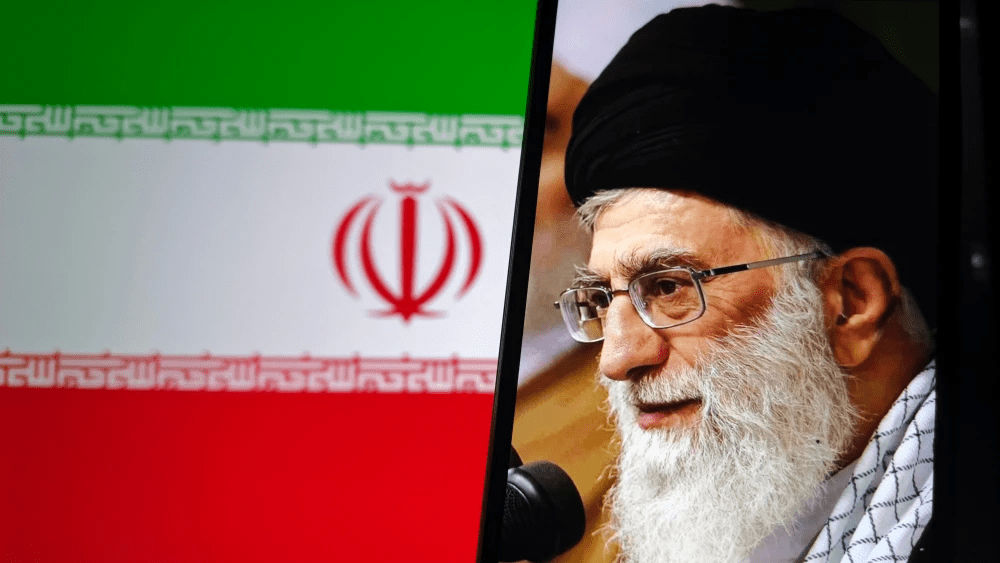
On the morning of February 24, 2026, the Mojahedin-e Khalq (MEK) announced that it had carried out a coordinated armed operation near the residence of Supreme Leader Ali Khamenei in the heart of Tehran, claiming that 250 of its members took part in the assault and that 100 were killed in the operation. It was a staggering claim. If true, it would mark one of the most dramatic confrontations in the Islamic Republic’s recent history.
There was no footage. No photographs. No verified eyewitness accounts. … The absence of tangible proof was glaring.
Yet almost immediately, serious questions began to surface. There were scattered reports that seemed, at first glance, to lend the story a degree of plausibility. The regime reportedly had closed schools in the vicinity of the supreme leader’s residence and blocked certain roads. There was a heavier-than-usual security presence in the area. Even snippets in state-affiliated media hinted that “something” had occurred, conveyed in a guarded tone that suggested reluctance to disclose details. But, beyond these fragments, the evidence fell apart.
There was no footage. No photographs. No verified eyewitness accounts. No names or images of the alleged dead. Not a single confirmed report of gunfire in a tightly controlled part of Tehran, where such an operation—especially one resulting in 100 fatalities—would have been impossible to conceal. The absence of tangible proof was glaring.
More damaging still, the MEK used an image from a previous Islamic State attack on Iran’s parliament in 2017 in its report about the alleged operation. That alone was enough to raise doubts about the authenticity of the entire narrative.

To understand the broader implications, it is important to understand the MEK itself.
The group—also known as the People’s Mojahedin of Iran—and its political umbrella, the National Council of Resistance of Iran, have long polarized Iranian politics. Once part of the revolutionary movement that helped topple the shah in 1979, the MEK later fell out with Ruhollah Khomeini when he refused to give them a single seat of power.
The MEK’s subsequent decision to align with Saddam Hussein during the Iran-Iraq War damaged its standing among ordinary Iranians. For many, that alliance crossed a national red line. The scars of the eight-year war remain deep, and Iranian see siding with Saddam as a betrayal that disqualifies the MEK from moral leadership.
Compounding this legacy are longstanding accusations regarding the group’s rigid cult behavior, and the intense personal devotion—similar to that in North Korea—expected of the members toward its leadership. Critics, including many former members, have described the organization as cult-like, where any dissent is dealt with retributions. It is therefore not surprising that the overwhelming population of Iran regard the MEK as even less desirable than the current regime.
Yet despite its lack of domestic appeal, the MEK remains well funded, highly organized, and active internationally. It has cultivated relationships with Western political figures and positioned itself as a ready-made alternative government through its National Council of Resistance of Iran framework.
When claims outpace reality, the result is not empowerment—it is an erosion of credibility.
As speculation grows about the long-term durability of the Islamic Republic, opposition factions are maneuvering to establish themselves as viable successors. Among them is the former crown prince, Reza Pahlavi, who presents himself as a unifying national figure capable of overseeing transition.
In such a landscape, relevance is currency. An armed operation targeting the symbolic heart of the regime projects strength, sacrifice, and operational reach. It would remind supporters and international backers that the MEK remains a force with which to be reckoned.
But when claims outpace reality, the result is not empowerment—it is an erosion of credibility. For decades, the Islamic Republic has used the MEK as a convenient bogeyman—a specter of ideological extremism and treachery invoked to frighten the public and justify repression. The implicit message has always been clear: Whatever the regime’s flaws, the alternative will be worse.
An inflated claim of a massive armed assault only reinforces that narrative. It feeds into the regime’s portrayal of the MEK as its opposition. In that sense, such propaganda amplifies the regime’s warnings of a post-Islamic Republic chaos and terror that will follow.
If Iran is indeed approaching a pivotal moment, credibility will matter more than spectacle. A population already weary from decades of upheaval is unlikely to entrust its future to actors who rely on unverifiable propaganda.
In the end, the MEK’s uncorroborated and exaggerated claim that 100 of its members were killed in the attack, while 150 survived, only damages its own credibility. Such childish inflation does not project strength; it exposes weakness and undermines whatever seriousness the organization seeks to convey as a viable alternative.
https://www.congress.gov/crs-product/R48433
The Mojahedin-e-Khalq (MEK) or People’s Mojahedin Organization of Iran (PMOI)
Summary
The Mojahedin-e-Khalq or MEK (also known as the People’s Mojahedin Organization of Iran, or PMOI) is an exiled Iranian opposition group. This report provides background on the group, including its origins, its 1997 designation by the U.S. Department of State as a Foreign Terrorist Organization (FTO), its 2012 delisting as an FTO, and other issues.
Background
The MEK was founded in Iran in the early 1960s to oppose the government of Shah Mohammad Reza Pahlavi, the last Shah of Iran. The group’s foundational ideology has been described by one historian as “a combination of Islam and Marxism.”1 Alongside and in periodic collaboration with other opposition groups of various ideological backgrounds, the MEK in the 1960s and 1970s sought the overthrow of the then-U.S.-backed Shah through guerilla attacks against the Iranian government and other targets. Some of these attacks killed U.S. military personnel stationed in Iran according to a 1994 congressionally mandated State Department report.2 The MEK participated in the 1979 Iranian Revolution and, after the fall of the Shah, “supported the takeover of the U.S. embassy, and opposed the release of American hostages” according to the 1994 State Department report.3 The MEK has denied involvement in the 1979 embassy seizure and other attacks on Americans in Iran.4
In the early 1980s, the MEK fell out with the newly established Islamic Republic led by Ayatollah Ruhollah Khomeini, and launched attacks against it (including a 1981 bombing that killed Iran’s chief justice and dozens of other officials); in response, the government detained and “indiscriminately” executed thousands of MEK supporters.5 MEK leader Massoud Rajavi and other MEK figures fled to France in 1981 as the crackdown intensified and founded the National Council of Resistance of Iran (NCRI) purporting to act as a government-in-exile. In 1985, Rajavi married Maryam Qajar-Azodanlu, who changed her name to Maryam Rajavi and became secretary-general of the MEK and the “President-Elect” of the NCRI. The Rajavis and other MEK members left France in 1986 for Iraq, where the MEK aided the government of Saddam Hussein in its war against Iran.6 Massoud Rajavi has reportedly not been seen in public since 2003 and his whereabouts are unknown; some analysts speculate that he is dead.7 According to the State Department report mentioned above, NCRI “disintegrated in the 1980s” as various partners “left the organization because of their objections to Rajavi’s dictatorial methods and his unilateral decision to ally with Iraq.”8
After the 1988 conclusion of the Iran-Iraq War, the MEK remained in Iraq, which they continued to use as a base for attacks both in Iran and abroad. Such attacks included coordinated assaults against Iranian diplomatic installations in 11 countries (including Iran’s Mission to the United Nations in New York) in April 1992, and the April 1999 assassination of the deputy chief of the Iranian Armed Forces General Staff.
Listing as a Foreign Terrorist Organization (FTO)
In October 1997, the State Department made the first designations pursuant to Section 219 of the Immigration and Nationality Act (as added by Section 302 of the Antiterrorism and Effective Death Penalty Act of 1996, AEDPA, P.L. 104-132), which authorizes the Secretary of State to designate as a Foreign Terrorist Organization (FTO) any group that engages in terrorist activity that threatens U.S. national security.9 The State Department announced the designation of 30 groups as FTOs, including the MEK.10 An October 1997 media report on the designations, citing an unnamed senior Clinton Administration official, stated that “inclusion of the [MEK] was intended as a goodwill gesture to Tehran and its newly elected moderate president, Mohammad Khatami,”11 a quote that has since featured prominently in MEK efforts to portray the designation as baseless and politically motivated.12 A 1999 State Department report announcing the redesignation of most of the original designees (including the MEK) featured several frequently asked questions, including, “Why was the MEK designated?” The report answered:
We have sufficient grounds for concluding that they are a terrorist organization and continue to engage in terrorist violence. The designation is based on activities much more recent than the takeover of our embassy.
Additionally, directing terrorism against a government or entity with whom we have differences does not exclude an organization from designation as an FTO.
MEK is designated as a Foreign Terrorist Organization because of the acts they commit, not who they act against and not who they are.13
In 1999, the State Department also added “National Council of Resistance” and NCR as aliases of the MEK.14
In the 2011 Country Reports on Terrorism (the last in which the MEK was included as an FTO), the State Department reported the group had 5,000-10,000 members worldwide, with large contingents in Paris and other European capitals, and that the NCRI (“the MEK’s political arm”) had “a global support network with active lobbying and propaganda efforts in major Western capitals. NCRI also has a well-developed media communications strategy.”15 That report also stated, “Before Operation Iraqi Freedom began in 2003, the MEK received all of its military assistance and most of its financial support from Saddam Hussein. The fall of Saddam Hussein’s regime has led the MEK increasingly to rely on front organizations to solicit contributions from expatriate Iranian communities.”16
In the late 2000s, the MEK mounted a legal and advocacy campaign in the United Kingdom and Europe to seek delisting as a terrorist group; the group was delisted as a terrorist organization by the United Kingdom in 2008 and the European Union in 2009.17 Seeking to capitalize on that momentum, the MEK petitioned the U.S. State Department to revoke its FTO designation in 2008, pursuant to AEDPA. In January 2009, Secretary of State Condoleezza Rice denied the petition but noted in a document provided to the MEK that “the continued designation of the MEK should be reexamined by the Secretary of State in the next two years even if the MEK does not file a petition for revocation,” given the MEK’s claims to have renounced terrorism.18
In July 2010, the U.S. Court of Appeals for the District of Columbia directed the Secretary to review the designation and to “provide the PMOI the opportunity to review and rebut the unclassified portions of the record on which she relied” in keeping the group on the FTO list.19 That court ruled again in June 2012 that the Secretary’s “delay in acting on PMOI’s petition for revocation is egregious” and ordered the Secretary to deny or grant the petition within four months.20
The MEK complemented its legal efforts with an advocacy campaign in Congress focused on the status of the group’s members in Iraq.21 MEK members in Iraq relinquished weapons to U.S. forces in Iraq in 2003 and remained concentrated largely at a location known as Camp Ashraf. In 2004, then-Secretary of Defense Donald Rumsfeld designated MEK members as “protected persons” under the Fourth Geneva Convention and U.S.-led coalition forces maintained security at the camp.22 U.S. forces handed security responsibility for the camp to the elected Iraqi government in 2008. As U.S. forces withdrew additional forces from Iraq in 2009, Iraqi government forces asserted greater security control over Camp Ashraf, and conducted operations inside the camp resulting in the deaths and injuries of some MEK camp residents. Some House Members introduced or cosponsored resolutions calling for protections and humanitarian assistance to Camp Ashraf residents (e.g. H.Res. 704, 111th Congress; and, H.Res. 231 and H.Res. 332, 112th Congress). Other Members introduced or cosponsored a resolution calling for the MEK’s delisting as an FTO (H.Res. 60, 112th Congress).
On September 28, 2012, the State Department announced the MEK’s delisting as an FTO. In the announcement, the Department said
With today’s actions, the Department does not overlook or forget the MEK’s past acts of terrorism, including its involvement in the killing of U.S. citizens in Iran in the 1970s and an attack on U.S. soil in 1992. The Department also has serious concerns about the MEK as an organization, particularly with regard to allegations of abuse committed against its own members. The Secretary’s decision today took into account the MEK’s public renunciation of violence, the absence of confirmed acts of terrorism by the MEK for more than a decade, and their cooperation in the peaceful closure of Camp Ashraf, their historic paramilitary base.23
In 2013, the MEK left Iraq for Albania, where the group remains at a site called Camp Ashraf-3 and reportedly has periodically faced threats from Iran’s Islamic Revolutionary Guard Corps (IRGC).24 The U.S. government provided some diplomatic and financial support for the MEK’s move to Albania and the Albanian government’s role in hosting the group.25 In June 2023, Albanian police reportedly raided the MEK camp as part of an investigation into “unsanctioned political activities;” the MEK claimed one of its members was killed and dozens injured in the raid.26
Some Members of Congress have remained engaged in MEK-related issues. In the 118th Congress, H.Res. 100, which would have expressed “support for the Iranian people’s desire for a democratic, secular, and nonnuclear Republic of Iran,” condemned “violations of human rights and state-sponsored terrorism by the Iranian Government,” and referenced “opposition leader Mrs. Maryam Rajavi,” had 243 cosponsors. H.Res. 1148, which would have expressed the House of Representatives’ support for Rajavi’s “Ten-Point Plan for the Future of Iran,” had 227 cosponsors.27 In December 2023, NCRI asserted that Members of Congress had formed a “Congressional ASHRAF Protection and Rights Advocacy Caucus” and published what NCRI described as the caucus’s ‘mission statement,’ ‘statement of purpose,’ and ‘by-laws.’28 In a January 2025 “Strategic Framework,” the NCRI-aligned Organization of Iranian American Communities (OIAC, see below) called for the United States government to “formally recognize” NCRI as a “parliament in exile.”29
As an exiled opposition group, the MEK plays no role in the authoritarian political system of the Islamic Republic. Given the Iranian government’s repressive approach to civil liberties and the media, there is not reliable information on the MEK’s activities or support within Iran. The MEK claims to be a focal point for broad-based opposition to the Iranian government.30 To bolster the group’s claims that it has support within Iran, the MEK has argued that it has received information from domestic sources on the government’s nuclear program and crackdowns on public protests.31 Limited public opinion polling suggests the group may not have broad popular support in Iran or within the Iranian-American diaspora.32 Statements from Iranian government officials as recently as January 2025, as well as alleged Iranian operations against both the MEK and the Albanian government, suggest that Tehran continues to view the MEK as a threat.33 The January 2025 OIAC “Strategic Framework” asserts that MEK “Iranian Resistance Units” operate covertly in Iran, organizing protests and strikes.34
In a 2022 statement to Foreign Policy, a State Department spokesperson was quoted as saying that “the United States does not see the MEK as a viable democratic opposition movement that is representative of the Iranian people.”35 The spokesperson also reportedly relayed that the State Department “continues to have serious concerns about the MEK as an organization, including allegations of abuse committed against its own members.”36 The group has long faced accusations that it holds members against their will and commits torture—allegations the group denies.37
Relationships with Other Iran-Related Groups in the United States
A number of U.S.-based advocacy groups seek to represent the views and interests of Iranian Americans. While the groups voice support for a free and democratic Iran, they often disagree strongly on U.S. policy approaches. Of these groups, the Organization of Iranian-American Communities (OIAC) appears to be closest to the MEK. OIAC materials and speakers regularly promote Maryam Rajavi, who has spoken (via video) at OIAC events, including a December 2024 OIAC briefing for congressional staff reportedly attended by several Senators and former U.S. military officials.38 OIAC has denounced Reza Pahlavi, the son of the former Shah and so-called “crown prince” whom other advocacy groups (such as the National Union for Democracy in Iran, NUFDI) have promoted.39
Footnotes
| 1. | Ervand Abrahamian, The Iranian Mojahedin (Yale University Press, 1992), p. 92. |
| 2. | U.S. Department of State, Report on the People’s Mojahedin of Iran, October 28, 1994. The report states that the MEK “are known to have assassinated” six Americans, including three U.S. military personnel, between 1973 and 1976. The report was mandated by Section 523 of the FY1994-1995 Foreign Relations Authorization Act (P.L. 103-236) and is at http://iran.org/news/1994_10-State-Dept-MEK-report.htm. |
| 3. | U.S. Department of State, Report on the People’s Mojahedin of Iran. |
| 4. | See National Council of Resistance of Iran, U.S. Representative Office, FARA filing at https://efile.fara.gov/docs/6171-Informational-Materials-20170110-1.pdf. |
| 5. | U.S. Department of State, Report on the People’s Mojahedin of Iran. |
| 6. | Ibid. |
| 7. | Jonathan Masters, “Mujahadeen-e-Khalq (MEK),” Council on Foreign Relations, July 28, 2014. In a 2020 interview, an MEK spokesperson reportedly said, “We can’t talk about it” when asked about Massoud Rajavi’s whereabouts. Patrick Kingsley, “Highly secretive Iranian rebels are holed up in Albania. They gave us a tour,” New York Times, February 16, 2020. |
| 8. | U.S. Department of State, Report on the People’s Mojahedin of Iran. |
| 9. | 8 U.S.C. §1189. For more, see CRS In Focus IF10613, The Foreign Terrorist Organization (FTO) List, by Liana W. Rosen. For follow-up, congressional offices may contact Clayton Thomas. |
| 10. | Office of the Coordinator for Counterterrorism, Public Notice 2612, 62 Federal Register 52650, October 8, 1997. |
| 11. | Norman Kempster, “U.S. designates 30 groups as terrorists,” Los Angeles Times, October 9, 1997. |
| 12. | See, for example, “The resilient MEK: Rebuilding the Iranian Resistance in exile,” PMOI/MEK, September 8, 2021. |
| 13. | U.S. Department of State, 1999 Report Index, October 8, 1999, at https://2001-2009.state.gov/s/ct/rls/rpt/fto/2682.htm. |
| 14. | Office of the Coordinator for Counterterrorism, Public Notice 3130, 64 Federal Register 55112, October 8, 1999. |
| 15. | U.S. Department of State, Country Reports on Terrorism 2011, July 2012, at https://2009-2017.state.gov/j/ct/rls/crt/2011/195553.htm. For more information on the MEK’s reliance on Iranian diaspora communities as a financial support system, see Mark Edmond Clark, “An Analysis of the Role of the Iranian Diaspora in the Financial Support System of the Mujahedin-e Khalq,” in Terrornomics, ed. Sean S. Costigan and David Gold (London: Routledge, 2007), pp. 65-76. |
| 16. | Ibid. |
| 17. | For an account of the MEK’s legal campaign in the United Kingdom and European Union, including references to primary sources, see Ben Smith, “The People’s Mujahiddeen of Iran (PMOI),” UK House of Commons Library, Briefing Paper Number CBP 5020, March 7, 2016, pp. 9-12. |
| 18. | People’s Mojahedin Organization v. United States Department of State, 613 F.3d 220 (D.C. Cir. 2010). |
| 19. | Ibid. |
| 20. | In re People’s Mojahedin Organization of Iran, 680 F.3d 832 (D.C. Cir. 2012). |
| 21. | Ali Gharib and Eli Clifton, “Long march of the yellow jackets: how a one-time terrorist group prevailed on Capitol Hill,” Intercept, February 26, 2015; Ali Harb, “How Iranian MEK went from US terror list to halls of Congress,” Middle East Eye, July 17, 2019. |
| 22. | Jeremiah Goulka et al., The Mujahedin-e Khalq in Iraq: A Policy Conundrum, RAND National Defense Research Institute, July 28, 2009. |
| 23. | U.S. Department of State, Delisting of the Mujahdin-e Khalq, September 28, 2012, at https://2009-2017.state.gov/r/pa/prs/ps/2012/09/198443.htm. |
| 24. | Kingsley, “Highly secretive Iranian rebels”; Hollie McKay, “Inside the Albanian compound of an exiled Iranian opposition group,” Coffee or Die Magazine, September 20, 2022; and, Harun Karcic, “How Albania Ended Up in Iran’s Cyber Crosshairs,” Foreign Policy, November 8, 2022. |
| 25. | Pamela Dockins, “US praises Albania for MEK resettlement,” VOA, February 14, 2016; U.S. Department of State, Remarks Before the Daily Press Briefing, September 12, 2016. |
| 26. | Maziar Motamedi, “Why was this Iran dissident group raided in Europe?” Al Jazeera, June 21, 2023. |
| 27. | Rajavi’s Ten-Point Plan, which includes calls for “a republic founded on universal suffrage and pluralism,” “separation of religion and state,” and “complete gender equality,” is available at https://www.ncr-iran.org/en/maryam-rajavis-ten-point-plan-for-future-iran/. |
| 28. | “Congressional caucus spearheads global initiative to ensure safety and rights of Iranian dissidents in Ashraf-3,” National Council of Resistance of Iran, December 21, 2023. See also Matthew Petti, “Congress forms caucus to aid Iranian ex-terror group,” Responsible Statecraft, January 16, 2024. As of December 2024, the caucus did not appear on the Committee on House Administration’s list of Congressional Member Organizations (CMOs) in the 118th Congress. As of February 2025, the caucus does not appear on the CMO list for the 119th Congress. See CMO lists at https://cha.house.gov/congressional-member-and-staff-organizations. |
| 29. | “Strategic framework for U.S. policy on Iran: Supporting regime change, engaging viable alternative, and facilitating transition,” Organization of Iranian-American Communities, January 15, 2025. OIAC’s website says the group “supports the 10-point plans by Mrs. Maryam Rajavi for a democratic Iran.” See https://oiac.org/about/. |
| 30. | See, for example, Matin Karim, “The Resistance Units: The frontline of the fight for freedom in Iran,” PMOI, February 17, 2025. |
| 31. | “About the People’s Mojahedin Organization of Iran (PMOI/MEK),” PMOI website, at https://english.mojahedin.org/about-the-peoples-mojahedin-organization-of-iran-pmoi-mek/. |
| 32. | Nancy Gallagher, Ebrahim Mohseni, and Clay Ramsey, “Iranian public opinion at the start of the Raisi Administration: a public opinion study,” University of Maryland Center for International and Security Studies, September 2021; Public Affairs Alliance of Iranian Americans, National Public Opinion Survey of the Iranian American Community 2023, February 2023. |
| 33. | Cybersecurity and Infrastructure Security Agency, “Iranian state actors conduct cyber operations against the government of Albania,” September 23, 2022; Gerta Zaimi, “Iran’s Balkan front: the roots and consequences of Iranian cyberattacks against Albania,” Middle East Institute, December 22, 2022; “Killing of senior Iranian judges puts spotlight on exiled opposition group,” Amwaj.media, January 20, 2025. |
| 34. | “Strategic framework for U.S. policy on Iran: Supporting regime change, engaging viable alternative, and facilitating transition,” Organization of Iranian-American Communities, January 15, 2025. |
| 35. | Harun Karcic, “How Albania ended up in Iran’s cyber crosshairs,” Foreign Policy, November 8, 2022. |
| 36. | Ibid. |
| 37. | No Exit: Human Rights Abuses Inside the MKO Camps, Human Rights Watch, May 18, 2005; Kingsley, “Highly secretive Iranian rebels”; Murtaza Hussain and Matthew Cole, “Defectors tell of torture and forced sterilization in militant Iranian cult,” Intercept, March 22, 2020. |
| 38. | “A bipartisan conference in the U.S Senate examined the path to a free democratic Iran,” Organization of Iranian American Communities, December 14, 2024. |
| 39. | OIAC, “Reza Pahlavi, son of overthrown shah, is no advocate for a democratic Iran,” May 10, 2023. |
Disclaimer:
These documents were prepared by the Congressional Research Service (CRS). CRS serves as nonpartisan shared staff to congressional committees and Members of Congress. It operates solely at the behest of and under the direction of Congress. Information in a CRS Report should not be relied upon for purposes other than public understanding of information that has been provided by CRS to Members of Congress in connection with CRS’s institutional role. CRS Reports, as a work of the United States Government, are not subject to copyright protection in the United States. Any CRS Report may be reproduced and distributed in its entirety without permission from CRS. However, as a CRS Report may include copyrighted images or material from a third party, you may need to obtain the permission of the copyright holder if you wish to copy or otherwise use copyrighted material.
Unmasking the Mojahedin-e Khalq: A Comprehensive Look at their Terrorist Activities
With over 40 documented incidents involving bombings and assassinations, the Mojahedin-e Khalq utilized fear, violence, and intimidation as instruments to achieve their political objectives.
February 28, 2025
Sepideh Bahrami
The Mojahedin-e Khalq (MEK), also known as the People’s Mujahedin of Iran, has long been embroiled in controversies surrounding its classification as a terrorist organization. Spanning several decades, between 1971 and 1975, the MEK executed more than 40 armed actions marked by bombings and targeted assassinations. This essay examines the organization’s violent activities during this period, asserting that the MEK’s actions fit the definition of terrorism as they aimed at instilling fear and promoting their political objectives through violence.
Early Violent Acts
The MEK’s initial foray into violence occurred on September 21, 1971, with an unsuccessful attempt to kidnap Shahram, the son of Ashraf Pahlavi. This operation, intended to secure the release of imprisoned comrades, marked the organization’s inception as an entity willing to engage in acts of violence for political ends (Wilber, 1976).
In the ensuing months and years, the MEK further demonstrated its violent capabilities. The May 3, 1972, bombing at the British Airways office, along with another explosion targeting the “This Week” magazine, showcased their willingness to target foreign interests. The group utilized terrorism as a tool to project power against foreign entities and the Iranian regime (Murray, 2005).
Another significant escalation occurred on May 30, 1972, when simultaneous bombings targeted the US Information Office, Iran-America Association, and the Iran-UK Cultural Relations Association in Tehran. This act was intended to signal discontent with American involvement in Iranian affairs under the Shah and to galvanize support for the MEK’s ideology (Keddie, 2003). On the same date, the MEK also successfully executed an explosion along General Price’s route, a high-ranking American adviser, indicating a consistent pattern of targeting individuals associated with the perceived oppressor.
In a striking action, the MEK bombed the tomb of Reza Khan on May 30, 1972, coinciding with President Nixon’s visit to Iran. This operation was not merely a random act of violence; it was a carefully calculated attempt to embarrass both the Iranian regime and the U.S. government (Sanam, 2012).
Targeted Assassinations
One of the MEK’s most infamous actions was the assassination of Lieutenant Colonel Louis Hawkins, an American military advisor, on June 2, 1973. Hawkins’ assassination not only exemplified the group’s violent methods but its resolve to target foreign nationals directly involved in Iranian military affairs (Lentini, 2003).
Other notable assassinations included General Taheri on August 12, 1972, and Brigadier General Zandi Pour on March 18, 1975, both of whom were targeted for their roles within the Iranian military. Such acts of targeted killing emphasize the MEK’s strategy to decimate the country’s military leadership through fear and violence (Central Intelligence Agency, 1993).
Coordinated Bombings
The MEK conducted a series of coordinated bombings as protests against the Shah’s regime and foreign officials. For instance, on March 2, 1974, during Sultan Qaboos’ visit to Iran, the MEK exploded bombs at various locations, including the Housing Bank building and near the British Embassy. This attack aimed to disrupt diplomatic relations and validate the organization’s revolutionary narrative (Zand, 2010).
On December 2, 1975, the MEK assassinated Reza Khalighi, a driver at the court ministry, making it evident that no individual affiliated with the regime was beyond the reach of their violence. Furthermore, the assassination on August 28, 1976, of three employees of the American company Rockwell International marked another deliberate strike against foreign interests within Iran (Harris, 1999).
The Iran-Iraq War and Cooperation with Saddam Hussein
The Iran-Iraq War (1980-1988) marked a crucial juncture for the MEK, during which the organization established a controversial affiliation with Saddam Hussein’s regime. This collaboration was underscored by the MEK’s active participation in military operations against Iran, where the group reportedly executed numerous attacks that resulted in the deaths of thousands of Iranian soldiers and civilians. Historical accounts indicate that the MEK contributed to Saddam’s military strategy, providing intelligence and operational support, which ultimately led to significant casualties for Iranian forces (Zand, 2010).
Saddam Hussein, eager to undermine the Iranian regime, saw the MEK as a useful ally in his war efforts. The organization leveraged this alliance to gain resources and military training, furthering its agenda while simultaneously committing acts of violence that equated to state-sponsored terrorism. Documented instances indicate that the MEK utilized sophisticated weaponry supplied by Iraq and conducted numerous cross-border raids into Iran, causing significant loss of life and contributing to the broader chaos of the war (Harris, 1999). This complicity not only tainted the organization’s image but also raised ethical questions about its motives and methods in pursuing political change.
Conclusion
The actions of the Mojahedin-e Khalq between 1971 and 1975 clearly position the group within the framework of terrorist organizations. With over 40 documented incidents involving bombings and assassinations, the MEK utilized fear, violence, and intimidation as instruments to achieve their political objectives. Each operation was designed to foster a climate of fear and disrupt both domestic and international relations. As such, the MEK’s methods not only contrive to define terrorism but also demonstrate the complexities of politically motivated violence in the 20th century.
In conclusion, the Mojahedin-e Khalq, rooted in Marxist-Islamist ideology, illustrates the intricate use of terrorism for political aims and highlights the moral challenges in pursuing ideological objectives.
References
- Wilber, Donald N. 1976. The Iranian Revolution of 1979: A Historical Perspective. Washington: CIA.
- Murray, Christine. 2005. Terrorism and Counterterrorism: A Global Perspective. London: Routledge.
- Keddie, Nikki R. 2003. Modern Iran: Roots and Results of Revolution. New Haven: Yale University Press.
- Sanam, Arash. 2012. “Nixon’s visit to Iran and its cultural ramifications.” Journal of Iranian Studies.
- Lentini, Peter. 2003. “The Struggle Against State Oppression: An Analysis of the MEK.” Middle Eastern Politics Journal.
- Central Intelligence Agency. 1993. World Factbook. Washington, D.C.: CIA.
- Zand, A. 2010. “SEPTEMBER 21, 1971: A Terrorist’s Diary.” Iranian Affairs Review.
- Harris, John. 1999. The Evolution of Iranian Political Violence. Cambridge: Harvard University Press.
9.Zand, A. 2010. “The Role of the MEK in the Iran-Iraq War.” Iranian Affairs Review.
From Terror List to Political Lobbying – Assassinations, Abuse, and International Maneuvering
By Amil Imani|February 22nd, 2026
By: Amil Imani

February 24, 2026
Washington’s Favorite “Opposition” Is Iran’s Most Hated Cult
For decades, a specific brand of political theater has played out in Washington ballrooms: high-ranking American officials standing before rows of cheering, flag-waving supporters to declare that the Mojahedin-e-Khalq (MEK) is the “democratic alternative” to the Islamic Republic. Figures like Mike Pompeo, John Bolton, and Rudy Giuliani have spent years cashing massive speaking fees to shill for a group that nearly every credible analyst – and 80 million Iranians – recognize as a treasonous, totalitarian cult.
The push to install the MEK as a puppet government isn’t just bad diplomacy; it is a direct assault on the aspirations of the Iranian people. If history repeats itself, the U.S. risks making a blunder even more catastrophic than the perceived “installation” of Khomeini in 1979 – this time by forcing a group upon Iran that the population views with visceral, historical hatred.
The primary reason the MEK is despised across the Iranian political spectrum is not their ideology, but their record during the Iran-Iraq War. While Iranian soldiers and civilians were dying by the hundreds of thousands to defend their soil against Saddam Hussein’s invasion, the MEK relocated to Iraq and fought alongside Saddam.
In the eyes of Iranians – whether they support the current regime, loathe it, or fall somewhere in between – the MEK are not “freedom fighters.” They are “Monafeqin” (Hypocrites) who committed the ultimate sin: siding with the enemy during a war for national survival. Their participation in Operation Mersad, a failed 1988 invasion of Iran backed by Iraqi air power, cemented their status as traitors in the national consciousness.
Behind the slick PR and the “National Council of Resistance of Iran” (NCRI) branding lies a structure that human rights organizations and former members describe as a personality cult. Led by Maryam Rajavi (and and early on by her late husband Masoud), the group enforces:
Mandatory “ideological divorces” for its members.
Isolation from family and the outside world.
Public self-criticism sessions are designed to break an individual’s will.
Reports from organizations like Human Rights Watch have documented how the group uses psychological manipulation to maintain control over its members, many of whom are now elderly and housed in a fortified compound in Albania. This is not a “government-in-exile”; it is a relic of 1970s Marxist-Islamist radicalism that has mutated into a closed-loop authoritarian sect.
Despite this, the MEK enjoys unprecedented access to the upper echelons of the U.S. political establishment. The irony is thick: men like John Bolton, who claim to promote “freedom,” are the primary advocates for a group that was on the U.S. Foreign Terrorist Organization (FTO) list until 2012.
The advocacy of Rudy Giuliani, Mike Pompeo, and John Bolton (and many more) is particularly egregious. Pompeo, even after leaving office, has visited the MEK camp in Albania, lending the group a veneer of legitimacy that it lacks at home. By promoting the MEK, these officials signal to the Iranian people that the U.S. is not interested in their actual democratic will, but in installing a compliant, ready-made puppet that will serve Washington’s interests – regardless of how much the local population hates them.
“The MEK has no base in Iran, no support in Iran. They are a cult… If you want to make the current regime in Tehran look popular, just start supporting the MEK.” – Common sentiment among secular Iranian activists.
The most dangerous aspect of the MEK obsession is that it sucks the oxygen out of the room for genuine, domestic Iranian movements. The uprisings of 2025 and 2026 have shown a youth-led, decentralized movement that wants a secular, democratic future. These protesters are not shouting for Maryam Rajavi; they are shouting for “Woman, Life, Freedom” or for a referendum to decide their own fate.
When Washington hawks push the MEK, they hand the Islamic Republic a propaganda gift. The regime can dismiss all legitimate dissent as being “MEK-led” or “foreign-funded,” allowing them to justify brutal crackdowns under the guise of national security. By associating the cause of “regime change” with a hated terrorist cult, Pompeo and Bolton are effectively strengthening the very regime they claim to oppose.
Installing the MEK in Iran would be like trying to “liberate” France after WWII by installing a Nazi-collaborator government. It is a fundamental misunderstanding of Iranian history and psychology.
The 80 million people living in Iran deserve better than a choice between a clerical autocracy and a cultist autocracy. If the U.S. wants to support democracy in Iran, it must stop auditioning puppets and start listening to the millions of Iranians on the streets who want to write their own future – a future that absolutely does not include the MEK.
The MEK and the Rajavis: Controversies and Allegations Surrounding the Iranian Opposition Group
In the realm of Iranian politics, few groups have sparked as much controversy and generated as much animosity as the Mujahedin-e Khalq (MEK) and its leaders, Masoud and Maryam Rajavi. With claims of terrorism, human rights abuses, and allegations of collaboration with foreign powers, the MEK and the Rajavis have become a subject of intense scrutiny and contention both within Iran and on the international stage.
The MEK: An Overview of Controversial Figures:
The MEK, founded in the 1960s as a militant leftist organization, played a significant role in the Iranian Revolution. However, its ideology and tactics evolved, leading to its designation as a terrorist group by several countries, including the United States, until 2012. The MEK’s association with violence and its history of attacking both Iranian and Western targets have contributed to widespread condemnation.
The Rajavi Couple: Leaders and Controversial Figures:
The deceased Masoud Rajavi, the founder of the MEK, and his wife, Maryam Rajavi, have assumed leadership positions within the organization. Their hold over the MEK and its political arm, the National Council of Resistance of Iran (NCRI), has been a subject of criticism and controversy. Critics argue that the Rajavis maintain tight control over the group, stifling dissent and suppressing internal power struggles.
Allegations of Human Rights Abuses and Terrorist Activities:
One of the most contentious aspects of the MEK and the Rajavis’ legacy is the alleged involvement in human rights abuses and acts of terrorism. Former members and critics have accused the MEK of employing cult-like tactics, including forced marriages, isolation, and even torture. Additionally, claims of the group’s involvement in assassinations and bombings have persisted over the years, further tarnishing its reputation.
Controversial International Connections and Collaborations:
The MEK has garnered attention for its alleged collaborations with foreign entities, particularly the United States. While the U.S. officially removed the MEK from its list of designated terrorist organizations, critics argue that America’s association with the MEK raises concerns about double standards in counterterrorism efforts. Claims of U.S. support for the MEK as a potential replacement for the Iranian government after Khamenei’s tenure add fuel to the fire, heightening tensions within Iran.
Public Perception in Iran:
It is important to note that the perception of the MEK and the Rajavis within Iran is highly polarized. While some Iranians view them as heroes and an alternative to the current regime, many others hold deep animosity towards the group. Historical events and the MEK’s violent tactics have led to widespread resentment and suspicion among Iranians, who perceive the group as betraying the ideals of the revolution and colluding with foreign powers.
The MEK and the Rajavis’ controversial legacy continues to divide opinions and generate intense debate. Accusations of terrorism, human rights abuses, and collaboration with foreign powers have contributed to their negative image, particularly within Iran. The alleged aspirations of installing the MEK after Khamenei’s departure add further complexity to an already contentious situation. As the MEK’s influence and international connections persist, the controversy surrounding the group is likely to endure, shaping Iran’s domestic politics and its relations with the international community.
© 2026 NWV – All Rights Reserved
Home » Mujahedin Khalq Organization » The Mujahideen-e Khalq: From Revolutionaries to Terrorists
The Mujahideen-e Khalq: From Revolutionaries to Terrorists
From Revolutionary Movement to Controversial Opponent in Iranian Politics
https://www.nejatngo.org /en/posts/15710
October 5, 2024
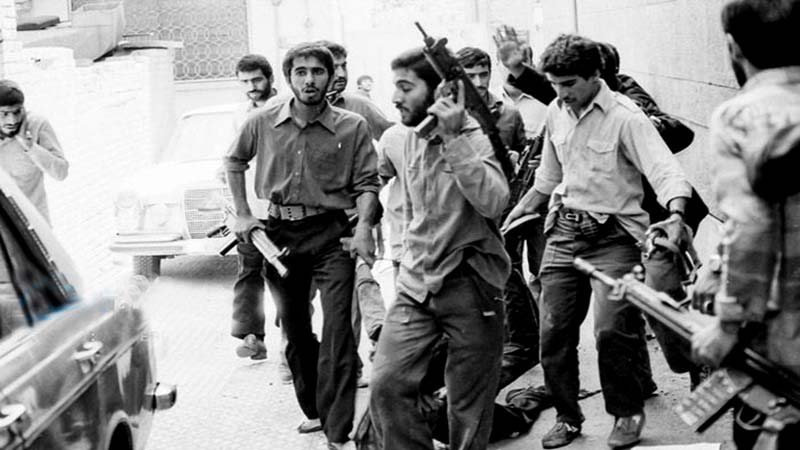
On Mehr 5, 1360 (September 27, 1981), Tehran experienced one of the most devastating and organized terrorist acts in its modern history. This calculated attack was orchestrated by the Mujahideen-e Khalq (MEK), a militant group that once claimed to fight for the freedom of the Iranian people but had turned its back on the very principles it proclaimed to uphold. The incident was marked by chaos, bloodshed, and violence, as the MEK armed forces executed a coordinated assault in the heart of Iran’s capital, wreaking havoc across several key areas of the city, including the streets of Taleghani, Vali Asr, Jumhuri, and around Hafez Bridge.
This article delves deep into the terrorist attack of Mehr 5, 1360, the implications of this act of violence, and the broader political and historical context surrounding it. By analyzing the causes, the nature of the attack, and its aftermath, we will uncover how this tragic event shaped the Iranian political landscape and revealed the true face of the MEK’s terror-driven agenda.
The Mujahideen-e Khalq Organization (MEK) was initially established in the 1960s as a Marxist-Islamist opposition group against the Pahlavi regime, aiming to overthrow the Shah of Iran. During the Iranian Revolution of 1979, the MEK was part of the broader revolutionary movement that played a significant role in the ousting of the Shah. However, despite their initial alignment with the revolutionaries, the group quickly became disillusioned with the direction the new Islamic Republic of Iran was taking under the leadership of Ayatollah Khomeini
The Mojahedin-e Khalq (MEK), also known as the People’s Mujahedin of Iran, is an organization that has been involved in various activities in Iran since its founding in the 1960s. Originally formed as an Islamic and leftist group opposing the Shah’s regime, the MEK has since taken on multiple roles, including that of a dissident group and a designated terrorist organization by some countries, especially in the United States and Iran. In examining the MEK’s activities, it becomes clear that their operations are characterized by a series of political, militant, and terrorist actions aimed at destabilizing the Iranian government.
Initially, the MEK was involved in various protests against the Shah and sought an eclectic ideology that blended Marxist and Islamic principles. After the Islamic Revolution in 1979, the group initially welcomed the political changes but quickly found itself at odds with the new regime led by Ayatollah Khomeini. This shift led to a violent suppression of the MEK, resulting in thousands of their members being arrested, imprisoned, or executed. In response, the MEK adopted a more militant stance and conducted attacks against government officials and security forces.
Throughout the 1980s, the MEK intensified its militant activities, including acts of terrorism within Iran. The group was responsible for numerous assassinations targeting Iranian officials, marking a significant chapter in the narrative of violence associated with dissident movements in the region. The MEK’s strategic decision to resort to violence stemmed from the perception that peaceful protest would not yield any results under a repressive regime. As a result, their operations became increasingly radicalized, culminating in a series of high-profile attacks.
The MEK’s most notorious operation in the 1980s was Operation Eternal Light in 1988, which aimed to overthrow the Iranian government. This operation was disastrous for the MEK, leading to significant casualties and a loss of military capability. Following that operation, the group regrouped and moved its base to Iraq, where it received support from Saddam Hussein’s regime. This relocation marked a turning point in the MEK’s history, as it became a tool of the Iraqi government against Iran during the Iran-Iraq War.
By stationing itself in Iraq, the MEK operated in a state of limbo, engaged in military operations against Iran while simultaneously enduring internal struggles regarding its ideological direction and leadership. The MEK established a quasi-military structure in Iraq, enabling it to launch cross-border attacks into Iran. This military aspect solidified its reputation as a terrorist organization among government officials in Iran, who accused it of receiving foreign backing for its activities.
As the international landscape evolved, the MEK found itself increasingly isolated. Although it had once enjoyed some support from Western nations during the Cold War as a counterforce to the Islamic Republic, post-9/11 geopolitics shifted dramatically against groups that were perceived as terrorist organizations. The MEK’s operatives were involved in assassinations and bombings, reinforcing their designation as a terrorist group by Iran and partly contributing to their complex relationship with nations like the United States and European countries.
The MEK’s most notorious operation in the 1980s was Operation Eternal Light in 1988, which aimed to overthrow the Iranian government. This operation was disastrous for the MEK, leading to significant casualties and a loss of military capability. Following that operation, the group regrouped and moved its base to Iraq, where it received support from Saddam Hussein’s regime. This relocation marked a turning point in the MEK’s history, as it became a tool of the Iraqi government against Iran during the Iran-Iraq War.
The U.S. State Department designated the MEK as a terrorist organization in 1997, a label that significantly impacted its ability to operate internationally. However, the designation did not stop the MEK from engaging in various forms of activism, including lobbying and public relations efforts aimed at rehabilitating its image. The group claimed to pursue a peaceful transition to democracy in Iran while simultaneously continuing its militant agenda. Over the years, various high-profile politicians and former officials have endorsed the MEK, creating a controversial discourse surrounding its place in Iranian opposition politics.
The MEK has also been implicated in numerous human rights violations and was often criticized for its authoritarian internal governance. Reports have highlighted the cult-like nature of its structures, with strict regulations governing members’ lives and loyalty to the organization’s leadership, particularly to its founder, Massoud Rajavi. The group’s insistence on loyalty above all else effectively stifled dissent within its ranks, further breeding a toxic environment that has led to accusations of brainwashing and coercion.
In recent years, the MEK has sought to reestablish itself as a legitimate opposition force against the Iranian regime. It has aimed to attract a younger demographic within Iran by highlighting its historical opposition to the regime and presenting itself as a pro-democracy alternative. The organization has utilized social media and modern communication platforms to disseminate its message, trying to present a more palatable image to both the Iranian people and the international community.
Despite its efforts to rehabilitate its image, the MEK remains controversial. Many in Iran view it with disdain, largely due to its history of collaboration with Saddam Hussein and its designation as a terrorist organization. Furthermore, the group’s actions have often been perceived as serving foreign interests rather than the genuine aspirations of the Iranian population. This perception complicates its position and raises questions about its legitimacy as a resistance movement.
The MEK’s funding and resource acquisition strategies have also raised eyebrows. It has been reported that the group has relied on donations from sympathizers, affluent expatriates, and even some foreign governments. However, its reliance on external support has led to allegations that it operates more as a mercenary force than a dedicated political movement, undermining its claims of being a unifying force for democratic change in Iran.
As the Iranian regime continues to face challenges, including widespread discontent among the populace over economic and social issues, the MEK’s activities are likely to be scrutinized more closely. The group may attempt to exploit any civil unrest as an opportunity to reassert itself. However, its long history of violence and terrorism makes it a contentious figure in any discourse about Iranian political change.
The situation is further complicated by geopolitical factors, including tensions between Iran and the United States, as well as regional challenges. As long as these tensions persist, the MEK may continue to position itself as a viable option for external intervention, but it risks remaining a marginal player due to its controversial legacy and the heavy baggage of its past.
In summary, the narrative surrounding the MEK is complex and multifaceted. Its evolution from a revolutionary movement to a designated terrorist organization illustrates the shifting dynamics of Iranian politics and the unresolved tensions that persist within the country. The MEK’s historical context and its current activities can serve as a lens through which one can understand broader themes of dissent, authoritarianism, and the quest for identity in contemporary Iran.
Ultimately, the question remains whether the MEK can successfully transition from its legacy of violence to a platform for meaningful political change. Developing a strategy rooted in grassroots support and an understanding of the socio-political landscape in Iran may provide the group with a chance to redefine its role. However, as history has shown, transforming a reputation built on decades of violence into one of solidarity and democracy will be a monumental challenge for the organization
By Rayanworld.com
Yes, We Do Know the MEK Has a Terrorist Past
By DANIEL BENJAMIN
https://www.politico.com/magazine/story/2016/12/mek-backtalk-iranian-group-214526/
December 13, 2016
Ambassador Daniel Benjamin is Director of the John Sloan Dickey Center for International Understanding at Dartmouth College and served as Coordinator for Counterterrorism at the State Department 2009-2012.
Share on Facebook Share on Twitter
In his response to my article on the connections between a number of potential Trump Cabinet nominees and the Iranian organization known as the Mujahidin e-Khalq (MEK), Robert Torricelli does what the group’s supporters always do: He rewrites history, and then smears the group’s critics.
With one MEK supporter already tapped to be a Cabinet secretary (Elaine Chao at Transportation); several others, including John Bolton and Fran Townsend, still in discussion for senior jobs in a Trump administration; and a fourth, Newt Gingrich, taking the self-described role of “chief planner,” the character of the MEK and, by extension, its well-paid supporters matters.
Let’s start with the revisionist history. Torricelli, a former congressman and senator and for many years the MEK’s lawyer, denounces my assertions about the group’s violent past as outrageous and contends that he “has seen no evidence to support the assertion Benjamin makes that it took part in terrorist activities against Iranians or Americans.”
But there’s plenty of evidence out there. For decades, and based on U.S. intelligence, the United States government has blamed the MEK for killing three U.S. Army colonels and three U.S. contractors, bombing the facilities of numerous U.S. companies and killing innocent Iranians. Multiple administrations have rejected efforts by the MEK and its surrogates to claim that any bad acts were the result of what Torricelli calls “a Marxist group” that briefly ran the MEK while other leaders, who later rejected this cabal, were in prison.
So much was true when Torricelli himself was in the House of Representatives and served as a member of the Europe and Middle East Affairs Subcommittee of the House Foreign Affairs Committee. In a written response to a subcommittee question in 1992 about the MEK, Assistant Secretary of State Robert Pelletreau wrote:
We do not deal with the People’s Mojahedin Organization of Iran. This policy arises from our concerns about the organization’s past use of terrorism, its continuing advocacy of violence, and a fundamental contradiction between its policy and our own.
First of all, the Mojahedin murdered several Americans [sic] officials in Iran in the 1970s. This is not history to us, nor do we accept the Mojahedin attempts to excuse such actions on grounds that some of the organization’s leaders were incarcerated at the time of the attacks. The organization took responsibility for the attacks, and must bear the subsequent responsibility. They also supported the occupation of our Embassy in Tehran, in which American diplomats became hostages for over a year.
This is not a solitary reference. The issue came up frequently, and the answer was always the same. A 1992 Congressional Research Service report detailed the MEK’s extensive record of murder of Americans and Iranians. Although Torricelli denies that the MEK took part in Saddam Hussein’s repression of the Kurds after Operation Desert Storm, the report, drawing on U.S. government sources, notes, “Iraqi Kurds also claimed the Mojahedin had assisted the Iraqi army in its suppression of the Kurds, ‘a claim-substantiated by refugees who fled near the Iranian border.’” The report goes on to cite the Kurdish leader—and first president of Iraq after the fall of Saddam—Jalal Talabani, as telling reporters at the time that “5,000 Iranian Mojahedin [MEK] joined Saddam’s forces in the battle for Kirkuk” and points to Wall Street Journal reporting as well on the MEK’s part in this bloody campaign.
There is also a rich scholarly literature on the MEK’s misdeeds. Indeed, in 2011, distinguished Iranian-American historian Ervand Abrahamian (author of The Iranian Mojahedin) and three dozen other leading Iran scholars including Shaul Bakhash, Gary Sick and Juan Cole all signed a letter, published in the Financial Times, that opposed removing the MEK from the State Department’s Foreign Terrorism Organization List because of its history of terrorism, cult-like behavior and lack of support among Iranians.
Additionally, the MEK’s lawyer claims that in 1997, at the time of the designation, “The State Department gave as its reasons the MEK’s long record of violence, but I can tell you that as a member of the [Senate] Foreign Relations Committee, I reviewed the State Department file on the MEK and found no evidence, no testimony and no reason for the designation except placating Tehran.” But here, too, former Sen. Torricelli’s statement is incorrect. The State Department never shares the administrative record that underlies the listing of foreign terrorist organizations with anyone outside the Justice Department, the FBI, the Treasury Department and the White House. He would not have seen any State Department “file” or any evidence it contained.
Torricelli dismissed my argument by labeling me, and those who pushed to designate the MEK as a terrorist group back in 1997, appeasers of Tehran. The MEK and its surrogates commonly use this attack against those who criticize the group, but it is nonsense. Those who worked on the designation have repeatedly refuted this claim about doing a favor to Iran, and I certainly carry no brief for Tehran.
Indeed, in my years on the National Security Staff and as coordinator for counterterrorism at the State Department, I’ve been devoted to combating Iranian terrorism. I pressed our European partners to designate Hezbollah as a terrorist organization, which they eventually did in 2013. I briefed other countries on the Iranian plot to kill the Saudi ambassador in Washington, D.C., an effort that led to an unprecedented U.N. General Assembly condemnation of Iran in 2011. MEK supporters simply believe that anyone who won’t echo their calls for regime change in Tehran must be on the Islamic Republic’s side. They also claim that the MEK has a future as the “true democratic opposition to the mullahs”—that if and when regime change comes about in Iran, the MEK will be able to fill the void. But this is just pure wishful thinking. With no support in Iran and a gruesome history behind it, the MEK has no serious political prospects.
Lastly, Torricelli implies that because several high-level officials such as Secretary Hillary Clinton and Secretary John Kerry have thanked prominent American MEK supporters for their help in pressing the remaining group members to leave Camp Ashraf and later Camp Liberty, they somehow approve of the MEK.
I can’t speak for any private communications after I left State, but I would be surprised if the sentiment inside the building were any different from what it was when I was there—which is that gratitude was expressed to various American political figures for urging MEK followers, who were being used as pawns by their leadership, to start leaving Iraq. We wanted to avoid them all getting killed—86 were slaughtered in attacks in 2011 and 2013. That’s why I recommended, and Clinton signed off on, delisting the MEK—and doing so specifically as a matter of her discretion and not because of “changed circumstances,” which would have been the reason of record if the State Department felt confident that the MEK had become a genuinely trustworthy, nonviolent and democratic group.
It’s probably too much to ask that Robert Torricelli or any of the renowned political figures supporting the MEK reconsider their views. But others in Congress and the public ought to consult the abundance of evidence of the MEK’s troubling history, including the abuse of its members relayed in reports by such observers as Human Rights Watch and the account of its efforts to buy influence on Capitol Hill contained in the memoir by former Congressman (and onetime Iran-based CIA operative) Robert Ney. A more informed debate about the MEK might start there.
 The Hostage Rescue Attempt in Iran, April 24-25, 1980