We Must Never Forget the First Victims of Khomeinist Mass Terror
Aug 17, 2026
By Banafsheh Zand & Sophie Baron-AmirTeymour

Listen to the article ☞https://substack.com/home/post/p-211597086
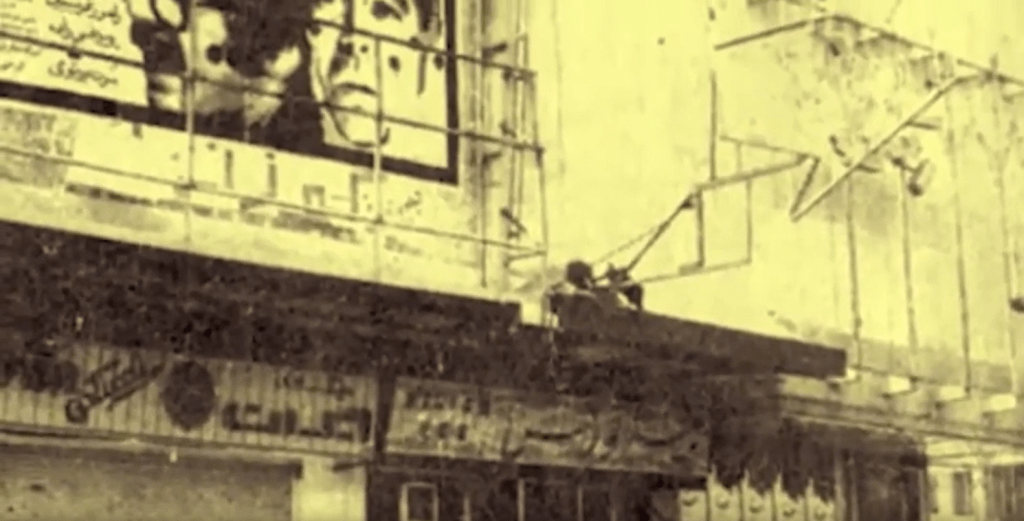
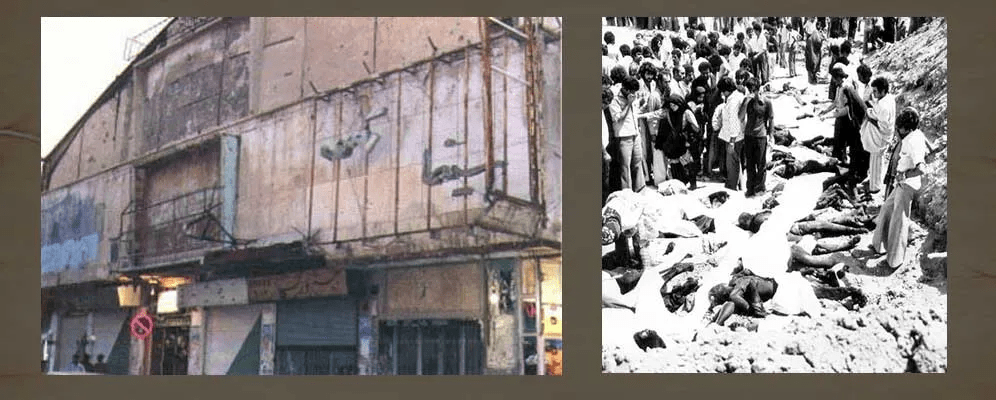
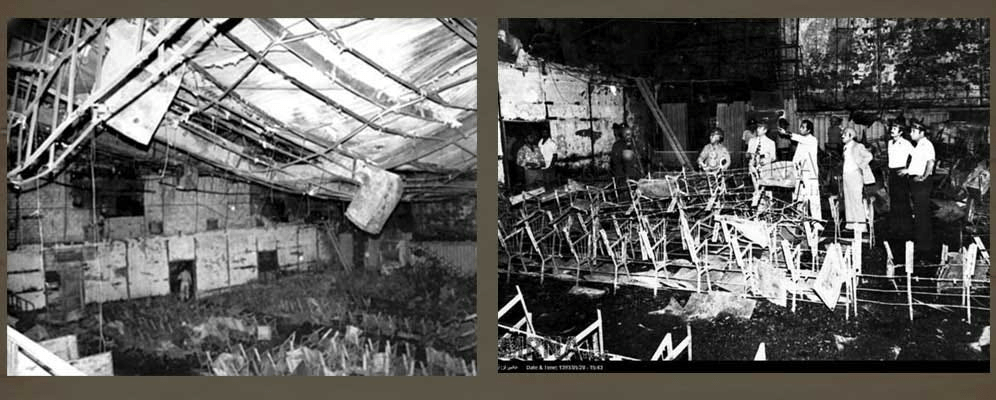
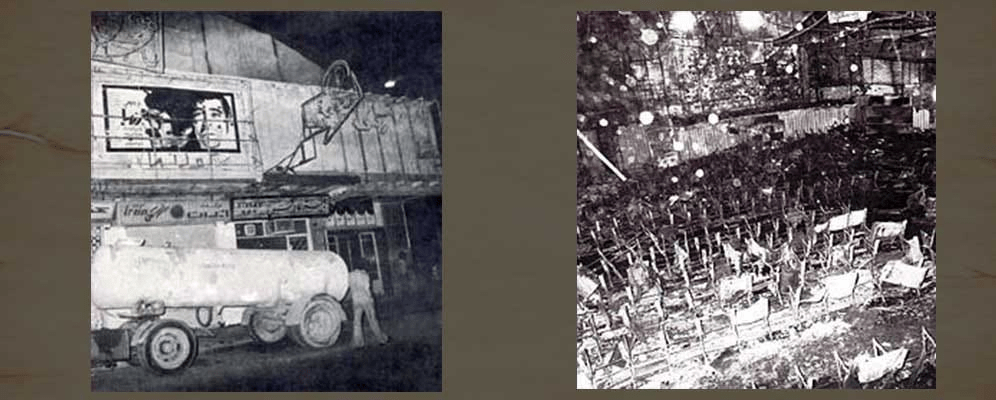
August 19th, 2026 marks the 48th anniversary of the Cinema Rex massacre in Abadan, Iran, the first mass Islamist terror attack. Hundreds of people who had gathered to watch a film were burned alive after Khomeiniist “revolutionaries” set the theater ablaze. The attack—now known to have been overseen by the late Ali Khamenei himself—marked the beginning of a campaign of terror the Islamic Regime would later export around the world.
After 9/11, Cinema Rex remains the second deadliest terrorist incident in history. The exact number of deaths remains unclear. According to an American diplomatic commentary on Iranian press reports of the day, “firemen found 377 bodies inside and death toll has unofficially risen to 430. It will probably rise still higher, since estimates of the theatre audience range from 600 to 700, and only 20 to 40 people are thought to have escaped without injury.”
August 1978 – The Setting
Iran in 1978 was a rapidly developing society, economically and socially. Fifteen years of the White Revolution had led to the Shah’s announcement in January of the Great Civilization program, which envisioned Iran reaching the economic and living standards of Western Europe within 12 years.
Opposition to the Shah came from two very different camps, both determined to bring down the monarchy. Violent Marxist-Leninist guerrillas, supported by the Communist bloc, opposed capitalism and Iran’s alliance with the United States. Reactionary Islamists remained angered by the land reform program, which had deprived them of hereditary feudal wealth, and by the progress of women’s liberation and a modern culture that included alcohol, dancing, movies, and greater freedom in personal relations. The threat posed by these extremists had made Iran a more authoritarian society than Western-educated liberal intellectuals would have preferred. At the same time, since the 1973 rise in oil prices, Western countries had begun to regard Iran as a potentially formidable competitor in the global market.
A series of demonstrations sparked by the exiled Ayatollah Ruhollah Khomeini had begun in January. These were not simply peaceful protests. Mobs, most often paid by clerics, attacked what they considered “un-Islamic” symbols: bars, liquor stores, banks, supermarkets, cinemas, and theatres were attacked and burned. Unveiled women were beaten, and state-run women’s social centers were raided. Marxists joined the Islamists and acted as provocateurs within the mobs.
Despite the unrest, the police and army managed to keep it somewhat contained, and life continued largely as normal into the summer. On August 5th, Iran’s Constitution Day, the Shah promised new elections open to all political parties within a year. For the revolutionaries, this created a dilemma. An open political campaign was not what the Islamists and Marxist-Leninists wanted. If a truly revolutionary mood were to be created, something drastic had to occur—something capable of causing the public to lose faith in the government.
It is highly likely that August 19 was chosen for a large-scale action because it marked the 25th anniversary of the 1953 uprising that ended the still-controversial premiership of Mohammad Mossadegh.
Weaponization of Social Outcasts
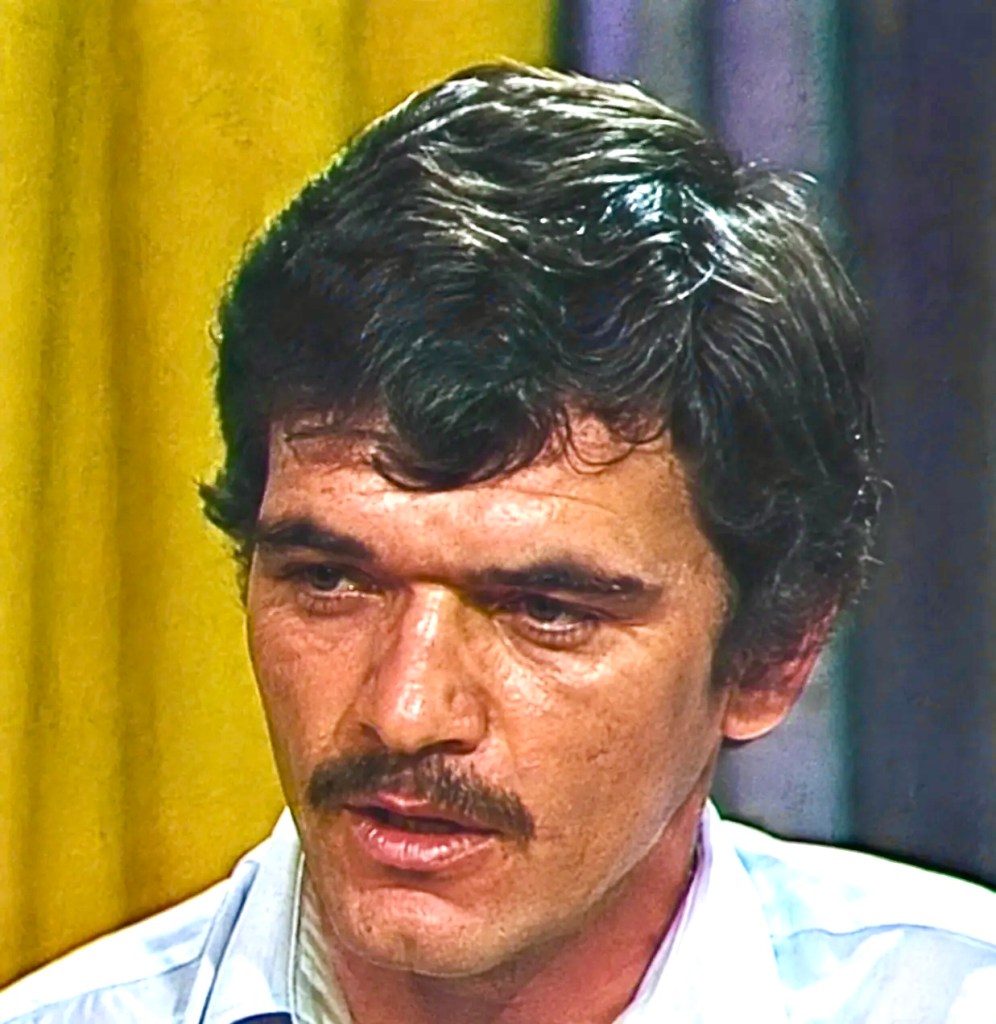
Hossein Takbalizadeh
In 1977, a 20-year-old drug addict named Hossein Takbalizadeh was introduced by a neighborhood friend, Asghar Noruzi, to several of Abadan’s Islamists, including Abdollah Lorghaba and Faraj Bazrkar. Takbalizadeh told his new friends that he wanted to quit drugs and began attending Quran study sessions at Lorghaba’s home.
Another visitor to Lorghaba’s home was a man from Esfahan named Mahmud Abolpur. Because Takbalizadeh’s grandmother lived in Esfahan, he began visiting Islamists there to obtain books and pamphlets to bring back to Abadan.
During the spring of 1978, Takbalizadeh brought several other friends— Fallah Mohammadi-Hashemi and Yadollah Mohammadpur-Hosseini — to Lorghaba’s Quran classes. Soon afterward, Takbalizadeh and Bazrkar stopped attending because they considered the classes useless and wanted to participate directly in revolutionary activities. Takbalizadeh did not, however, completely cease contact with Lorghaba.
Lorghaba later stated that complaints about Abadan not being revolutionary enough affected Takbalizadeh.
Sometime before August 19, 1978, Takbalizadeh and Bazrkar set fire to the Rastakhiz Party headquarters in Abadan, though the building sustained only minimal damage.
After he stopped attending Quran study and fell back into addiction, Takbalizadeh traveled to seek recovery, before returning to Abadan on August19th.
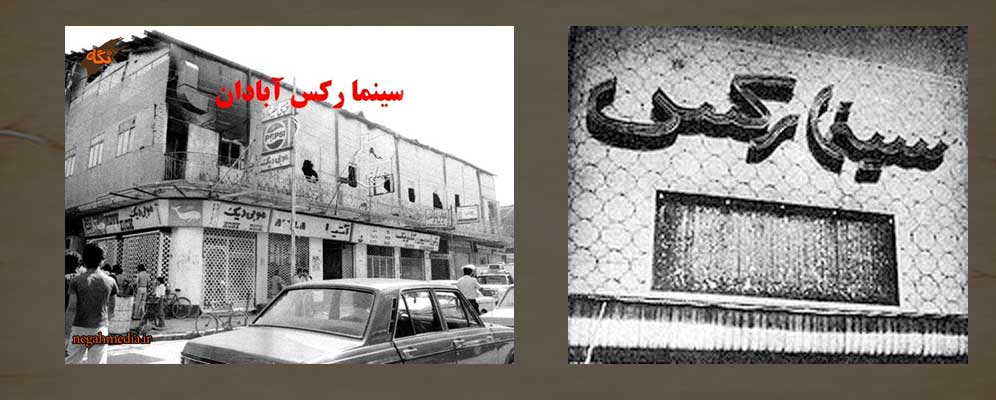
Cinema Rex
That same day, Takbalizadeh later said, Bazrkar told him that he, Fallah Mohammadi, and Yadollah Mohammadpur had decided to set fire to Cinema Soheila. Takbalizadeh agreed to join them. As he later confessed:
“We then prepared four small glasses filled with thinner and went to Cinema Soheila. We threw the glasses on the floor from the waiting room inside the cinema. Then I lit a match, but it did not catch fire.”
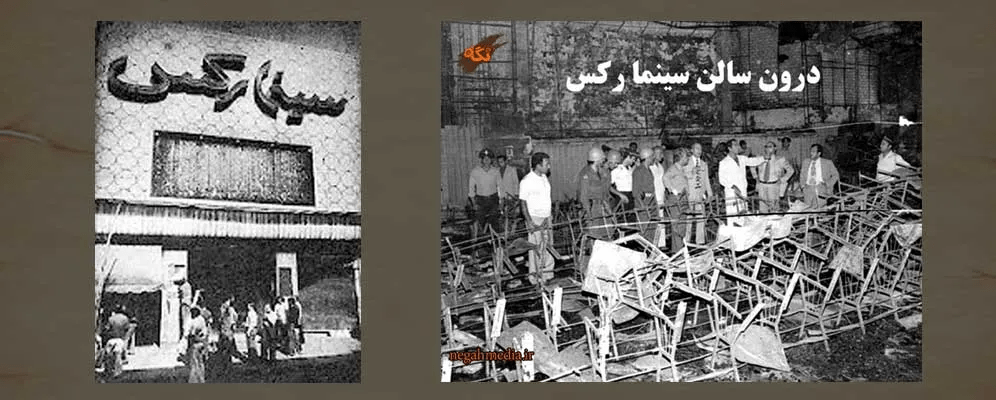
They assumed the thinner had dried too quickly and returned to Cinema Soheila with another incendiary glass, but by then the cinema was closed. Searching for another target, they arrived at Cinema Rex and purchased tickets for the 9 PM showing.
Bazrkar, Takbalizadeh, Mohammadpour, and Mohammadi poured the incendiary materials on both sides of the theatre’s entrance before Takbalizadeh struck a match. All four then returned to the theatre, except for Mohammadi, whose body was never found. Within moments, flames and smoke began spreading through the entrance. A scream alerted the audience, and panicked people rushed toward a door near the screen that led to a stairway and the street. Several people forced it open, and the crowd surged through. Takbalizadeh was swept along with the fleeing audience and escaped.
A Government Too Afraid to Reveal the Facts
Immediately after the fire, an investigation was launched by the Iranian security service, SAVAK. Four of Khomeini’s associates who had entered Iran from Iraq were arrested and interrogated.
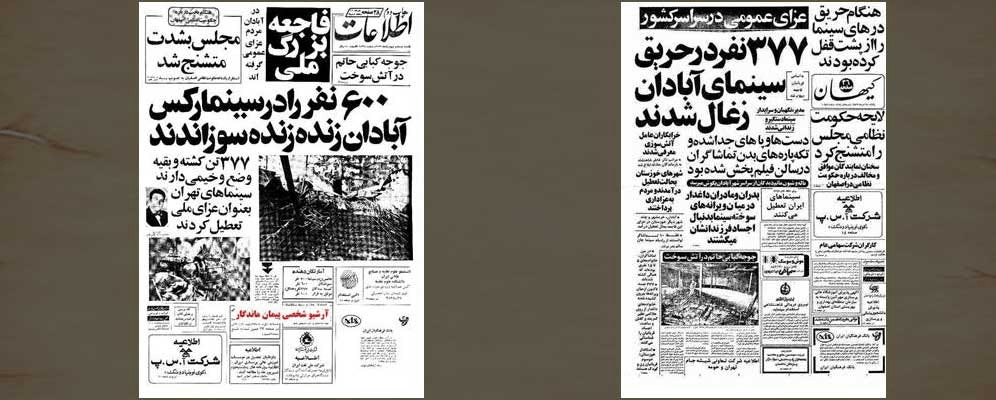
Front page of the two main Iranian daily newspapers on August 20th, 1979. Left: Etelaa’aat claiming 600 people burned alive, right: Kayhan reporting 377 burned alive.
The SAVAK report on the Cinema Rex disaster was never released because Prime Minister Jafar Sharif-Emami believed that doing so would further inflame a public whose opinion had already been shaped by months of Khomeinist agitation against the government. One copy was held by the anti-Khomeini Ayatollah Shariatmadari until Revolutionary Guards seized it during a 1979 raid on his office, as the new regime moved against its clerical opponents.
The only other person known to have possessed a copy was the then-Minister of Information, Mohammad Reza Ameli-Tehrani. Before being executed by Khomeini in May 1979, Ameli-Tehrani told journalist Ali Reza Nourizadeh that one of the four arrested Khomeiniists, a man named Ashour, had told SAVAK that the plan to burn a major cinema had been devised at a meeting in Khomeini’s house in Najaf, Iraq. According to this account, the four men were sent to Iran with $11,000 and 5,000 Iraqi dinars.

A local Islamist contact in Abadan named Fouad Karimi used the funds to obtain the incendiary materials. At the same meeting in Khomeini’s house, plans were allegedly made to accuse the government of starting the fire. When SAVAK searched Karimi’s house, they found pamphlets accusing the government of burning a movie theatre that had been printed a week before the Cinema Rex tragedy. The manager of the printing house that produced the pamphlets admitted that he had done so in exchange for payment.
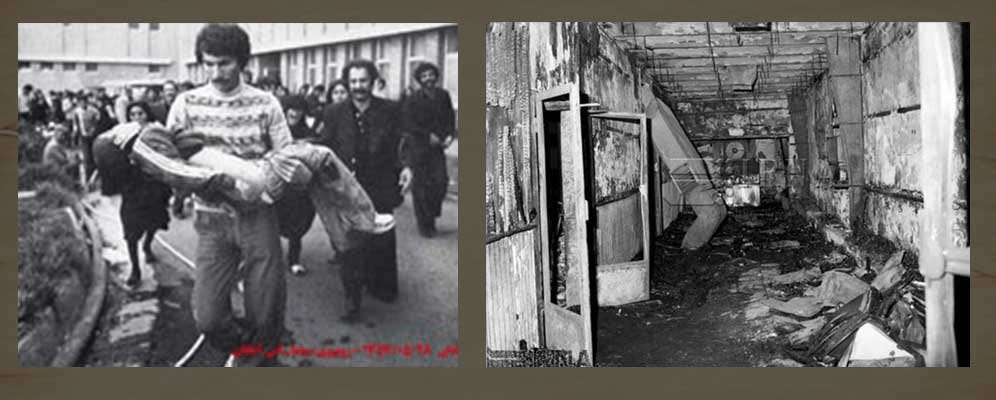
Ameli-Tehrani further told Nourizadeh that he believed the true reason for his forthcoming execution was to prevent him from speaking publicly about the Abadan disaster.
Another account of how the arson was arranged emerged in 2002, when former Khomeiniist activist Hossein Boroujerdi published a Persian-language book, Behind the Islamic Revolution.
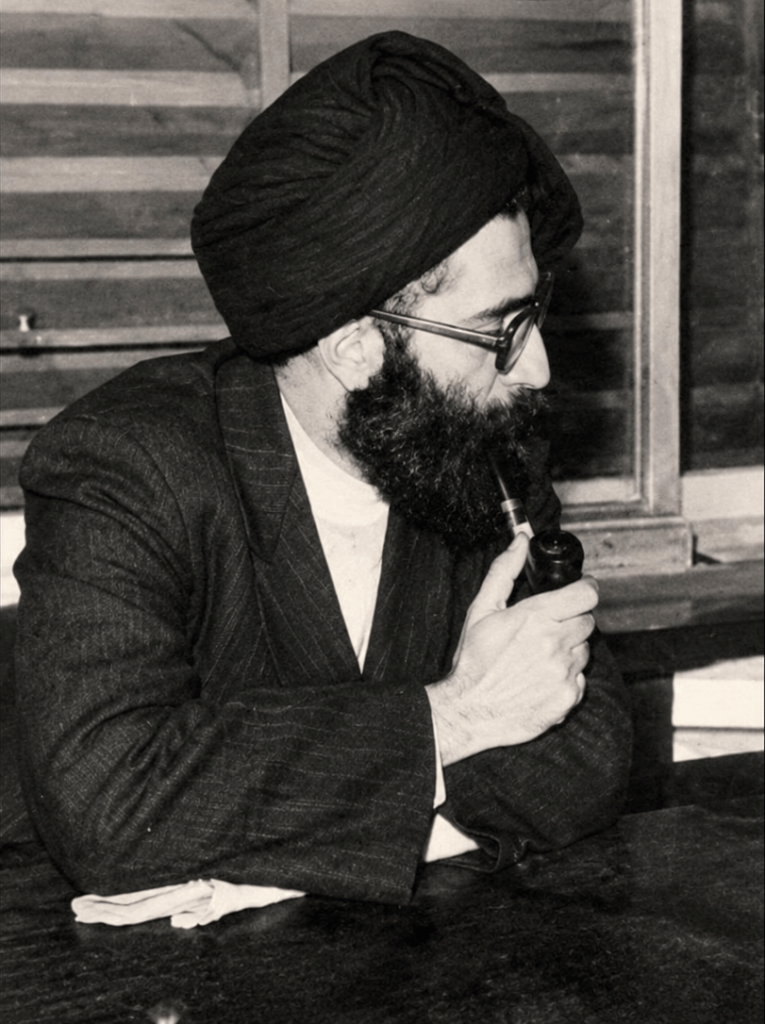
Supreme Leader Ali Khamenei who was known to the arsonists as Hadj Abdollah, 1979
Boroujerdi wrote that during the summer of 1978, while working as an underground activist, he and his comrades received incendiary materials and a sealed letter from a cleric whose name he knew only as “Hadj Abdollah.” They were instructed to take them to Abadan and deliver them to another cleric, Mousavi-Tabrizi. Boroujerdi then saw the materials passed to Takbalizadeh and his three friends.
Boroujerdi stated that he did not know what would be done with the materials until the Cinema Rex fire was reported on the news and that he felt sick upon realizing he had been an accomplice. He believed the sealed letter he had carried from Abdollah was a fatwa ordering a cinema to be burned. Only after the revolution’s victory in February, he wrote, did he learn Abdollah’s real name: Ali Khamenei.
A third account, which also implicated Mousavi-Tabrizi and his father-in-law, Ayatollah Nouri Hamedani, was given by Ayatollah Ali Tehrani. He recalled:
“On the day when the news came that the Cinema Rex in Abadan had been set on fire and dozens of people had been burned to ashes, Nouri Hamedani, I, and a group of others were sitting in a gathering. As the poison of this news hit the hearts of the people who had gathered, Nouri Hamedani leaned in and said in my ear: This was our doing. I asked: Why? He said, because we had received news that Khuzestan was quiet and not onboard with the revolution and the oil industry workers had not joined the strikers. We had to provoke both the people and the oil company employees.”
A few months later, someone approached Abadan’s deputy police chief, Colonel Bayat, and reported that the brother of the deceased perpetrator Yadollah Mohammadpur had admitted that Mohammadpur had been one of the arsonists, and that Takbalizadeh was another. Takbalizadeh was arrested. During questioning, he said that he and other young men from Abadan had regularly met with Seyyed Mohammad Kiavash, a religiously active teacher in the city. Takbalizadeh claimed that Kiavash mocked the young men of Abadan as not being “man enough” to participate in revolutionary action and repeatedly pushed them to prove otherwise. Kiavash later entered the new Islamic establishment as a member of the Majles, first representing Ahvaz and later Abadan.
An Irresponsible Media Fans the Flames
Cinema Rex was not the first cinema targeted by Islamist terrorists. Just two days earlier, the Arya Movie House in Mashhad had been set ablaze, killing three people. While every other prominent Islamic religious leader condemned the attack, Ruhollah Khomeini conspicuously refused to do so.
Opponents of the monarchy soon saw the Abadan tragedy as an opportunity to accuse the government itself of starting the fire in a “false flag” operation intended to discredit the revolutionaries.
The Tudeh Communist Party was the first group to assert publicly that SAVAK had started the fire, doing so in the September 4 issue of its underground newspaper, Navid. The allegation was supported by a purported interview with unnamed Abadan firemen.
As analyst Robert Moss observed in his 1978 study “The Campaign to Destabilize Iran”, although the communist newspaper’s account contained numerous details inconsistent with what had actually occurred, “Navid‘s story started a rumor that spread like wildfire in Tehran.” Khomeini later repeated the same accusation. What might otherwise have exposed Islamist violence instead deepened public distrust of the government and strengthened the revolutionary movement.
In the months that followed, the Cinema Rex fire triggered larger demonstrations across Iran and accelerated a cycle of violence and unrest that culminated in Khomeini’s rise to power in February 1979. Throughout this period, much of the left-wing media outside Iran repeated revolutionary claims with little scrutiny, often amplifying them, while the Shah’s government was seldom given an adequate hearing.
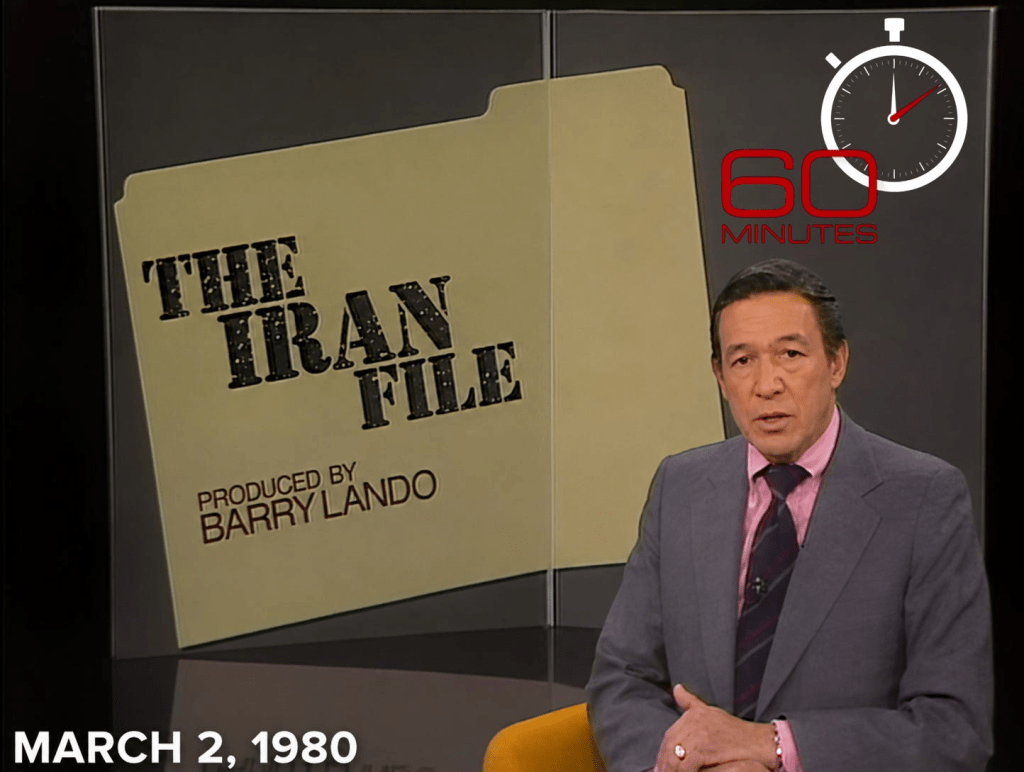
American media also played a part in attributing the Cinema Rex fire to the Shah’s government. In 1980,60 Minutes host Mike Wallace, who had long displayed hostility toward the Shah, aired a segment titled “Explaining Iran’s Animosity,” during which he identified a former Iranian official, then living as a refugee in Southern California, as responsible for the fire.” That accusation brought death threats and forced the man into hiding. Neither Wallace nor 60 Minutes producers and network ever retracted the claim. Wallace never corrected the record, never apologized, and continued to defend a false narrative of the revolution for the rest of his career.
Scapegoats Offered – But the Truth Emerges
After seizing power, Khomeini and his circle moved swiftly to eliminate opponents, executing officials, military officers, and security personnel who had stayed behind. In that climate, it was inevitable that someone from SAVAK would be blamed for the Cinema Rex atrocity.
On February 23rd, 1979, Captain Monir Taheri, a police officer of the former regime, was executed for allegedly participating in the Cinema Rex fire, despite evidence that he had not even been in Abadan that day. Meanwhile, Takbalizadeh—the man who had confessed to taking part in the arson—was quietly released from detention.
Leftist groups, by then locked in a struggle for power with Khomeini, had little interest in reopening the Cinema Rex case. The claim of SAVAK responsibility had already become a cornerstone of their narrative about the ‘crimes of the Shah and the Americans’.
The relatives of those killed in Abadan wanted real answers. Takbalizadeh, too, wanted the truth to come out—not out of remorse, but because he resented seeing what he regarded as his “holy deed” attributed to the hated “counterrevolutionaries.” He turned himself in, only to be branded a “SAVAK agent” and held incommunicado for more than a year before finally being brought to trial.
Ayatollah Ali Tehrani—Khamenei’s own brother-in-law—stood with the people of Abadan in demanding justice and wanted to oversee the trial. They called for Tehrani to oversee the trial. Instead, the regime handed the proceedings to Seyyed Hossein Mousavi-Tabrizi—the same man Takbalizadeh had identified as helping incite the attack.
Twenty-eight people, including the owner and manager of Cinema Rex, were brought to trial. Takbalizadeh represented himself, remained openly defiant, and confessed in detail to everything he knew, including the involvement of the clerics with whom he had been associated.
Although regime-controlled television broadcast only excerpts of Takbalizadeh’s testimony, the people of Abadan who packed the courtroom heard the proceedings in full, making the truth far more difficult to suppress.
After hearing the testimony, many of the victims’ relatives concluded that Takbalizadeh had been manipulated and was not the principal culprit. Convinced that the other defendants were innocent, they sought out Ayatollah Ali Tehrani, then in Mashhad, to relay what had emerged in court.
As the representatives made their way to Mashhad, they heard on the radio that Takbalizadeh had been executed, along with the owner and manager of Cinema Rex and three others. Seven people who were no longer in Iran were sentenced to death in absentia.” “With the executions carried out, any further inquiry into the massacre’s broader responsibility effectively came to an end.
When the Abadan representatives finally reached Ayatollah Tehrani in Mashhad, he told them that Khomeini had just removed him from the judiciary.” And with that, any realistic hope of establishing the full truth was gone. Tehrani was later placed under house arrest, escaped Iran in 1984, and fled to Iraq, where he published The Catastrophe of Cinema Rex, his own account in Persian. Tehrani returned to Iran in 1995 and received a ten-year prison sentence. He never spoke publicly again before his death in 2022.
Nothing better captures the revolutionary purpose behind the Cinema Rex arson than Takbalizadeh’s own words at trial: “It was oil that I was pouring on the fire of revolution to hasten its success.”
The Regime Extols a Model Operation – and Repeats It
In the early 1980s, a manual for prospective Islamist revolutionaries abroad was printed in Tehran. Written by Ayatollah Hossein Ali Montazeri and titled “Manual of Islamic Revolution”, it laid out what its author called “the techniques revolutionaries employed in order to destroy the satanic regime of the Shah”. The bitter irony is that Montazeri would later fall out with Khomeini over the regime’s brutality, stripped of his position as heir apparent and eventually placed under house arrest, a stark reminder that revolutionary zeal offers no immunity.
Among them were instructions to, “… burn places of sin, bars, cinemas, cabarets, attack all aspects of the stinking Western civilization.” Khomeini’s disciples would later employ similar methods elsewhere. From the attacks of September 11th, 2001 to the Bataclan massacre in Paris in 2015 and Hamas’s October 7th, 2023 attack on the Nova music festival, the world repeatedly witnessed the consequences of an ideology that sanctified the mass murder of civilians in the name of a higher cause.
Cinema Rex was not merely one atrocity among many; it became a template—both for the use of terror as a revolutionary instrument and for the manipulation of public perception that allowed such violence to be justified, denied, or even celebrated.
Iranians have never forgotten that the Islamic regime came to power through bloodshed, deception, and the mobilization of disaffected factions, amplified by religious fervor. For decades, they have tried to warn the global community not to be deceived by Islamist propaganda or to underestimate the violence and expansionism that accompany it.
One of the great tragedies is that the first and most numerous victims of Islamist extremism have in fact been Muslims themselves. Long before the ideology reached New York, Paris, London, Madrid, or Jerusalem, it had already devastated Muslim societies, claiming countless Muslim lives in its pursuit of power.
xxxxxxxxxxxxxxxxxxxxxxxxxxxxxxxxxxxxxxxxxxxxxxxxxxxxxxxxxxxxxxxxxxxxxxxxxxxxx

