Amnesty International’s 1976 Iran Report: Manufacturing a Tyrant in the Name of Human Rights
https://substack.com/inbox/post/219613648
How contested claims, revolutionary terrorist networks, and the struggle over Iran’s oil helped cast the Shah as a tyrant in the Western imagination
Nina Milani
Oct 09, 2026
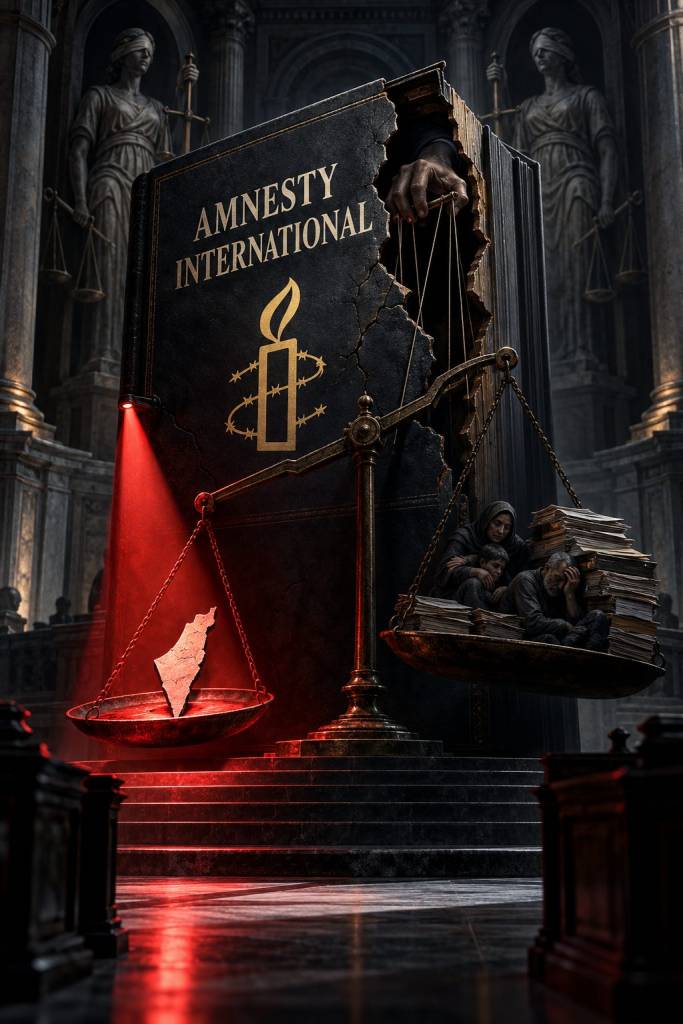
Faulty Amnesty International’s 1976 report helped entrench the portrayal of Mohammad Reza Shah Pahlavi’s government as one of the world’s most repressive regimes—a narrative with profound consequences for Iran’s constitutional monarchy.
As Sean Durns argues in The Jerusalem Post, Amnesty’s claims were echoed by journalists and cited by members of Congress, helping shape Western perceptions of the Shah. Despite subsequent clarifications revealing inaccuracies, the report’s enduring impact sustained a narrative portraying the Shah as a tyrant deeply ingrained in Western consciousness.
This essay examines the role of Amnesty International’s report in shaping global perceptions of the Shah’s government, particularly in the context of his ambitious oil policies and the alliance between communist and Islamist groups in Iran. It also considers the findings of Scott Cooper and Emad Baghi, which challenge the exaggerated figures often used to vilify the Shah’s government. Additionally, the essay compares human rights violations in the United States and Britain during the same era to provide a broader context for understanding the challenges faced by the Shah’s government.
By exploring these factors, this essay seeks to offer a nuanced perspective on the Shah’s reign and the complexities of governance in a rapidly changing world.
Reassessing the Numbers: Baghi, Cooper, Ganji, and Former Prisoners
Emad Baghi’s research is relevant because it drew on records of the Islamic Republic’s Martyrs Foundation, where he worked as a researcher. Andrew Scott Cooper later traveled to Iran and interviewed Baghi; in The Fall of Heaven, Cooper recounts Baghi’s findings. The distinction matters: Baghi examined the records, while Cooper reported on that research.
As Cooper presents Baghi’s work, the Foundation’s records initially listed 3,164 deaths associated with the period from 1963 to 1979. That total included 2,781 people killed during the 1978–79 revolution. After separating those revolutionary fatalities from deaths attributed to the Shah’s government, Cooper gives a figure of 383. He says 197 of those people were guerrilla fighters killed in clashes with security forces; he describes 183 others as political prisoners and dissidents who were executed, died under torture, or died by suicide in detention. The 183 figure therefore refers to several forms of death in custody or state detention—not executions alone. Cooper also reports that Baghi’s research put the political-prisoner population at about 3,200. These are figures reported through Cooper’s account of Baghi’s archival work, and they should be presented as such.
Akbar Ganji’s later statement provides a different kind of evidence. A former revolutionary activist and Revolutionary Guards member who later became an investigative journalist and dissident, Ganji said in an interview with journalist Nazi Kamvari that his camp had knowingly spread false claims. He specifically cited the claim that the Shah’s government held 150,000 political prisoners and accusations that the regime had killed several prominent figures. His admission is evidence that false claims circulated among some opponents of the Shah; it does not establish that Amnesty International adopted those particular claims or knew them to be false.
Accounts from people imprisoned under both governments also resist simple conclusions. IranWire interviewed former political prisoner Hamidian, who described torture under the Shah, including severe physical abuse. He contrasted that experience with the Islamic Republic, where he said prisoners faced a continuing threat of execution, renewed prosecution, and death after arrest. A Radio Free Europe/Radio Liberty roundtable included former prisoner Majid Derabeigi, who described torture under both systems and characterized the Islamic Republic’s prison population and psychological torment as markedly different. These testimonies do not erase abuses under the Shah; they help distinguish the forms and consequences of repression under the two governments.
Amnesty International’s November 1976 briefing requires the same scrutiny. It said that a reliable estimate of Iran’s political-prisoner population was impossible, cited figures of about 3,000 from the Shah and 3,200 from a SAVAK official, then relayed estimates of 25,000 to 100,000 from foreign journalists and exile groups without explaining how those figures had been verified. In April 1977, the International Committee of the Red Cross counted 3,087 political prisoners in 18 prisons—a figure far below the briefing’s upper estimates, though it does not disprove every allegation of torture or ill-treatment. Ganji’s admission does not prove that Amnesty knowingly used fabricated claims. But alongside the report’s reliance on unverified estimates and the stark difference between those estimates and the ICRC’s on-site count, it implicates Amnesty in serious negligence and in amplifying disinformation. It also raises a serious question about whether the report’s presentation deliberately misled the public.
Oil Sovereignty and the Political Context of Amnesty’s Report
The report appeared amid growing tensions over Iran’s oil policy. In 1973, the Shah’s government replaced the concessionary framework of the 1954 Consortium Agreement with a Sale and Purchase Agreement that put production under the National Iranian Oil Company (NIOC). Western companies became purchasers of Iranian oil; they no longer controlled its production or had the power to dictate its price unilaterally.
The timing deserves scrutiny. During the 1973–74 energy crisis, oil prices rose nearly fourfold—from about $2.90 a barrel before the embargo to $11.65 by January 1974. OPEC’s collective price increases and the Arab-led embargo and production cuts drove the shock; the Shah was a prominent advocate for higher prices. The crisis brought soaring costs, inflation and recession to Western economies.
Review American media coverage and public statements from the period, and a striking pattern emerges: criticism of the Shah’s human-rights record unfolded alongside a major struggle over control of Iranian oil and a global energy crisis. That coincidence deserves investigation.
The connection between oil and the human-rights debate appears in the contemporary record—not simply in the chronology. In July 1974, U.S. Treasury Secretary William Simon privately called the Shah a “ringleader” in OPEC’s push for higher oil prices, and President Nixon discussed whether Washington should pressure him. The price dispute was a direct point of tension between Tehran and Washington.
Two years later, human-rights reporting had entered a concrete congressional debate over U.S. arms sales. House hearings on Iran took place in August and September 1976; the November 1 Amnesty briefing followed. A 1977 Congressional Research Service report then summarized Amnesty’s high prisoner estimates and described the hearing process, while noting that congressional concern about Iran involved both human rights and major arms sales.
The clearest link between these subjects appears in a December 23, 1976, U.S. Embassy cable from Tehran. Embassy officials discussed congressional reliance on Amnesty and International Commission of Jurists reports, possible restrictions on military sales, and the Shah’s worsening public image. In that same discussion, they observed that unrelated issues—including oil-price increases—could aggravate Iran’s “general image problem.” The cable does not show that the oil dispute caused Amnesty to issue its report. It does show that U.S. officials recognized oil-price conflict and human-rights criticism as intertwined in the political debate over Iran’s image and U.S. policy.
By 1975, Western oil companies demanded renegotiation, signaling a historic shift where oil companies sought to negotiate terms with producing countries.
As the original contract approached expiration in 1979, the Shah proposed new conditions during extension negotiations to prioritize Iran’s national interests amid economic challenges and dissatisfaction with the existing agreement.
The false reporting by Amnesty International and others was influenced by the Shah’s courageous oil policies.
Western powers, particularly the United States, supported the narrative of human rights abuses in Iran to advance their strategic interests, including curbing Soviet influence in the region.
The Islamist–Marxist Coalition, Palestinian Networks, and the Campaign Against the Shah
The opposition to Mohammad Reza Shah Pahlavi was not a single peaceful movement. It included Islamist terrorist “revolutionaries”, Marxist guerrillas, and organizations that combined Islamic and Marxist ideas. Ervand Abrahamian documents the armed terrorism waged by both Marxist and Islamist groups, including the Fedai and the Mojahedin-e Khalq (MEK). The MEK’s record included bombings and assassinations; its members were part of a revolutionary terrorist movement seeking to overthrow the monarchy by force.
Ali Alfoneh has cited a figure of more than 20 armed Islamist and Marxist terrorist groups operating inside Iran. Their ideological differences did not prevent them from sharing an enemy: the Shah’s government. The treasonous Tudeh Party, meanwhile, was aligned with the Soviet Union, but it should be distinguished from the armed guerrilla organizations. These groups had their own structures, tactics, and political objectives.
Palestinian terroristsmilitant networks also helped shape the armed opposition. Research on the MEK’s relationship with Fatah describes Palestinian training and military support for MEK members, including instruction in tactics and weapons. This connection placed Iranian militant terrorists within a wider terrorist “revolutionary” network that exchanged terrorist training, methods, and political ideas across borders.
Sadegh Zibakalam’s late-1978 prison interview offers another window into that network. In the footage, a young Zibakalam discusses Arab and Palestinian groups, including the Popular Front for the Liberation of Palestine, encouraging opponents of the Pahlavi government to pursue violence, terrorist operations, and urban guerrilla warfare.
The interview connects the Palestinian network to the terroristic climate inside Iran; it also shows that armed terrorism was openly discussed among opponents of the Shah.
Khomeini’s clerical movement and their rampaging mob armed terrorist groups were not identical, and they did not share one ideology.
Khomeini turned medieval clerical fury into a weapon, rallying reactionaries against the Shah’s assault on their power: the dismantling of their Sharia-based judicial authority, the breakup of their vast landholdings, and women’s emancipation. Marxist and Islamist terrorist guerrillas pursued the same end with bombs and assassinations. Their ideologies clashed; their common target was the monarchy. After the revolution, Khomeini’s movement consolidated power and crushed many of the same armed groups that had helped weaken the monarchy.
This history matters when assessing claims about the Shah’s human-rights record. These organizations were political-terrorist actors engaged in a reactionary resistant to overthrow his government, not neutral observers. They had every incentive to publicize accounts that would discredit the monarchy abroad. Their record of bombings, looting, and assassinations makes it unreasonable to accept their claims uncritically.
Reports reaching Western media and institutions required independent verification—especially when Amnesty International’s 1976 report repeated claims whose underlying evidence was disputed. Amnesty’s report relied heavily on allegations promoted by Islamist and Marxist terrorist “revolutionary” networks—some of whose militants trained in Palestinian camps or Soviet-linked institutions—then gave those claims the authority of a human-rights report.
Comparison with Human Rights Violations in the United States and Britain
The Shah’s human-rights record should be examined critically. But the governments and societies judging Iran were not free of grave abuses themselves. In the United States, racial discrimination, police violence, and violations of civil liberties remained part of public life during the 1970s.
The United States had a long history of racial terror lynchings: the Equal Justice Initiative documents more than 4,000 lynchings of Black people in 12 Southern states between 1877 and 1950. That history shaped the conditions Black Americans continued to face in the following decades. In 1970, sixteen-year-old Charles Oatman died after being severely beaten in a Georgia jail. His death sparked the Augusta uprising, where six more Black men were killed by white police officers. In Detroit, archival research has documented Black men beaten to death in police custody, including Robert Slaughter in 1973.
Federal authorities also surveilled and disrupted Black political organizations. The FBI’s COINTELPRO operations targeted groups including the Black Panther Party. The program became public after an FBI office was burglarized in 1971; the FBI itself acknowledges that COINTELPRO was later condemned for violating First Amendment rights.
Government violence reached beyond racial repression. At Kent State in 1970, National Guard troops shot unarmed students protesting the Vietnam War, killing four and injuring nine. The killings provoked nationwide outrage and intensified scrutiny of the government’s use of force against protesters.
Britain, meanwhile, still presided over colonies where people faced severe abuses and often had little access to accountability. These examples do not excuse abuses by the Shah’s government. They do show that human-rights violations were not unique to Iran—and that Western criticism of the Shah unfolded against a background of serious abuses at home and under Western rule abroad.
Furthermore, the U.S. government’s Cold War crusade against communism became a license to punish dissent. McCarthyism turned suspicion into a weapon: people were investigated, interrogated, driven from public service, and blacklisted in entertainment and academia for their real or alleged communist ties. Freedom of speech and association were treated as expendable whenever they threatened the state’s anticommunist agenda.
These instances of human rights violations in the West highlight the complexity of the historical narrative surrounding the Shah’s government. While the Shah’s government faced criticism for its human rights record, particularly regarding political prisoners and the suppression of dissent, it was operating within a global context where similar violations were occurring in Western democracies.
The Shah’s Balancing Acts
The Shah pursued secularization, modernization, and economic diversification in a country marked by widespread rural poverty, low literacy, and limited infrastructure. The challenge was enormous: Iran was vast, development was uneven, and centuries of clerical influence had shaped its courts, schools, and social life.
The White Revolution, launched in 1963, sought to change that structure. Its reforms included land redistribution, women’s suffrage, the Literacy Corps, and measures to expand education and industry. The Family Protection Law strengthened women’s legal rights. These policies challenged established clerical authority and the interests of large landholders, while aiming to build a more educated population and a broader middle class.
The reforms produced major changes. Iran experienced sustained industrial growth, and the government directed much of its investment toward infrastructure, including transportation and water systems. But growth was rapid and uneven. Rural communities could not be transformed overnight, and the benefits of development did not reach every region or social group at the same pace. The Shah’s centralized rule and suppression of political opposition further intensified resentment. Economic and social progress did not cancel those grievances; nor do those grievances erase the scale of the country’s transformation.
The reform of power structure of a traditional and feudal society also provoked fierce opposition by entrenched religious nd political forces. Khomeini rallied the clergy to defend the power and wealth the Shah’s reforms threatened: their grip on law and courts, their vast estates and the rents they produced, and the draconian Sharia rules that subordinated women. The reforms extended the vote to women and curtailed men’s sweeping authority over divorce and polygamy. What Khomeini framed as a defense of Islam was also a defense of clerical privilege, concentrated wealth, and male supremacy.
Marxist and Islamist revolutionaries cast the monarchy as a capitalist, imperialist, pro-Israel order. Their rhetoric fused anti-capitalism, anti-imperialism, anti-Zionism, and revolutionary internationalism; their armed terrorist factions pursued its overthrow through bombings and assassinations of Iranians and Americans.
The Shah’s government, in turn, cracked down on armed leftist organizations, including the Soviet-aligned Tudeh Party. Modernization, clerical opposition, communist organizing, and state repression collided in a political system with little room for peaceful opposition.
Amnesty International’s institutional bias and political assumptions cannot be dismissed. Reports are written by people who decide whose testimony to trust, which claims to publish, what evidence to verify, and what context to leave out. Those decisions can turn advocacy into a political narrative presented as neutral fact.
Secretary of State Marco Rubio recently called Amnesty “a fraud” after it criticized U.S. conduct in Iran, accusing the organization of selective attention. His charge does not prove that Amnesty’s 1976 report was false, but it underscores why the organization’s credibility, methods, and political framing deserve scrutiny.
The 1976 briefing entered a Washington debate over human-rights reporting, congressional pressure, and security assistance to Iran. A U.S. Embassy cable also noted that oil-price increases were worsening Iran’s image in Washington. In that geopolitical climate, Amnesty’s disputed allegations did more than report abuses: they helped cast the Shah as a pariah and made pressure on his government easier to justify. The report’s political effect is clear; its claim to neutral truth must be tested against its sourcing, verification, and omissions.
The Shah’s effort to transform Iran from above while retaining tight political control ultimately proved unsustainable in a society still emerging from entrenched feudal and religious hierarchies.
His reforms altered the country, but they did not build a political system capable of absorbing the opposition they generated. The 1979 “revolution” was not simply a popular verdict on building an impoverished nation from scratch or a straightforward rejection of the Shah’s rule: it was the victory of a coalition whose members shared a target, then fought over the country’s future. Amnesty’s report became part of the story told about that collapse—one that fixed the Shah’s reputation in the West while leaving much of the revolutionary opposition’s role outside the frame.
Conclusion
Amnesty International’s 1976 briefing did not simply describe the Shah’s government; it helped put it on trial in the court of Western opinion. Its claims entered a Washington debate over congressional pressure, security assistance, and arms sales to Iran. A U.S. Embassy cable recorded concern that Congress was accepting Amnesty’s reporting as credible—and noted that the Shah’s oil-price policies were worsening Iran’s image in Washington. Amnesty’s allegations were politically useful: they turned a contested struggle over Iran’s future into a stark morality play, with the Shah cast as the villain.
The report’s authority outran its evidence. Amnesty acknowledged that the exact number of political prisoners could not be established, yet disputed estimates hardened into apparent fact and a sweeping indictment of the monarchy. That is not a minor flaw in presentation. It is a failure of verification with serious political consequences.
The concern is not confined to 1976. Amnesty’s accusation that Israel committed genocide in Gaza was rejected by the U.S. State Department as unfounded, while Amnesty’s own Israeli section publicly distanced itself from the conclusion. In October 2026, Secretary of State Marco Rubio called Amnesty “a fraud” and accused it of selective outrage. Those disputes do not, by themselves, settle the truth of either case; they do expose the danger of treating Amnesty’s conclusions as neutral or beyond scrutiny.
The pattern is plain: Amnesty’s reports can present politically charged judgments as settled truth, while the evidence, sourcing, and omissions receive far less attention than the headline accusation. In 1976, that framing served a geopolitical narrative that weakened the Shah’s standing in the West. The report should be remembered not as an impartial verdict, but as a consequential political intervention whose claims demand the same scrutiny Amnesty directed at the Shah.
References
Books
Andrew Scott Cooper, The Fall of Heaven: The Pahlavis and the Final Days of Imperial Iran
https://us.macmillan.com/books/9780805098983/thefallofheaven/
Andrew Scott Cooper, The Oil Kings: How the U.S., Iran, and Saudi Arabia Changed the Balance of Power in the Middle East
https://www.simonandschuster.com/books/The-Oil-Kings/Andrew-Scott-Cooper/9781439155189
Abbas Milani, The Shah
https://books.google.com/books?id=8V1UhqWhKRwC
Maziar Behrooz, Rebels with a Cause: The Failure of the Left in Iran
https://www.bloomsbury.com/us/rebels-with-a-cause-9780755652013/
Oil Policy and the 1970s Oil Crisis
Andrew Scott Cooper, “Showdown at Doha: The Secret Oil Deal That Helped Sink the Shah of Iran”
https://doi.org/10.3751/62.4.11
https://www.suren-pahlav.com/pdf/showdown_at_Doha-The_Secret_Oil_Deal_That_Helped_Sink_the_Shah_of_Iran.pdf
Encyclopaedia Iranica, “Oil Agreements in Iran”
https://www.iranicaonline.org/articles/oil-agreements-in-iran/
U.S. State Department documents on the 1973 oil agreement
https://history.state.gov/historicaldocuments/frus1969-76v36/d167
1973 Iran–NIOC–Consortium Agreement
https://tile.loc.gov/storage-services/service/ll/llglrdppub/2019668701/2019668701.pdf
U.S. State Department, “The 1973 Oil Embargo”
https://history.state.gov/milestones/1969-1976/oil-embargo
Federal Reserve History, “Oil Shock of 1973–74”
https://www.federalreservehistory.org/essays/oil-shock-of-1973-74
International Monetary Fund, “The Importance of Global Cooperation, 1972–1981”
https://www.imf.org/external/np/exr/center/mm/eng/mm_rs_02.htm
Amnesty International and Human-Rights Reporting
Amnesty International, Briefing: Iran (November 1, 1976)
https://www.amnesty.org/en/documents/mde13/001/1976/en/
Amnesty International, Annual Report 1975–1976
https://www.amnesty.org/es/wp-content/uploads/2021/05/POL1000011976ENGLISH.pdf
Amnesty International, Annual Report 1977
https://www.amnesty.org/en/wp-content/uploads/2021/09/annual-report-1977.pdf
Emad Baghi, “A Question of Numbers”
https://emadbaghi.com/a-question-of-numbers/
U.S. Congressional and State Department Records
U.S. House hearings, Human Rights in Iran (August 3 and September 8, 1976)
https://books.google.com/books?id=MbPQAAAAMAAJ
Congressional Research Service, The Status of Human Rights in Selected Countries and the U.S. Response (1977), Iran section
https://www.mohammadmossadegh.com/news/us-house-of-representatives/status-of-human-rights-in-iran/
U.S. State Department cable on human-rights reporting and Iran (August 18, 1976)
https://history.state.gov/historicaldocuments/frus1969-76v27/d184
U.S. State Department response (August 20, 1976)
https://history.state.gov/historicaldocuments/frus1969-76v27/d185
U.S. Embassy Tehran cable on human-rights reporting, congressional concerns, and oil prices (December 23, 1976)
https://history.state.gov/historicaldocuments/frus1969-76v27/d197
U.S. Embassy Tehran cable on Amnesty reporting, congressional concerns, and oil prices (December 23, 1976)
https://history.state.gov/historicaldocuments/frus1969-76v27/d197
U.S. Embassy Tehran cable on human-rights allegations and political-prisoner estimates (August 18, 1976)
https://history.state.gov/historicaldocuments/frus1969-76v27/d184
James D. Seymour and Reza Baraheni, “Political Prisoners in Iran,” The New York Review of Books (June 9, 1977)
https://www.nybooks.com/articles/1977/06/09/political-prisoners-in-iran/

